When I look deeply at what happened to Africa, I do not see an isolated tragedy belonging only to another continent or another time. I see a pattern that Indigenous Peoples throughout Mother Earth know in our bones.
First, outsiders arrive seeking land, labor, minerals, wealth, and strategic power. Then they declare that the people already living there are backward, primitive,e or incapable of governing themselves. They rename the land, redraw its boundaries, undermine its spiritual and cultural foundations, and replace reciprocal relationships with systems of ownership and extraction. They take the resources outward and leave the wounds behind. Finally, when the injured societies struggle under the consequences, the colonizers point to that suffering as evidence that the people were somehow unprepared for freedom.
This pattern was imposed on Africa, just as it was imposed on the Indigenous Nations of the Americas, Australia, the Pacific, and many other parts of Mother Earth. The details are different, and Africa’s many Nations and peoples must never be reduced to a single story. Yet the underlying machinery of colonization is unmistakable.
Africa was not an empty land waiting for Europe to give it history. Long before European colonial occupation, Africa contained great civilizations, universities, trading networks, agricultural systems, legal traditions, spiritual philosophies, sciences and sophisticated forms of government. Ancient Egypt and Nubia, the kingdoms of Kush and Aksum, the empires of Ghana, Mali and Songhai, Great Zimbabwe, the Kingdom of Kongo, Benin, Ethiopia, the Swahili city-states, the Ashanti Confederacy and countless other societies developed their own systems of diplomacy, trade and knowledge.
Timbuktu became an internationally recognized center of scholarship. African traders connected the continent’s interior with the Mediterranean, the Red Sea, and the Indian Ocean. Farmers developed crops and ecological practices adapted to very different lands and climates. Pastoral peoples maintained vast territories through sophisticated knowledge of water, grasslands, seasons and animal life. Communities preserved history through oral traditions, ceremony, art, music and collective memory.
These civilizations were not perfect. No human society has ever been perfect. Africa knew warfare, hierarchy, exploitation and slavery before European conquest, and some African rulers and merchants participated in slave trading. Historical truth requires us to acknowledge this. But recognizing African agency and internal conflict does not excuse the immense scale, racial ideology, and industrial organization of the systems imposed from outside.
The fundamental colonial falsehood was that Africa had no civilization until Europe arrived. That lie served the same function as the doctrine of terra nullius and the Doctrine of Discovery in the Americas: it made the original peoples politically and morally invisible so their lands and resources could be taken.
The First Great Extraction: Human Beings
Before the formal colonial partition of Africa, centuries of human removal preceded it.
The transatlantic slave trade deported approximately 12.5 million African children, women, and men to the Americas between the sixteenth and nineteenth centuries, according to UNESCO. Millions more died during capture, forced marches to the coast, imprisonment, and the Middle Passage. In contrast, others were carried into slave systems across the Sahara, the Red Sea and the Indian Ocean.UNESCO
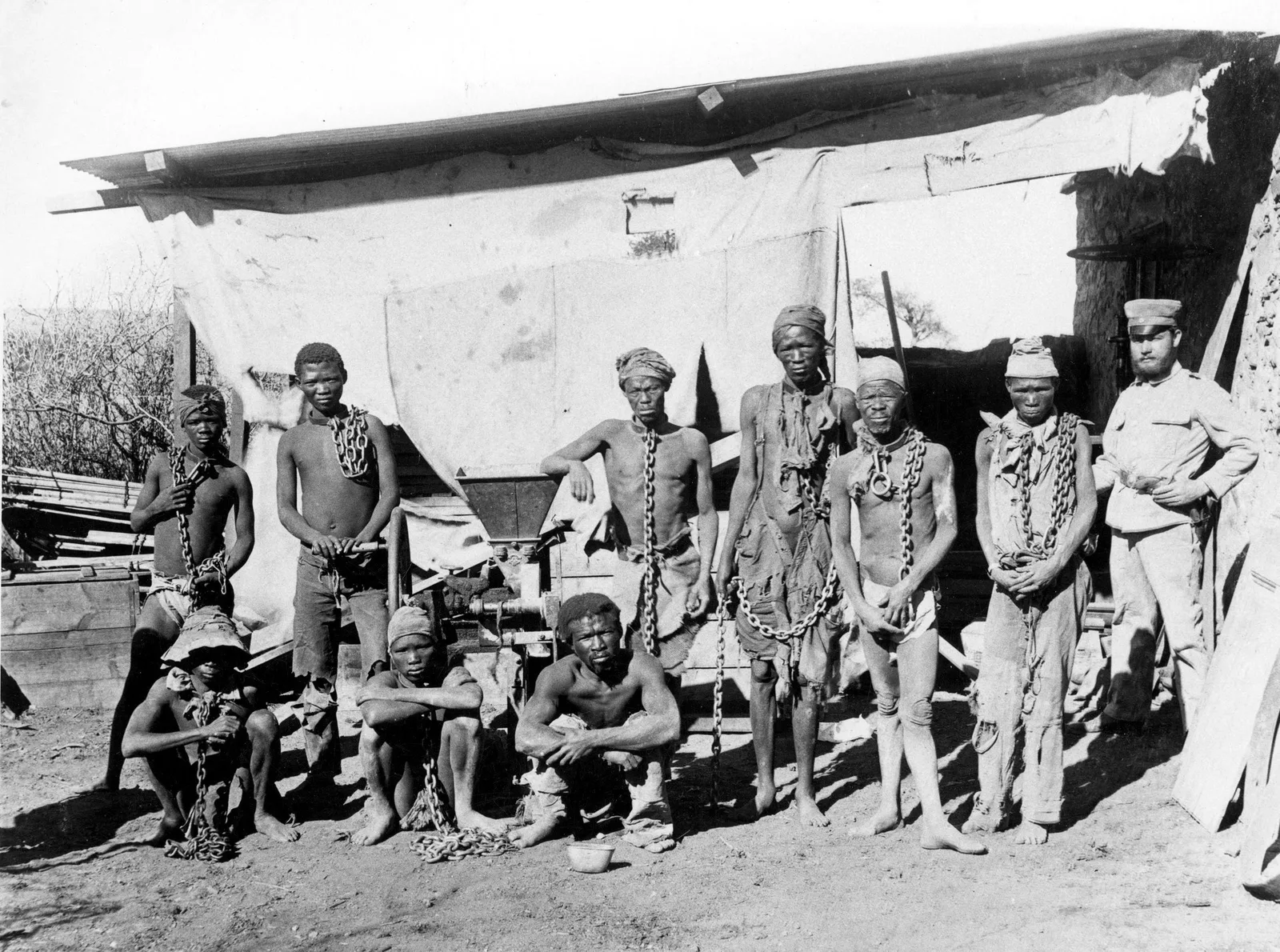
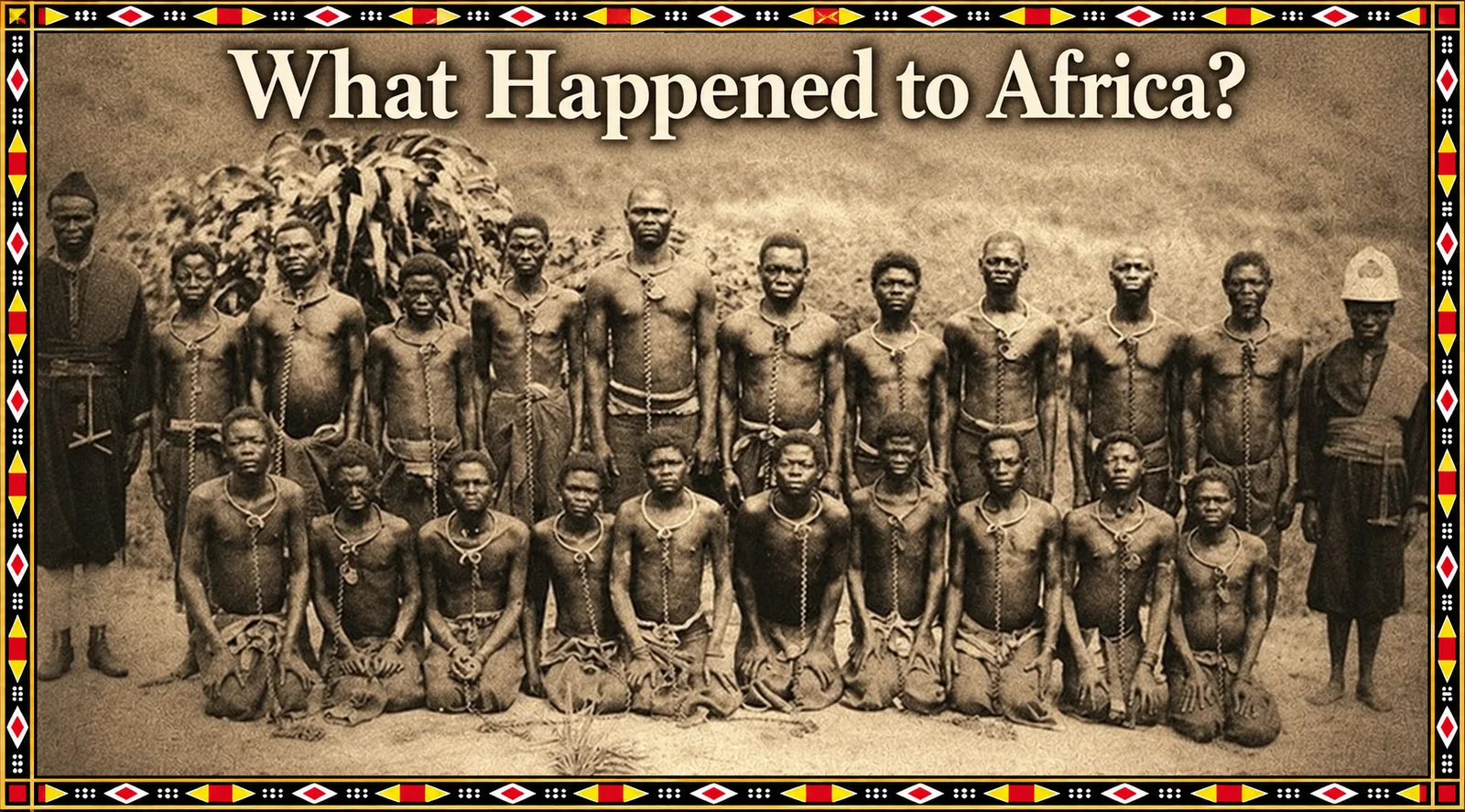
These figures cannot communicate the true magnitude of what was taken. Every person carried relationships, knowledge, language, gifts and possibilities. Africa did not lose only laborers. It lost mothers and fathers, farmers and healers, teachers and spiritual leaders, artists and potential future leaders. Entire communities lived under the constant threat of raids, kidnapping,g and warfare encouraged by external demand for enslaved human beings.
This is deeply familiar to Indigenous Peoples. Colonial systems repeatedly targeted our children because they understood that children carry the future. In North America, children were forcibly removed to residential and boarding schools. In Africa, millions of young people were removed through slavery, forced labor, military recruitment, and colonial education. Different methods were used, but the objective was the same: sever the bonds connecting the child to family, land, language, culture,e and spiritual identity.
Colonization is never satisfied with controlling territory. It attempts to colonize memory itself.
Berlin and the Legalization of the Taking
The Berlin Conference of 1884–1885 became the most visible symbol of the European partition of Africa. Representatives of European powers, along with the United States and the Ottoman Empire, gathered to establish rules governing commerce, navigation, and colonial claims. No African people had meaningful representation in decisions concerning their own continent.
Historical precision is important. The conference did not draw every present African border directly upon a single map. Rather, it established an international framework—including principles associated with “effective occupation”—through which European powers recognized one another’s claims and accelerated the conquest and division of Africa. Germany’s own diplomatic archive confirms that the conference established the framework under international law for dividing the continent while reducing the danger of war among the colonizing powers themselves.German Federal Foreign Office Political Archive
This is one of the deepest ironies of colonial history: European governments sought to prevent themselves from fighting one another over Africa, but they showed no comparable concern for the wars, dispossession and suffering inflicted upon Africans.
The lines that followed were often negotiated in European capitals along rivers, coastlines, latitude and longitude, mineral interests, and strategic rivalries. They frequently cut through the territories of existing peoples and political societies. Communities that had traded, intermarried or shared cultural and ecological relationships were divided between different colonies. Other peoples with distinct languages, political systems and histories were forced into administrative units designed primarily for colonial convenience.
Research has identified hundreds of African cultural and ethnic communities whose historical homelands colonial borders divided. One widely cited scholarly assessment found 231 groups with significant portions of their traditional territories falling within more than one modern country.Center for Economic Policy Research
The Tuareg homeland was divided across what became Mali, Niger, Algeria, Libya and Burkina Faso. Somali communities were divided among Somalia, Ethiopia, Kenya and Djibouti. The Ewe were divided between British and French colonial territories that became Ghana and Togo. Bakongo communities were divided among Angola, the Democratic Republic of the Congo and the Republic of the Congo. These are only a few examples.
Indigenous Peoples of North America recognize this immediately. The international boundary between Canada and the United States cuts through the territories and kinship networks of many Indigenous Nations. The medicine line did not come from the land or from our ancestors. Colonial governments imposed it. Our relatives did not cease being relatives because an outsider drew a line across our homeland.
As an Indigenous person of North America, I cannot consider the Berlin Conference without remembering a disturbing parallel from our own history. Beginning in 1869, under President Ulysses S. Grant’s so-called Peace Policy, the United States government apportioned federal Indian agencies among Christian denominations. Methodists were assigned certain agencies, Presbyterians others, Episcopalians others, Catholics others, and Quakers still others. The Grand River Agency near present-day Wakpala, later the Standing Rock Agency, fell under Catholic influence.
The Berlin Conference and Grant’s Peace Policy were not the same event, and their scale and political purposes were different. Yet they grew from the same colonial presumption: outsiders believed they had the moral and political authority to meet among themselves and divide responsibility for other peoples’ lands, lives, and destinies—without those peoples at the table.
In Berlin, European powers established rules among themselves for claiming and occupying African territories. In Washington, government officials and Christian organizations determined which denominations would exercise privileged influence within particular Native territories. In neither case were the original peoples treated as fully sovereign nations with their own governments, laws, languages, sacred traditions, and relationships with the Creator.
The contradiction is almost beyond comprehension. European nations that frequently distrusted and fought one another nevertheless cooperated in dividing Africa. Christian denominations that disagreed profoundly about doctrine—and often believed that their own road was the only road to salvation—nevertheless accepted the underlying assumption that Indigenous spiritual traditions had no equal standing. They competed over who would be authorized to save us, while never asking whether we needed to be saved from our own sacred relationship with the Great Mystery.
This is a defining pattern of colonization. The colonizing powers may disagree among themselves, but they unite around the assumption that they possess the right to decide for others. They rename lands they did not create. They draw boundaries across ancient homelands. They assign administrators, missionaries, and commercial interests to communities that did not invite them. They then describe these decisions as civilization, development, protection, or peace.
The people of Africa were not represented as sovereign equals at Berlin. Our spiritual leaders and Tribal Nations were not equal decision-makers when Indian agencies were distributed among churches. The African continent was regarded as territory available for European claims; Native Nations were regarded as populations available for Christian administration and assimilation.
What was divided was not empty geography. In Africa, boundaries cut across living Nations, languages, trade routes, watersheds, grazing lands and kinship systems. In North America, reservations and Indian agencies were imposed upon living Nations whose sacred relationships extended far beyond those boundaries. In both places, colonial maps attempted to replace the geography of relationship with the geography of control.
From an Indigenous perspective, that distinction is fundamental. A homeland is not an administrative unit. It is a sacred field of relationships. It holds the ancestors, the children yet unborn, the medicines, the waters, the animals, the ceremonies, and the responsibilities through which a people understands itself. When outsiders divide such a homeland without the people’s consent, they do more than alter a map. They wound a living system.
The names were different—the Berlin Conference in Africa and the Peace Policy in the United States—but beneath them operated a related colonial logic: divide the land, assign external authority, suppress the original spiritual and political order, and call the result progress. In both cases, peace was defined not as a just relationship among sovereign peoples, but as reducing Indigenous resistance to an externally imposed order.
This shared history does not mean that African and Indigenous experiences are identical. Each people has its own history, its own wounds and its own continuing strength. But our experiences speak to one another. They reveal that colonization was not simply a series of unfortunate local events. It was an international system—a way of seeing land, humanity, and power that traveled across Mother Earth.
Recognizing that common pattern allows us to stand beside our African relatives without attempting to speak for them. We can say: What was done to you was not unfamiliar to us. The borders were different, the institutions were different, and the historical circumstances were different, but we recognize the hand that drew the lines. We recognize the voice that declared itself superior. We recognize the system that removed wealth, attacked identity, and then blamed the wounded people for the wounds it created.
And because we recognize one another’s wounds, we can also recognize one another’s strength. Neither Africa nor the Indigenous Nations of the Americas were empty, voiceless, or spiritually lost before colonization. We were living peoples with laws, knowledge, economies, ceremonies, and sacred relationships. Colonial maps divided us, but the deeper circle of our relationships was never entirely broken.
Colonialism is an Economic System
Although colonialism was justified through words such as civilization, Christianity, development, order, and progress, its central economic purpose was extraction.
Colonial governments seized land, imposed taxes payable in European currency, and compelled Africans to enter mines, plantations, and labor markets to obtain the money required to pay those taxes. In many places, forced labor built roads, railways, and ports. These projects were presented as gifts of modernization, but their routes frequently ran from mines and plantations to coastal ports—not primarily between African communities.
The infrastructure revealed the system’s true intention: move copper, gold, diamonds, rubber, cocoa, cotton, timber, palm oil, and other resources out of Africa as rapidly and cheaply as possible.
Colonial economies were deliberately structured to export raw materials and import manufactured goods. Africans were expected to grow or extract what Europe needed, while purchasing finished products made from their own resources at a much higher price. Local manufacturing that might have competed with European industry was often discouraged, restricted, or destroyed.
This pattern did not disappear with the lowering of colonial flags. Across much of Africa, the railway still runs from the mine to the port. The economy still depends heavily upon exporting unprocessed resources. The contracts, financial institutions, and international supply chains may now appear modern. Still, the direction of wealth often remains colonial: the resource goes out, the value is added elsewhere, the profit accumulates elsewhere, and the environmental damage remains with the community.
The World Bank reports that minerals, oil and gas constitute at least one-third of exports from most countries in sub-Saharan Africa. During the 2004–2014 commodity boom, natural resources represented more than half of the region’s merchandise exports and nearly 30 percent of government revenues. Yet resource-rich countries have often struggled to convert this immense wealth into broad and lasting improvements in well-being.World Bank
This is not because Africa is poor. Africa has been impoverished amid extraordinary wealth. Poverty and wealth exist together because the structures governing ownership, pricing, taxation, processing, financing, and trade determine who benefits and who bears the burden.
The Congo: A Wound at the Center of the Story
Perhaps nowhere is the colonial system more brutally exposed than in the Congo.
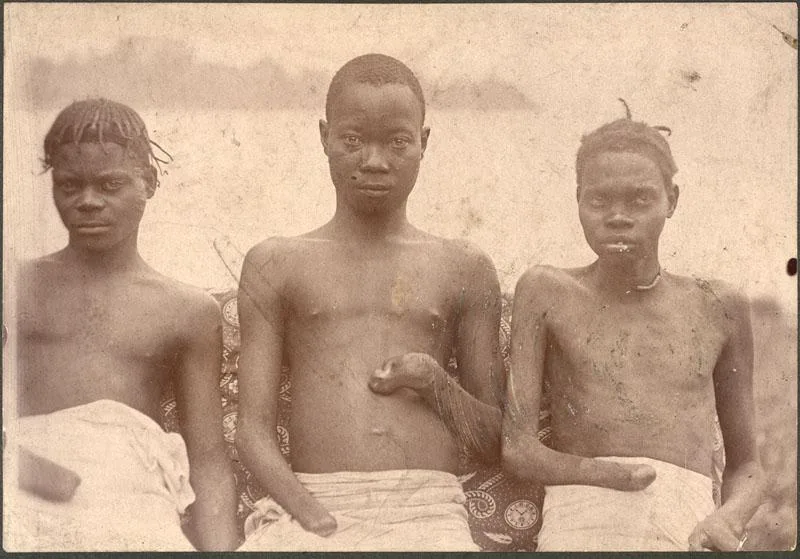
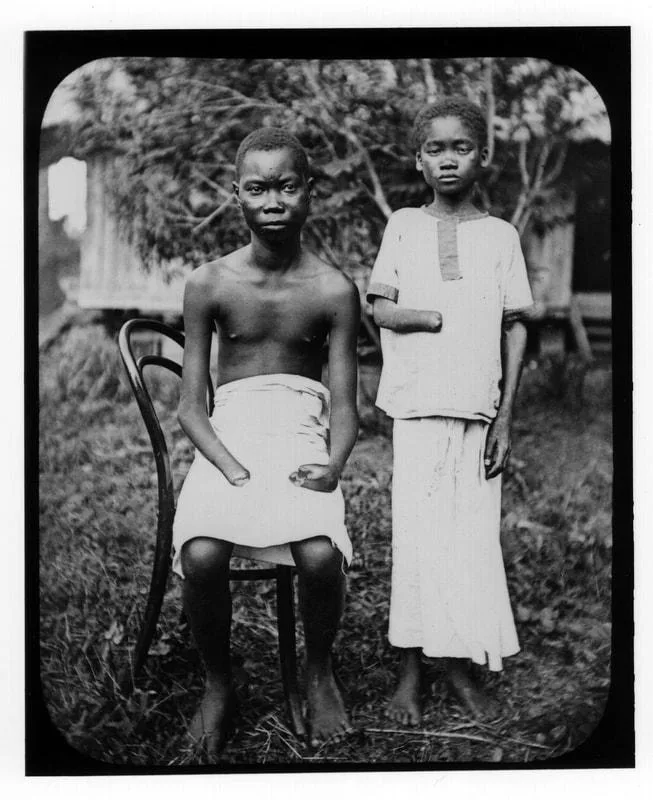
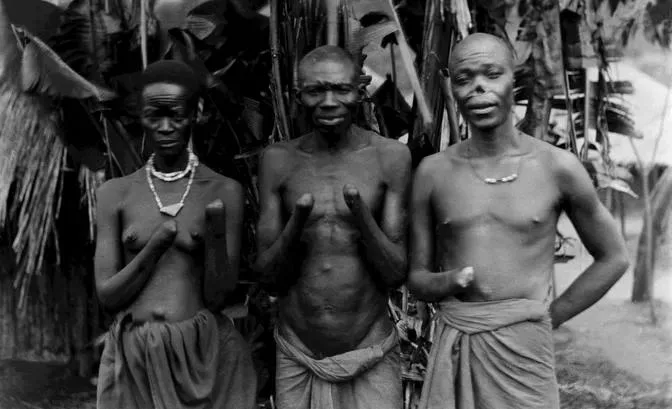
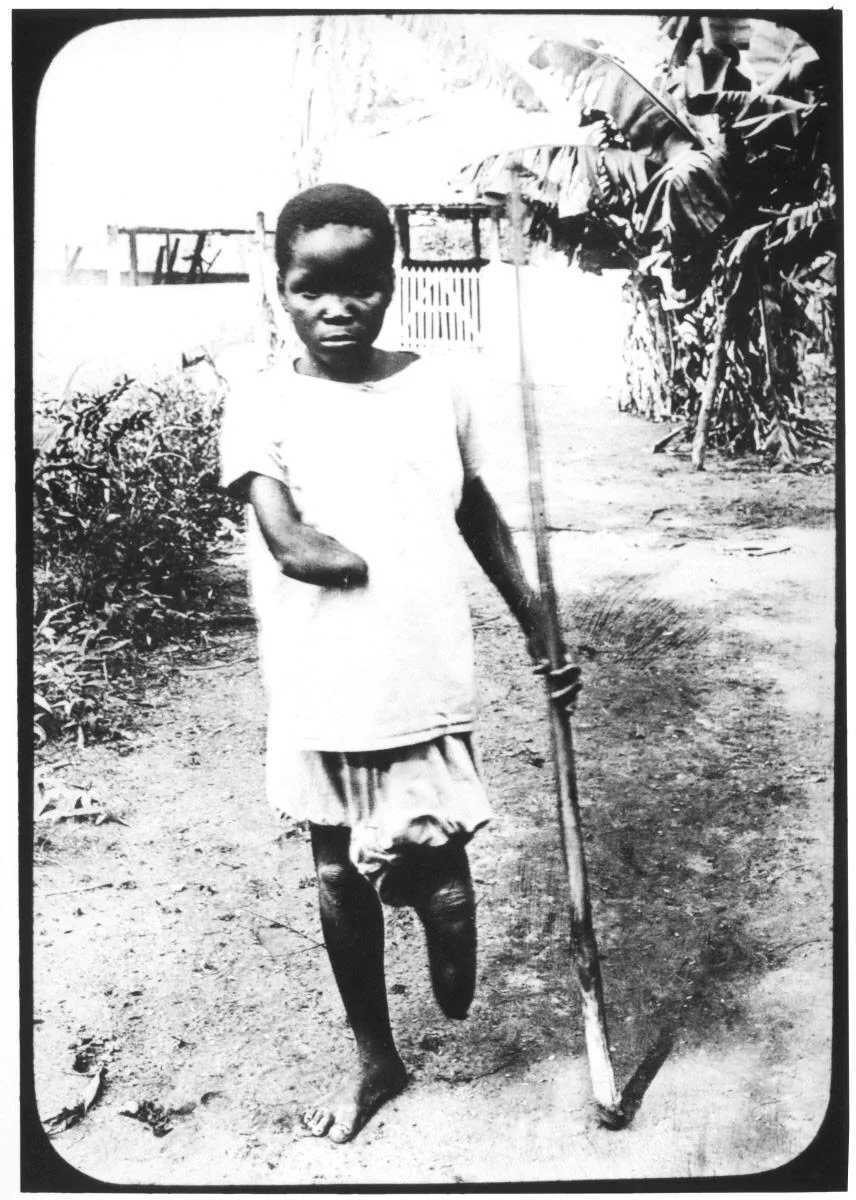
Under King Leopold II, the Congo Free State was treated as the king’s personal possession from 1885 until 1908. Congolese communities were subjected to terror, hostage-taking, mutilation, execution, and forced labor, especially in the extraction of wild rubber and ivory. Villages were required to meet quotas imposed by a distant ruler for the enrichment of an empire they had never consented to join.
The exact number of deaths remains debated because no reliable census existed when Leopold took control. Estimates of population loss vary widely, and responsible history must acknowledge that uncertainty. But uncertainty over the number does not diminish the documented reality of mass death, terror, famine, disease, forced labor and social disintegration.
The same land later became a source of uranium, copper, diamonds, gold, coltan and cobalt. Today, the Democratic Republic of the Congo supplies roughly two-thirds of the world’s mined cobalt, a mineral essential to many rechargeable batteries and technologies associated with the global transition to clean energy.World Bank
This forces a difficult moral question: Can technology truly be called clean when its supply chain leaves poisoned water, exploited workers, displaced communities, and endangered children behind?
Electric vehicles may produce fewer emissions where they are driven, but if the minerals within their batteries are obtained through injustice, the pollution has not disappeared. It has been transferred to people whose suffering remains largely invisible to the final consumer.
This directly violates an Indigenous understanding of development. Development must be judged by the entire circle of its relationships—from the place where a resource is taken to the people who process it, the person who purchases the final product, and the generations who will inherit the consequences.
The Land Was Turned from Relative into Commodity
From an Indigenous perspective, one of colonialism’s greatest acts of violence was the transformation of land from a living relative into private property and commercial inventory.
Land is not merely soil beneath our feet. Land carries language, identity, medicine, memory, food, water, ceremony and responsibility. Human beings belong within that circle of life; we do not stand above it as its absolute owners.
Colonial governments imposed property systems that often ignored communal stewardship, seasonal use, pastoral movement and customary law. Land was declared vacant or underused when it was not cultivated according to European agricultural practices.
Fertile territories were transferred to settlers or concessionary companies. Africans were pushed into reserves, subjected to pass systems, or required to labor on land that had once sustained their own communities.
Cash-crop agriculture replaced food production in many regions. Forests became timber concessions. Rivers became instruments of transportation and power generation. Minerals beneath the land were separated legally from the rights of the people living above them. Colonial science classified the resources; colonial law claimed them; colonial armies enforced the claim.
In the Americas, our buffalo, timber, gold, oil, water, and fertile territories were treated in much the same way. The colonizer sees abundance and asks, “How much can be taken?” Indigenous wisdom asks, “What are our responsibilities to this living system, and what must remain so that life can continue?”
The Wounding of Language, Culture and Spirit
Colonialism did not rely upon military force alone. It also attempted to replace African ways of knowing.
European languages became the languages of government, higher education, law and economic advancement. African spiritual traditions were frequently dismissed as superstition or savagery. Colonial authorities seized sacred objects and carried them into European museums. Human remains were collected and studied without consent. Indigenous governance structures were abolished, manipulated, or placed beneath colonial administrators.
Schools often taught African children more about Europe than about their own histories. They learned that civilization came from outside, that intelligence spoke with a foreign accent, and that advancement required distance from their own people.
The United Nations human-rights system has recognized that colonialism’s continuing consequences include systemic racism, cyclical poverty, economic inequality, violence, and the loss of languages and cultures.UN Human Rights Office
This internalized colonialism may be the deepest wound because people can eventually remove a foreign flag while continuing to measure themselves by the values of the former colonizer. Political independence does not automatically produce intellectual, cultural, economic,c or spiritual liberation.
True freedom begins within. It begins when a people recover confidence in their identity, their knowledge, and their capacity to shape their own future.
Divide and Rule—and Then Blame the Divided
Colonial powers governed through division. They classified populations into rigid racial and ethnic categories, elevated selected groups over others, recruited some communities into colonial armies, and governed through appointed or manipulated authorities.
This did not invent every African difference or conflict. Africa’s peoples had their own rivalries and disputes long before colonial occupation, just as all peoples do. But colonial administrations hardened identities that had often been more flexible, attached political privilege to those classifications, and concentrated power within artificial states.
At independence, African leaders inherited borders, bureaucracies, militaries and export economies designed for colonial control—not for democratic participation, community well-being or balanced national development.
The Organization of African Unity made the difficult decision in 1964 to respect the borders inherited at independence. African leaders understood the injustice of those borders, but they also feared that redrawing every boundary could spark continent-wide warfare. This decision prevented some conflicts but left many divided peoples and unresolved territorial questions within the inherited system.
Therefore, it is too simple to say that every modern African conflict was “caused by the borders.” Conflicts also emerge from authoritarian rule, corruption, inequality, competition over resources, foreign interference, climate pressures, arms trafficking, and struggles for power. African rulers and elites must be accountable for their own decisions.
But accountability must be understood in historical context. A tree planted in poisoned soil cannot be understood by examining only its most recent leaves.
Political Independence Without Economic Sovereignty
The formal dismantling of colonial rule after the Second World War was one of humanity’s great liberation achievements. African freedom movements defeated empires that had once claimed they would rule indefinitely. Yet political independence did not automatically dismantle the economic systems those empires created.
Many new governments inherited little industrial capacity, narrow tax bases, externally oriented transportation networks and economies dependent upon a small number of commodities. Some became trapped in debt. Others remained tied to former colonial currencies, corporations, military agreements and trade relationships.
African leaders who sought more independent paths sometimes faced coups, destabilization, sanctions, or assassination. Patrice Lumumba of the Congo was removed and murdered in 1961 with the involvement and complicity of Belgian authorities and amid Cold War intervention. Kwame Nkrumah was overthrown while abroad in 1966. Thomas Sankara was assassinated in 1987. These leaders were different from one another, and no leader should be placed beyond criticism. Yet their fates reveal how dangerous genuine economic independence could become when it threatened powerful external and internal interests.
Today the extraction is often less visible. It occurs through unfair contracts, tax avoidance, profit shifting, corruption, debt servicing, commodity-price manipulation,n and the movement of capital into offshore accounts.
The United Nations Conference on Trade and Development estimates that Africa loses approximately US$89 billion every year through illicit financial flows—more than many countries receive in development assistance.UN Trade and Development
Foreign aid is then sometimes presented as generosity, even while much larger streams of wealth leave through extractive trade relationships, corporate practices, debt payments, and illicit transfers. Too often, one hand offers assistance while the other removes the foundation upon which self-reliance could be built.
Africa Is Not Without Responsibility—or Without Power
To describe colonialism truthfully is not to deny the responsibility of African governments, corporations, military leaders and wealthy elites. Colonial history cannot become an excuse for present-day corruption, repression, tribalism or the theft of public resources.
Some African leaders have used colonial divisions to strengthen their own power. Some have signed damaging contracts, transferred wealth abroad, silenced opposition and failed to protect their people. Foreign corporations cannot exploit a nation without local partners, officials,s or intermediaries willing to benefit.
Healing requires truth in every direction.
But the greatest mistake would be to tell Africa that it must solve problems created by centuries of international extraction while the global systems enabling that extraction remain untouched. Responsibility must be shared according to power, participation, and benefit.
European states, North American states, multinational corporations, financial institutions and consumers all have responsibilities. The global community cannot demand good governance from Africa while tolerating secrecy jurisdictions that receive stolen African wealth. It cannot condemn conflict while selling weapons into unstable regions. It cannot praise renewable energy while ignoring abuses in mineral supply chains. It cannot speak of conservation while removing Indigenous and local communities from ancestral lands in the name of protecting nature.
The Way Forward Is Not the Erasure of Borders but the Restoration of Relationship
Africa’s healing will not come simply through drawing another set of lines. New boundaries could produce new minorities, new disputes and new suffering. The deeper answer is to reduce the destructive power of imposed borders by restoring relationships across them.
This means making it easier for divided communities to visit, trade, govern shared ecosystems and maintain cultural relationships. It means strengthening regional institutions and African-led conflict resolution. It means building railways, energy systems and digital infrastructure that connect African economies—not only mines to foreign markets.
The African Continental Free Trade Area is an important expression of this direction. Its purpose is to expand intra-African trade, strengthen Africa’s common negotiating voice and help transform the continent from a supplier of raw materials into a producer of higher-value goods.African Union
The African Union’s Agenda 2063: The Africa We Want similarly calls for unity, self-determination, inclusive development, democratic governance, peace, cultural renaissance and collective prosperity.African Union
But economic integration must be joined with cultural and spiritual restoration. African languages must be respected as languages of education, science, governance and innovation. Traditional knowledge keepers, women, youth, farmers, pastoralists and local communities must have genuine authority in decisions concerning land and resources.
Africa must increasingly process its natural wealth within the continent. Cobalt, lithium, copper, cocoa, coffee, cotton and timber should not leave only as raw materials. African workers and enterprises must participate in refining, manufacturing, research, design and ownership. Resource agreements must be transparent, and affected communities must give their free, prior and informed consent.
Restoring Africa also requires protecting Mother Earth. Rivers, forests, grasslands and minerals cannot continue to be sacrificed for short-term profit. Climate change, although driven disproportionately by the industrialized world, is intensifying drought, displacement, food insecurity and conflict in many African regions. Climate finance must not become another form of debt or another mechanism for outsiders to control African lands.
Restoration means repairing both people and place.
Reparations Must Be More Than Money
The international conversation about reparations is growing, and it must continue. Reparations are not charity. Charity is freely offered; reparations concern obligations arising from harm and unjust enrichment.
Financial restitution is important, but reparative justice must also include the return of stolen cultural objects and ancestral remains; cancellation or restructuring of illegitimate debt; fair taxation of multinational corporations; recovery of illicitly transferred assets; investment in African-controlled education, health and infrastructure; reform of international financial institutions; technology sharing; and enforceable standards for ethical supply chains.
Above all, reparations must restore African peoples’ power to determine their own development.
No one can repair a relationship while continuing the harmful behavior. A corporation cannot speak of reconciliation while poisoning a river. A museum cannot honor African culture while refusing to return sacred objects taken through violence. A government cannot apologize for colonialism while supporting economic arrangements that reproduce colonial extraction.
Reconciliation without structural change becomes another ceremony of words.
Africa Was Wounded, but Africa Was Never Defeated
We must be careful not to tell Africa’s story only through suffering. To portray Africans merely as victims would repeat another form of colonialism.
African peoples resisted slavery and colonization at every stage. They defended their lands, preserved their languages, maintained ceremonies, formed liberation movements, and defeated colonial armies and administrations. Ethiopia’s victory at Adwa in 1896 became a worldwide symbol of African resistance. The Haitian Revolution, led by people of African descent, shattered the claim that enslaved peoples could not liberate themselves. Anticolonial leaders, workers, farmers, women, students, and spiritual communities carried the movements that eventually ended formal European rule.
Africa continues to create, teach and lead. Its population is young, its cultural influence is global, its ecological knowledge is indispensable, and its material resources remain central to the world economy.
Africa’s future will not be determined by what was done to it. It will be determined by what African peoples, joined by just partners throughout Mother Earth, choose to build now.
From my Indigenous perspective, the central lesson is this:
The opposite of colonization is not merely independence. The opposite of colonization is right relationship.
It is the restoration of the relationship between the people and the land, between leadership and service, between wealth and responsibility, between knowledge and wisdom, between nations and the human family, and between this generation and the generations yet unborn.
Africa does not need another outside power to save it. Africa needs the space, sovereignty, resources, and justice required to continue saving and renewing itself.
The world owes Africa more than sympathy. It owes truth. It owes accountability. It owes restoration. Most of all, it must stop taking from Africa under new names while pretending the colonial age has ended.
The wounds of Africa and the wounds of Indigenous Peoples are connected because they came from a common worldview—a worldview that separated human beings from Mother Earth, converted relatives into property, measured development by what could be extracted, and mistook domination for civilization.
But our healing can also be connected. Together, African and Indigenous Peoples carry living knowledge of community, reciprocity, ceremony, extended family, respect for ancestors, responsibility to the unborn and the sacredness of the natural world. These are not relics from a vanished past. They are essential instructions for humanity’s survival.
The path forward is not a return to yesterday. It is the creation of a future in which ancient wisdom and contemporary knowledge are braided together; in which resources serve life; in which development begins from within; and in which no people are required to sacrifice their children, culture, or Mother Earth for another people’s prosperity.
Africa’s history was interrupted, but it was not erased. Its wealth was taken, but its spirit was not conquered. Its peoples were divided, but the deeper circle of relationship remains.
Africa will write the next chapter of its own story, and when it does, that story will help all humanity remember how to live again.