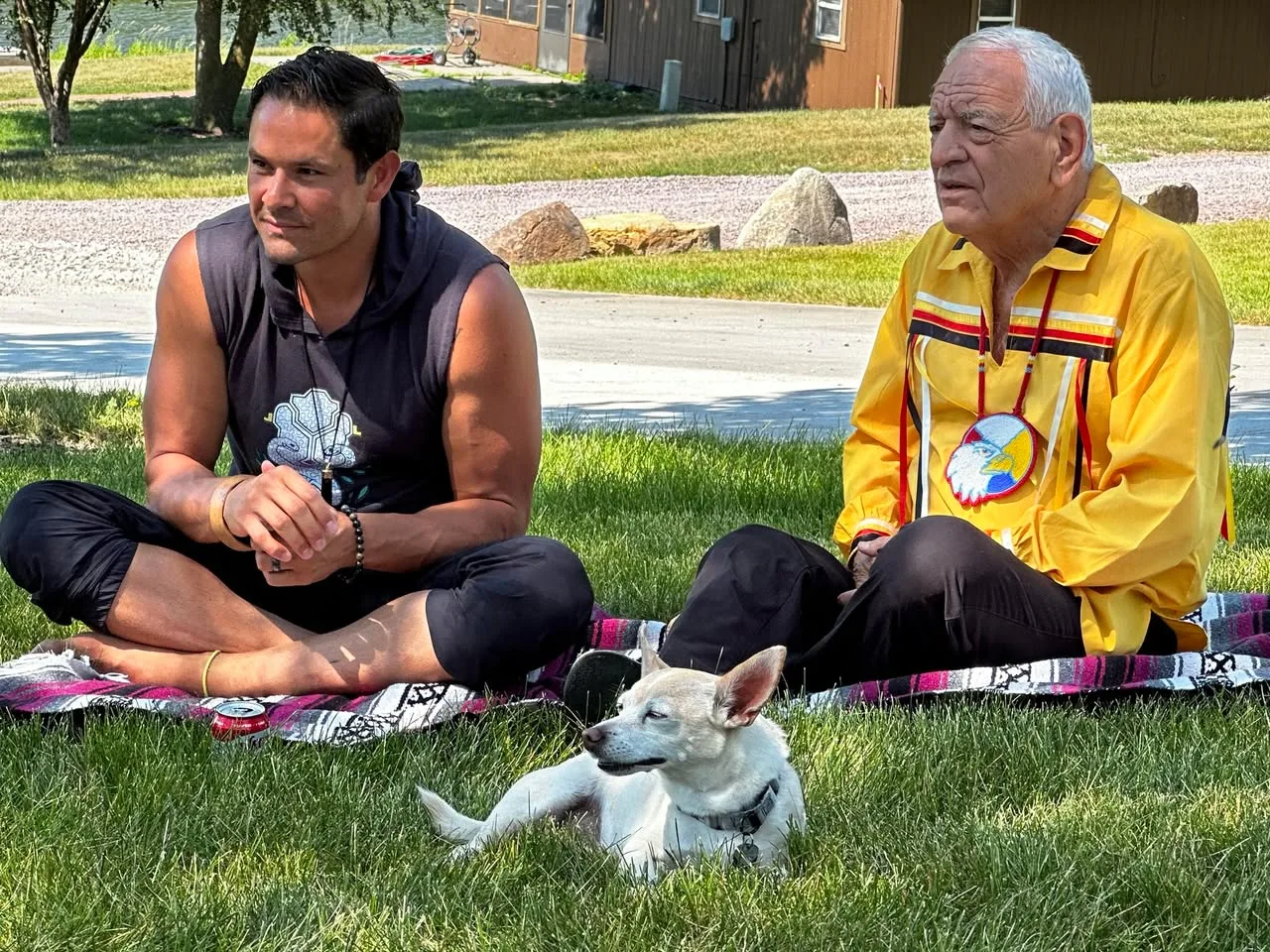
With our new Hunka relative, “Akicita Balam Wakan”--”Sacred Jaguar Warrior." Balam is Jaguar in Mayan.
The Hunka Ceremony is a sacred act in Dakota Culture. The term "hunka" translates to "making of relatives" or "adoption." The ceremony involves formally adopting an individual into a family or a community and giving them a sacred name.
The Hunka Ceremony establishes a profoundly spiritual and social bond between the Hunka relatives and their collective family or community. It is a way of extending kinship and creating a lifelong connection. The ceremony is conducted by a spiritual leader or elder who guides the ceremonial process.
There are core elements of the Hunka Ceremony. These include:
Gathering and Preparation: The ceremony typically takes place within a sacred space or a significant location chosen by the community. Participants gather and prepare themselves spiritually for the ceremony.
Adoption Process: The adopted person, is called the "hunka relative," is formally introduced to the community. The adopting family or individual, known as the "hunka relatives," publicly express their intention to embrace the person as their relative.
Exchange of Gifts: As a symbol of the new familial relationship, gifts are exchanged between the hunka parents and the hunka relative. These gifts have cultural and spiritual significance.
Sacred Naming: The hunka relative is given a new name, ochosen based on spiritual or personal qualities. The name is considered sacred and carries spiritual power and identity. The hunka relative may receive a new name during the ceremony or be given time to reflect on their unique identity and, if the name spiritually fits, to formally receive it within a year.
Rituals and Prayers: Prayers, blessings, and other sacred acts are performed during the ceremony to invoke the presence and guidance of the spiritual forces. This includes smudging, singing traditional songs, and making offerings.
Community Support: The entire community plays a role in the Hunka Ceremony, offering support, well wishes, and acceptance to the hunka relative. This collective involvement reinforces the sense of belonging and communal responsibility.
The Hunka Ceremony is a profound and meaningful spiritual event that strengthens the social fabric and spiritual connections within Dakota communities. It signifies a lifelong commitment to support, care for, and honor the hunka relative as a cherished member of the adopting family or community.
The name “Akicita Balam Wakan”--”Sacred Jaguar Warrior," carries profound spiritual qualities and embodies the essence of the jaguar and the concept of a spiritual warrior.
Balam-Jaguar in Mayan: The jaguar is a revered and majestic animal in many indigenous cultures, particularly in Mexico and Central and South America. It represents power, strength, and ferocity.
The jaguar is known for its agility, stealth, and ability to move silently, making it a powerful and elusive predator. It is seen as a guardian of the jungle, a creature deeply connected to the spiritual realm. The jaguar embodies the qualities of courage, fearlessness, and the ability to navigate the unseen and unknown.
Wakan-Sacredness: "Sacred" adds an elevated and divine dimension to the name. It signifies a connection to the spiritual realm and a sense of reverence. A sacred being or concept is considered holy, set apart, and embodying divine qualities. Including "sacred" in the name suggests a deep spiritual significance and the recognition of the profound nature of the warrior's path.
Akicita -Spiritual Warrior: The concept of a spiritual warrior transcends mere physical strength and martial prowess. A spiritual warrior seeks to cultivate inner strength, wisdom, and integrity while walking a spiritual growth and service path. It involves engaging in battles of the spirit, combating negative energies, and striving for personal and collective transformation. A spiritual warrior embodies bravery, compassion, resilience, and a deep sense of purpose.
By combining these words, the name "Sacred Jaguar Warrior" signifies a spiritual being who embodies the qualities of the jaguar—an embodiment of power, stealth, and a connection to the unseen world—while embracing the path of a spiritual warrior. The name represents a noble and sacred purpose, weaving together the spiritual prowess of the jaguar with the dedication and purposeful action of a warrior on a spiritual journey. It suggests an individual who fearlessly treads the path of spiritual awakening, protecting and nurturing the sacred, and working towards bettering themselves and their community.
The combination of sacredness, Jaguar, and warrior in the name "Sacred Jaguar Warrior" evokes a profound spiritual calling. It represents an individual who embraces their primal instincts, connects deeply with the divine, and fearlessly walks the path of spiritual growth and service. The Sacred Jaguar Warrior embodies strength, wisdom, and a sacred connection to the natural world, manifesting their spiritual purpose in harmony with the cosmic forces that guide them.
The name "Sacred Jaguar Warrior" encompasses profound spiritual qualities and meanings related to the Jaguar and the archetype of a spiritual warrior.
Sacredness: "Sacred" denotes a deep reverence and connection to the divine. It represents a heightened state of spirituality, where the individual is attuned to the sacred forces within and around them. The sacredness of the Jaguar Warrior suggests that this spiritual path is regarded as profound, elevated, and imbued with divine purpose.
Jaguar: The Jaguar holds great spiritual significance in many indigenous cultures, particularly Mesoamerican and South American civilizations. The Jaguar represents strength, power, and courage. It is a symbol of ferocity and fearlessness, often associated with the untamed forces of nature. The Jaguar embodies the primal and instinctual aspects of existence, serving as a guide to the spiritual realms and a guardian of sacred knowledge.
The Jaguar's qualities are multifaceted and include stealth, agility, and acute sensory perception. As a spiritual symbol, the Jaguar signifies heightened intuition, the ability to navigate the unseen realms, and a deep connection with the natural world. It embodies a balance between strength and grace, urging the Sacred Jaguar Warrior to harness their inner power with wisdom and integrity.
Warrior: In this context, a warrior is not merely a physical fighter but rather an individual engaged in a spiritual battle or quest for enlightenment and truth. The Warrior archetype embodies courage, determination, and a fierce commitment to one's beliefs and values. A spiritual warrior seeks to overcome personal limitations, transcend ego-driven desires, and embody higher virtues.
The Sacred Jaguar Warrior embodies the qualities of the Jaguar and the spiritual warrior archetype. They draw upon Jaguar's primal power and the warrior's spiritual fortitude to embark on a transformative journey. The warrior's battle is against inner obstacles, limiting beliefs, and societal conditioning, ultimately striving for personal growth, spiritual awakening, and community betterment.
The combination of the sacredness, Jaguar, and warrior within the name "Sacred Jaguar Warrior" evokes a profound spiritual calling. It represents an individual who embraces their primal instincts, connects deeply with the divine, and fearlessly walks the path of spiritual growth and service.
The Sacred Jaguar Warrior embodies strength, wisdom, and a sacred connection to the natural world, manifesting their spiritual purpose in harmony with the cosmic forces that guide them.