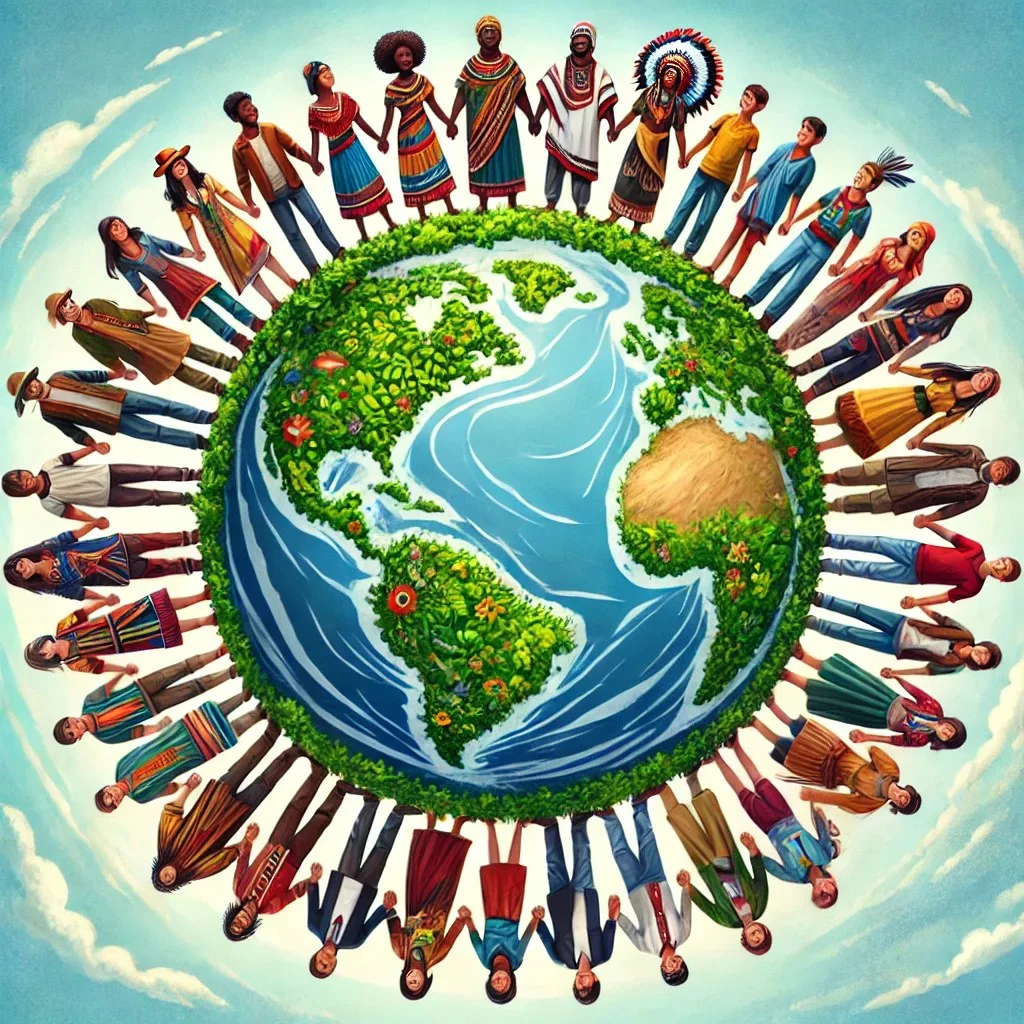
Uniting for Justice: A Global Movement of Unity and Equity
The call for unity among marginalized and impoverished communities is not just a plea but a pressing need that resounds urgently across the Americas and Africa. The weight of historical injustices and the pervasive inequities of the present demand a collective response grounded in justice, compassion, solidarity, and mutual respect. The numbers alone paint a powerful picture, but these communities' shared humanity and collective potential underscore the need for a unified social and economic justice movement. This need cannot be ignored.
In the United States, approximately 21.2 million African Americans, Hispanic/Latino Americans, and Native Americans live in poverty. Those in poverty are growing, while those that have extreme wealth are increasing.
These figures represent not just statistics but millions of lives constrained by systemic barriers to education, healthcare, and economic opportunities. Similarly, in Canada, around 615,000 Indigenous peoples and people of African descent face poverty, highlighting the ongoing impact of historical marginalization and discrimination.
The situation in Latin America and the Caribbean is even more pronounced, with an estimated 97 million Afro-Latin Americans and Indigenous peoples living in poverty. These communities, rich in cultural heritage and resilience, continue to struggle against structural inequalities that hinder their progress and well-being. In Africa, the scale is even more vast, with approximately 560 million people living in poverty, grappling with issues of economic instability, lack of access to essential services, and the legacies of colonial exploitation.
In addition, around 49.5 million people of European descent in the Americas and Africa also live in poverty. This diversity among the impoverished underscores their struggles and the shared struggle against systemic injustice. It reminds us that our collective efforts are crucial in addressing these issues, fostering a deep sense of solidarity in our fight for social and economic reform.
Approximately 729.5 million people across these regions face the harsh realities of poverty. This staggering number reflects a global crisis transcending borders and ethnicities, calling not just for a unified response but a compassionate one. These individuals are not merely statistics; they are our brothers and sisters, each with stories, dreams, and potential that demand immediate and empathetic action driven by our shared humanity and empathy.
Total Population of Marginalized Groups
The total population of people of Indigenous backgrounds from Africa and the Americas and other marginalized peoples is as follows:
People of African descent in the Americas: 413.1 million
Indigenous and mixed-race populations in the Americas: 1.4097 billion
Other marginalized groups in the United States: 100 million
Other marginalized groups in Canada: 5 million
Other marginalized groups in Latin America and the Caribbean: 100 million
Supporters of marginalized communities: 170 million (10% of the total population in the Americas)
People living in Africa: 1.4 billion
Combining these figures:
413.1 million+1.4097 billion+100 million+5 million+100 million+170 million+1.4 billion=3.5978 billion
Thus, approximately 3.5978 billion people are part of the total population of Indigenous backgrounds from Africa and the Americas, other marginalized peoples, and their supporters.
The Urgent Need for Unified Leadership
These numbers highlight the deep and pervasive inequities faced by people of color and marginalized communities globally. The disproportionate rates of poverty among these communities underscore the systemic barriers they face, including limited access to quality education, healthcare, and economic opportunities. This reality necessitates a unified and peaceful approach to leadership that prioritizes the needs and voices of marginalized communities, ensuring that everyone is heard and respected.
A Vision for Change
1. Addressing Systemic Inequities: Unified leadership will advocate for policies that dismantle systemic barriers and create equitable opportunities for all.
2. Promoting Sustainable Development: Emphasizing sustainable practices that respect Mother Earth and ensuring resources are available for future generations.
3. Fostering Inclusive Economies: Creating economic systems that prioritize the well-being of marginalized communities, promoting social enterprises, and supporting community-led initiatives.
4. Enhancing Education and Healthcare: Investing in culturally relevant education and accessible healthcare that ensures that marginalized communities can thrive.
5. Upholding Human Rights: Advocating for the protection and promotion of human rights globally, ensuring that every individual can live with dignity and respect.
6. Building Global Solidarity: Uniting people of color and marginalized communities to create a powerful coalition that can effect meaningful change on a global scale.
Unified Leadership and Peaceful Action
The social and economic justice movement must be rooted in non-partisanship and non-adversarial action principles. Rising above the divisions and conflicts that have historically impeded progress is essential. Indigenous and African spiritual traditions and thier deductive thinking teach us the importance of interconnectedness, respect for Mother Earth, and the value of community. These principles provide a foundation for leadership prioritizing the well-being of all beings and Mother Earth.
Unifying in peaceful action means embracing dialogue, mutual respect, and collaboration. Integrating practices like the Talking Circle, where every voice is heard, and decisions are made through consensus and deep listening. This approach fosters inclusivity and ensures that solutions are holistic and sustainable.
Vision for the Future
The vision for this unified movement encompasses addressing systemic inequities, promoting sustainable development, and fostering inclusive economies. By investing in culturally relevant education and healthcare, supporting community-led innovations, and advocating for human rights, we will create a world where every individual has the opportunity to thrive.
In this critical moment, we must answer the call for unity. By coming together in unprecedented, unified action, we will transform the landscape of social and economic justice, honoring our shared humanity and creating a legacy of justice, compassion, and equality for future generations. The prophecies and teachings of our ancestors guide us toward this vision, urging us to rise and unite in a movement that transcends divisions and builds a harmonious and just world for all.
Revealing the Full Vision received at the Island of the Sun and Lake Titicaca, Bolivia, May 23, 1972.
July 29, 2024, Gulf of Thailand
Shunkmanu He Me Yedo! Chunupa Sapa He Me Yedo!