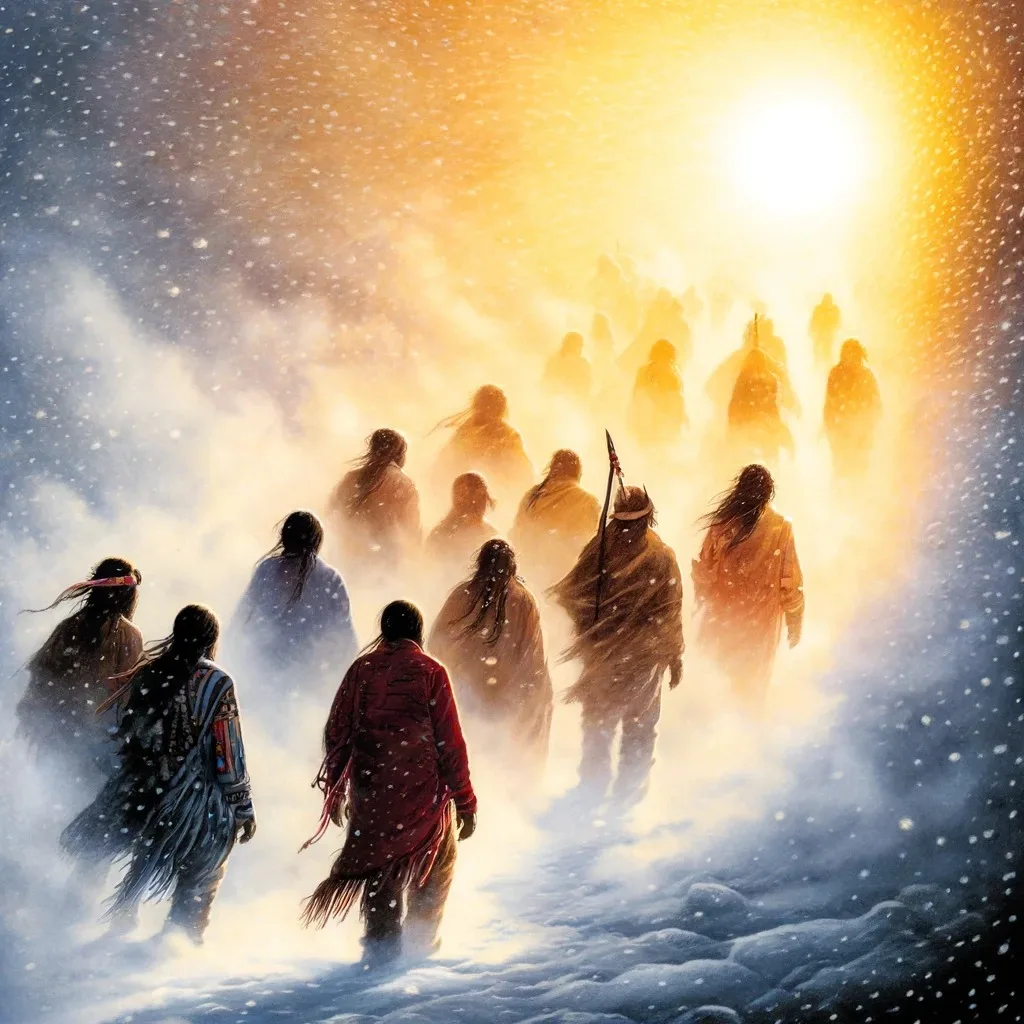
From my perspective, experience, and teachings, no Wičháša (Human Being) walks this Máni (Journey) of life without encountering the pain of Wóyakihi (Sorrow) or the ache of Čháŋ T’ápi (Grief). These trials are as natural as the changing Tȟaté (Winds) or the flowing of Mní Wakȟáŋ (Sacred Waters).
Yet, it is vital to remember that these Wóyakihi (Sorrows) and Čháŋ T’ápi (Griefs) do not come from the realm of the spirit, where our Creator, the Great Spirit, Wakan Tanka, dwells in eternal Wačháŋtognaka (Harmony).
They arise from the world of matter, from the illusions and attachments of the physical realm, where imbalance and disharmony cloud the clarity of our Čhaŋté (Hearts) and Nagi (Spirits).
The spiritual world, Wóuŋspe Wičháho (Sacred Teachings of Wisdom), in contrast, is the source of all Wíyokihi (Joy), a boundless reservoir of light and love that transcends the shadows of earthly concerns.
In this Wóčhékiya (Sacred Realm), we find the true essence of our being—connected, whole, and at peace. Here, the Creator’s Wóksape (Wisdom) flows unceasingly, and the teachings of the Tȟuŋkášila (Grandfathers/Ancestors) remind us that even amidst our struggles, the seeds of spiritual growth are being sown.
When we face Wóyakihi (Sorrow) and Čháŋ T’ápi (Grief), we are invited to turn our gaze inward and upward to seek refuge in the Wóuŋspe Wíčhóȟ’aŋ (Spiritual Truths) that anchor us. Like the Wambli (Eagle) soaring high above the Maǧážu (Storm), we are reminded to rise above the fleeting troubles of the world and find solace in the eternal.
For every Máza Wíčhókiŋyaŋpi (Tear) shed in this material world, there is an Olówaŋ (Song) waiting to rise from the depths of the Nagi (Spirit)—a song of healing, unity, and joy.
As we walk this Škáŋ Šá (Sacred Path) together, let us remember that the challenges of the material world are but Wóuŋspe (Lessons) guiding us closer to the Creator’s Ičháǧe Wíyuha (Embrace).
These experiences strengthen and prepare us to carry the Wóuŋspe Wičháho (Sacred Teachings) forward to live as instruments of peace and harmony. In this way, we transform Wóyakihi (Sorrow) into Wóksape (Wisdom) and Čháŋ T’ápi (Grief) into a deeper understanding of the Wíyokihi (Joy) that awaits us in the spiritual realm.
This is the way of Wačháŋtognaka (Balance), Wóuŋšila (Unity), and Wówáčhiŋtaŋka (Hope). As we draw from the strength of our Tȟuŋkášila (Ancestors) and the enduring love of the Wóčhékiya (Great Mystery), we are reminded that our Čhaŋté (Hearts) and Nagi (Spirits) are ever resilient, ever uplifted, and ever connected to the eternal Wíyokihi (Joy) that flows from the heart of the Creator, Wakan Tanka.
Mitákuye Oyás’iŋ. We are all related.
Šúŋkmanu Hé Miyédo! Čhaŋnúpa Sápa Hé Miyédo!
Ĥeȟáŋ Wičhášta/Delória Tiwašpaye, Iháŋktȟuŋwaŋ, and Chickasaw Nations.