
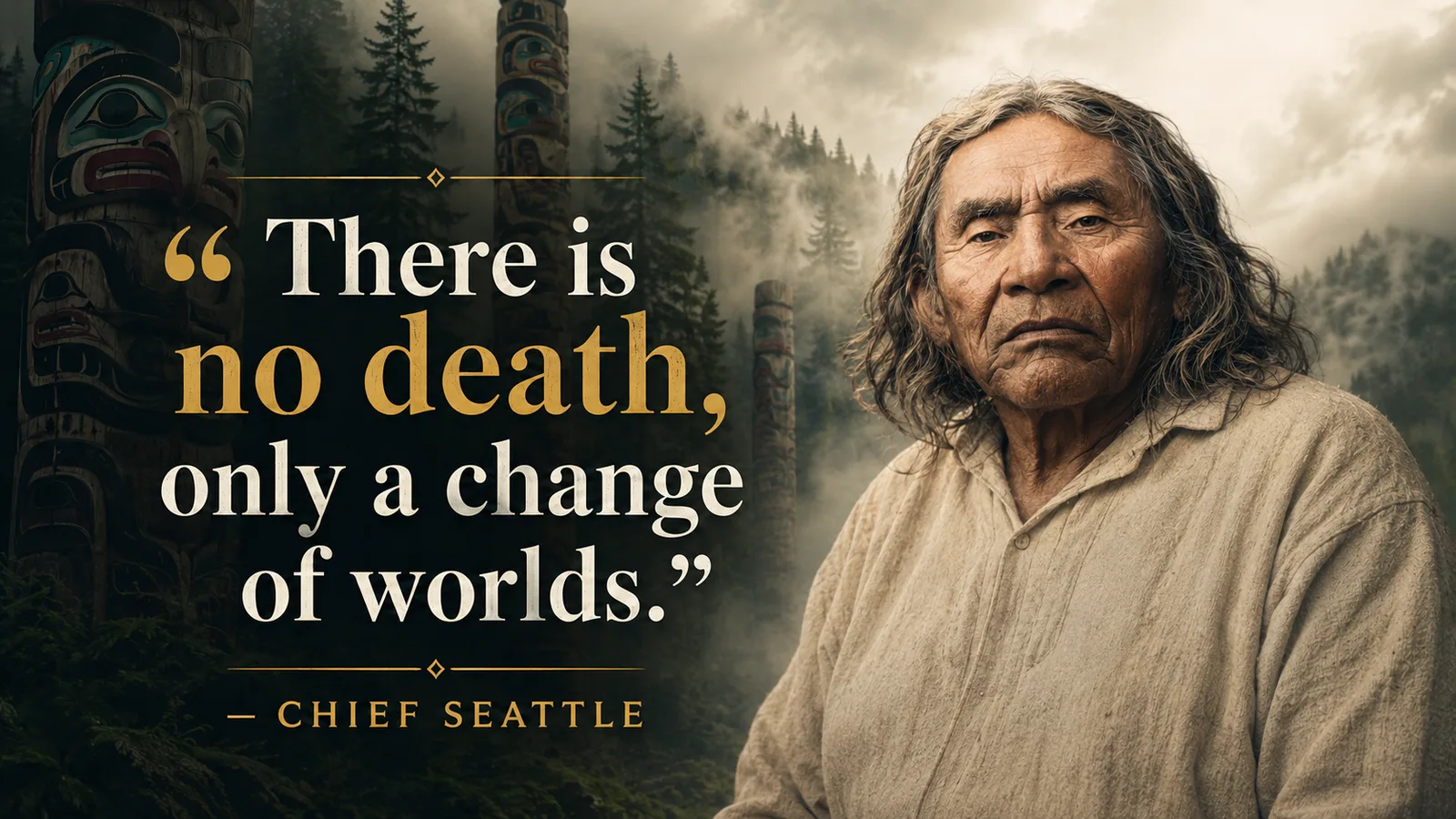
“There is no death, just a change of worlds.” - Chief Seattle.
In the Dakota way, what many call “death” is not an end, but a sacred transition, owáyawa othúŋwe kiŋ wíčhókata, a crossing into another world. Our nagi (spirit) is eternal, a gift from Wakȟáŋ Tȟáŋka, the Great Mystery, and it continues its journey beyond this physical life.
Just as we were born from the unseen into this world, so too do we pass through another doorway into the Tȟuŋkášila Tȟawíčakiya owáyawa, the Spirit World of the Ancestors, where we are received in love and guided by those who have walked before us.
To understand this is to live without fear. It brings peace to our hearts and helps us walk each day with gratitude, knowing this world is but one camp along a sacred path. The circle of life remains unbroken. We are never lost, only moving forward, Mitákuye Owás’iŋ, all our relations, in all worlds.
A love that anyone may have had for anyone will not be forgotten in the spiritual world, nor will we forget our life in this physical world.
Wówačhiŋtȟaŋka (deep compassion) binds us across time and space. In the Tȟuŋkášila Tȟawíčakiya owáyawa, the spiritual realm where we pray to the Creator, all true love endures. No sacred bond is erased. The love between relatives (thióšpaye), between friends, between those who walked together even briefly- this wówačhiŋtȟaŋka remains woven into our spirits like quillwork on a sacred robe. Our journey in the physical world (makhá) is not discarded—it becomes part of the eternal story our soul carries, like a sacred bundle.
In the spiritual world, we will recognize one another. We will seek union, a spiritual union.
In Wíyakapi Thiwáhe, the Star Family, we are drawn together by the wówačhiŋtȟaŋka and shared vibration of the soul. Our recognition is not by the skin or voice, but by the light (wí) each soul carries, like a fire remembered from another life. The čhaŋnúŋpa (sacred pipe) reminds us that our prayers are breathed into the unseen, where our souls will gather again in sacred unity (oyáte wówaši—the communal ceremony). There, we do not simply remember one another—we reunite, spirit to spirit, in love that has never ceased.
Our soul’s relationship with our body is like the connection between a lamp and a mirror. If the mirror is polished and perfected, the lamp’s light appears, but if the mirror is broken or covered with dust, the light remains concealed.
Our nagi (soul, spirit) is like the wí (sun), eternal and radiant. The body (tháŋka, the vessel) is like the still surface of a lake. When our heart is clear, free of wíyakA (deceit) and waš’íčun (bad thoughts), our soul’s light reflects through our actions, our words, and our presence. But if that mirror is covered in hiyá (negation, spiritual blockage), the light is hidden, not gone. In the Sweat Lodge (inípi), we purify the mirror of our being so that the light may once again shine freely.
Our rational soul, the human spirit, does not descend into our bodies or exist through our physical bodies. It is just the opposite. Our soul is the substance and foundation upon which our body depends for existence.
The nagi, our sacred essence, calls forth the body, not the other way around. Before our thípi (house/body) is built in the world, the spirit has already chosen to walk this Earth (makhá). The soul is the owáŋka—the sacred center—upon which the body is built. Just as the fire at the lodge center holds together the tíyošpaye, so too is the body animated by the sacred nagi. Without it, the form falls away like autumn leaves in the wind.
The soul has no gender, race, ethnicity, or class. This reality makes all forms of prejudice, whatever they may be, intolerable and unacceptable. The soul is not divided. It is a reflection of the Oneness of our Creator.
The nagi does not wear skin. It has no wíyakA (appearance), no tíyopa (entryway) that makes it greater or lesser. It is born of Wakȟáŋ Tȟáŋka—the Great Mystery—and carries only that sacred origin. To judge by the body is to dishonor the owáŋka of Creation. In our way, we say Mitákuye Owás’iŋ—all my relations—not as a metaphor, but as spiritual law. All souls are kin. All souls are sacred. Prejudice is wakíčhupi (a cutting off of kinship), a wound in the sacred hoop that must be mended.
Our soul is endowed with its unique individuality from the beginning of our existence in this physical world of time and space. Our soul does not acquire it because of our body.
From the first čháŋgléska (circle) of life, our nagi carries its song (olówaŋ), its vision (wówačhiŋ), its path (čhaŋkú). This is not given by body or circumstance, but by the Spirit World. Each soul is like a wíyakA, a feather with its pattern, distinct and irreplaceable. Our work on this Earth is to listen for our soul’s sacred song, to walk our path with wóksape (wisdom), and to honor our individuality without seeking to be above another.
The individuality and identity of our souls are strengthened in this physical world through our spiritual tests and challenges.
In makhá, the Earth world, the nagi is refined by fire. Each hardship is a sacred stone in the sweat lodge of life. Each sorrow is a teacher. Each loss is a sharpening. The soul grows not in comfort but in wóyute kiŋ akhípi, in what we endure and give back. With prayer and faith, these tests do not break the soul. They perfect the soul. They bring forth the sacred gifts we were given before birth. They remind us of who we are and why we came here.
Our soul is independent of and the very source of our body’s existence. If our body is destroyed, our soul and spirit remain unharmed.
Like the wakíŋyaŋ (thunder beings), the nagi moves through realms unseen. When the body (tháŋka) returns to the Earth, the soul returns to the stars, to the Star Nation (Wíyakapi Oyáte). Death is but a doorway, not an end. The nagi is untouched by fire, storm, or sickness. It is eternal. It is sacred. It is free. The destruction of the body is but the breaking of a shell; the spirit bird within flies home to the spiritual worlds beyond.
Our soul, our human spirit, is independent of our physical body. Our soul is free and sanctified beyond this physical plane of time and space.
The nagi walks in two worlds: this one of makhá, and the one beyond the veil, Tȟuŋkášila Tȟawíčakiya owáyawa. It is not bound by the turning of the moon or the ticking of the clock. In vision, in prayer, in hanbléčheyapi (vision quest), we touch the places where our soul is already free. The physical world is a camp along the journey, not the destination. The soul carries its sacred staff and walks on, beyond the hills of time.
All the powers that distinguish us as human beings- reason, memory, abstract thought, creativity, inventiveness, and willpower- are all properties of our soul, not the body!
The body may carry the drum, but the nagi sings the song. It is the nagi that dreams, that invents the bow, that paints the stories on the tipi wall, that reasons through suffering to find healing.
These powers,wóksape (wisdom), wówačhiŋ (will), wakȟóniya (sacred breath), are all gifts of the soul. When we create, it is not our hands alone. It is the nagi speaking through them. When we remember, when we forgive, when we imagine a better world, that is our nagi awakening to its divine nature.