The CC Forum, London, the Sixteen Guiding Principles, and the New Global Agenda for Sustainable Investment
The world is not facing a series of separate crises. It is facing a great crisis of disconnection. Climate change, geopolitical instability, artificial intelligence, water scarcity, ocean collapse, inequality, food insecurity, health, mobility, housing, philanthropy, media, fashion, finance, and the future of family wealth are all expressions of one deeper question: have we forgotten how to live in right relationship with one another and with Mother Earth?
For too long, the modern world has tried to solve living problems through fragmented systems. Finance has been separated from morality. Technology has been separated from wisdom. Development has been separated from culture.
Climate action has been separated from justice. Wealth preservation has been separated from world preservation. Philanthropy has often been separated from true community empowerment. Even sustainability has too often been treated as a sector, rather than as a sacred responsibility to all life.
This is why the work of Four Worlds and the Sixteen Guiding Principles is so urgently relevant. These principles offer more than a community development model. They offer a whole-systems framework for humanity’s future.
They remind us that true transformation begins within, that no vision means no development, that healing must be at the center of change, that participation is essential, that unity is a practical necessity, that culture is a foundation of development, and that spiritual, emotional, mental, and physical well-being must be advanced together.
The great questions now being asked by impact investors and global leaders are exactly the questions these principles were designed to address. Where will sustainable capital flow in a world being reshaped by geopolitics? How can private wealth be preserved and passed on in a time of planetary instability? Is artificial intelligence a threat or a tool for healing?
Should the world double down on net zero investment, or reassess the economic case? Is ESG an essential framework or an expensive distraction? Can philanthropy create lasting impact? Can media and entertainment truly shift behavior? Can family offices lead a new investment paradigm?
Can green banking, clean energy, real estate, mobility, fashion, health, and technology become forces for regeneration rather than merely new markets for profit?
The Sixteen Guiding Principles answer these questions by pointing us back to the whole circle. They teach that development must come from within. This means capital must be guided by inner purpose, not only external metrics.
It must be rooted in conscience, not in compliance alone. It must be accountable to life, not only to quarterly returns. A sustainable investment is not only one that avoids harm. A sustainable investment is one that actively helps restore balance.
The principle of vision is equally essential. Without a clear vision of the world we are trying to create, even good investments can become scattered, reactive, and shallow.
The world does not merely need more climate funds, more AI summits, more ESG reports, or more philanthropic announcements. It needs a shared vision of human development that places Mother Earth, future generations, human dignity, cultural wisdom, and spiritual responsibility at the center.
The principle of healing is also central. The crises we face are not only technical. They are historical, emotional, cultural, ecological, and spiritual. Colonization, racism, exclusion, poverty, war, and the destruction of natural systems have left wounds in the body of humanity.
Investments that do not recognize these wounds will only address symptoms. Investments rooted in healing can help restore communities, rebuild trust, regenerate ecosystems, and create pathways for youth and future generations.
The principle of participation speaks directly to the future of impact capital. No investment can be truly sustainable if the people most affected are left outside the circle.
Communities must not be treated as beneficiaries after decisions are made. Indigenous Peoples, local communities, youth, women, elders, scientists, entrepreneurs, and cultural leaders must be full partners in shaping the vision, governance, benefits, and accountability of development.
The principle of unity is not sentimental. It is strategic. The climate crisis cannot be solved by one sector. AI cannot be governed by technologists alone. Water scarcity cannot be solved without Indigenous knowledge, science, finance, law, and community stewardship. Ocean collapse cannot be reversed by markets alone.
The future of health cannot be separated from food, housing, culture, environment, and spirit. Unity means bringing the whole circle together so that finance, technology, governance, media, philanthropy, and community action move in the same life-giving direction.
This is also where Four Worlds offers a powerful lens for impact investors. Every investment should be examined through the spiritual, emotional, mental, and physical dimensions of life. Spiritually, does it strengthen moral purpose, reverence, responsibility, and service?
Emotionally, does it heal relationships, reduce fear, build trust, and strengthen a sense of belonging? Mentally, does it increase knowledge, wisdom, learning, and informed decision-making? Physically, does it produce real benefits in food, water, housing, energy, health, livelihoods, biodiversity, and ecological restoration?
When these four dimensions are aligned, investment becomes more than finance. It becomes a force of regeneration. It becomes a way of protecting life.
This is the new agenda. It is not enough to ask whether the UK can become a clean energy superpower, whether London remains a green finance capital, whether family offices are moving into impact investing, or whether ESG will survive political attacks.
The deeper question is whether the world of capital is ready to mature spiritually and morally. Can wealth become a servant of life? Can technology become a servant of wisdom? Can philanthropy become a servant of justice? Can media become a servant of truth? Can investment become a servant of the generations yet unborn?
The answer must be yes. But that, yes, requires a new kind of leadership. It requires leaders who understand that water is not only a resource, the ocean is not only an asset, forests are not only carbon, land is not only real estate, and people are not only consumers or labor. All are part of the living circle.
This is why this moment is so important. The world is reordering, but the direction of that reordering is not yet settled. It could become more divided, more militarized, more extractive, more unequal, and more unstable.
Or it could become more cooperative, regenerative, inclusive, and spiritually awakened. The difference will depend on whether those with influence, wealth, technology, and institutional power choose to preserve privilege or to preserve life.
From this perspective, the future of impact investment is not a niche conversation. It is one of the central moral conversations of our time. It asks whether humanity can finally bring together capital, conscience, culture, science, technology, and spirit in service to the whole human family and Mother Earth.
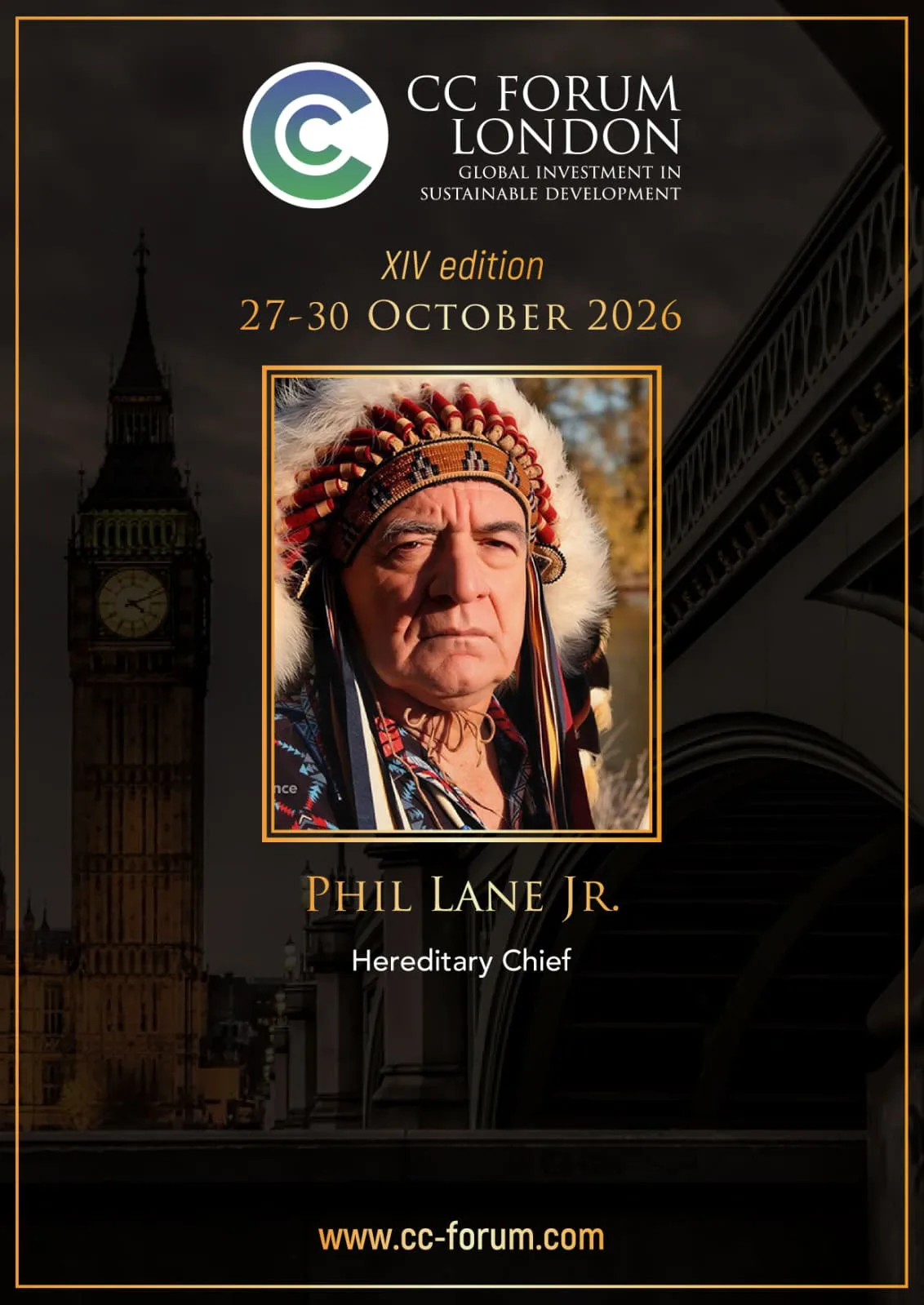
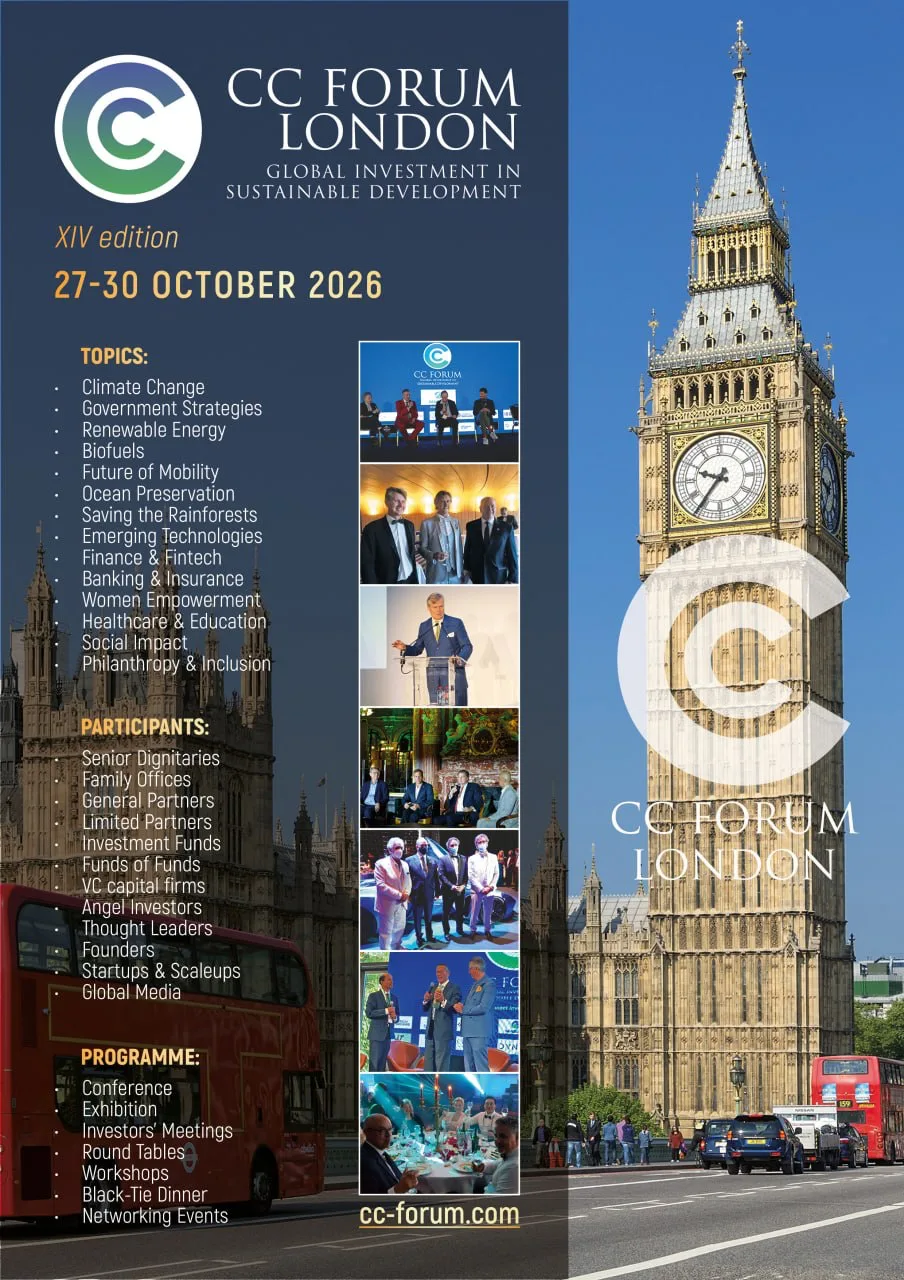
This is where the work of Max Studennikoff and CC Forum becomes especially significant. At a time when many gatherings still treat these issues separately, CC Forum is helping create a global space where the deep interconnections can be seen, discussed, challenged, and acted upon.
Its gathering in London in October 2026 comes at exactly the right time. The questions now before humanity require more than panels and speeches. They require a new circle of action.
CC Forum has the opportunity to become one of the great gathering places for this new agenda: where sustainable capital, Indigenous wisdom, ethical technology, climate responsibility, philanthropy, media, family offices, public leadership, and global community-building can come together in one shared purpose. That purpose is not simply wealth preservation. It is world preservation.
This is the call of our time: to connect the whole circle, to heal the broken relationships, to guide capital with conscience, and to build a future worthy of the children of all nations.
I greatly appreciate the invitation to join and share at the London CC Forum in October. We greatly enjoyed sharing at the London CC Forum this past March.