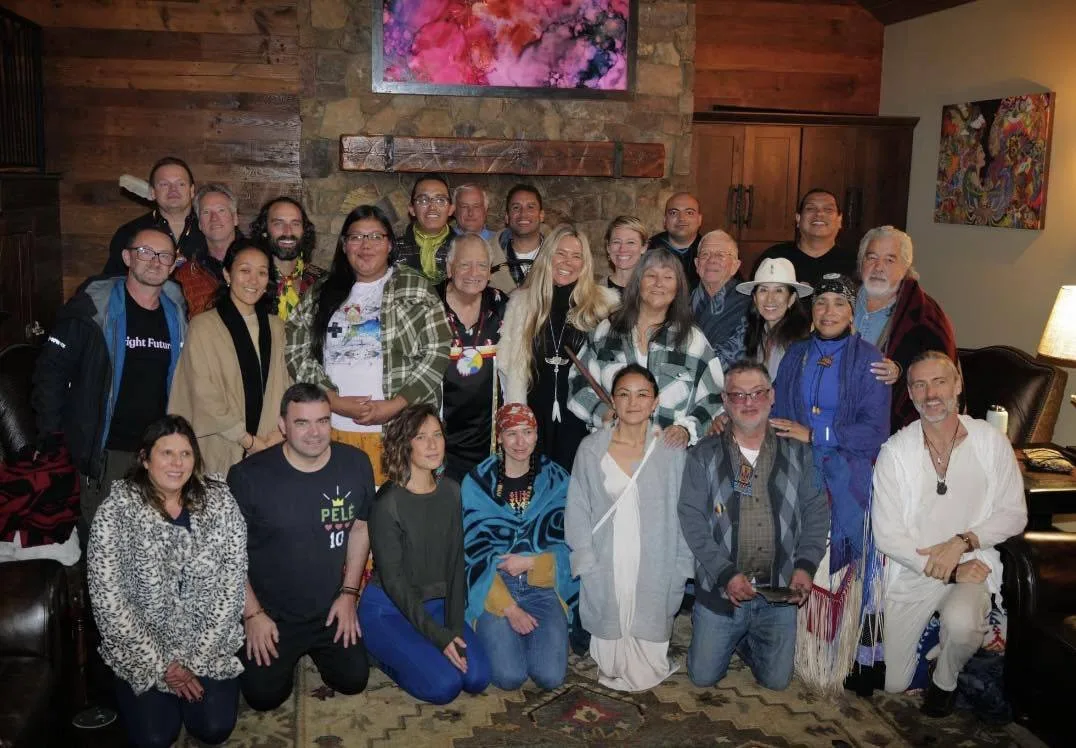
After the Sacred Hunka Ceremony for Čhaŋté Wašté, Tonja Morad Farad, at the first Imagine OR Gathering, October 12-15, 2023.
The Sacred Eternal Reality of the Hunka Ceremony
The Hunka Ceremony is one of the most sacred acts in our Nations because it reaches deeper than blood, more profound than clan, deeper than any human boundary. When two people become Hunka, they enter a bond as binding as birth itself.This sacred bond also unites their extended families, both in the seen and unseen worlds. For we know that the spiritual worlds, the worlds of pure light, sometimes called, “The Other Side Camp” are closer than our closest vein.
In the old way, the way carried on long before colonial times, Hunka relatives were treated exactly the same as your own blood relatives. There was no difference in rights, responsibilities, or love. A Hunka son was a son. A Hunka sister was a sister. A Hunka parent was a parent. This was understood across the plains and held with great reverence.
And this understanding extended beyond the Oceti Sakowin.
The Cheyenne, Arapaho, Ponca, Ojibwe, and many others recognized the sacredness of Hunka bonds. Through this ceremony, entire Nations sealed peace, friendship, protection, and shared responsibility. The original alliances of Turtle Island were shaped not by treaties on paper, but by Hunka relationships of the heart.
These ceremonies made it clear: “We are one extended family now. We rise together. We fall together. We protect each other’s children as our own.”
Hunka is not simply an adoption and the giving of a Sacred Name. It is spiritual kinship, political unity, and communal responsibility woven together.
It is a sacred promise witnessed by the ancestors and sealed in the presence of the unseen worlds, the worlds of light, sometimes called the Other Side Camp.
In this way, Čhaŋté Wašté and the Hunka Ceremony walk together. One speaks to the goodness and strength within a person’s heart. The other binds that heart into a circle of relatives who share one destiny. Both remind us of an ancient truth: When hearts are good and when relationships are made sacred, the People cannot be divided.
Čhaŋté Wašté — The Good Heart, Strong, and Clear
Čhaŋté Wašté speaks of a heart that walks in balance with all that lives. It is a heart that moves through the world with kindness, courage, steadiness, and integrity. A Strong Heart is not loud or proud; it does not seek power over others. Instead, it brings calm to conflict, clarity to confusion, and compassion to suffering. A Čhaŋté Wašté carries goodness the way a sacred fire carries warmth, quietly, steadily, without arrogance.
The one who carries this name is known by the People not for what they say, but for the way they live: with honesty, generosity, humility, and a spirit that stands firm in truth. This heart is strong enough to withstand hardship without becoming bitter, and gentle enough to remain open even after seasons of sorrow. It is the kind of heart our ancestors trusted to guide families, heal divisions, and protect the dignity of the People.
To walk with Čhaŋté Wašté is to live each day in a way that brings harmony — to oneself, to one’s relatives, and to the community.