
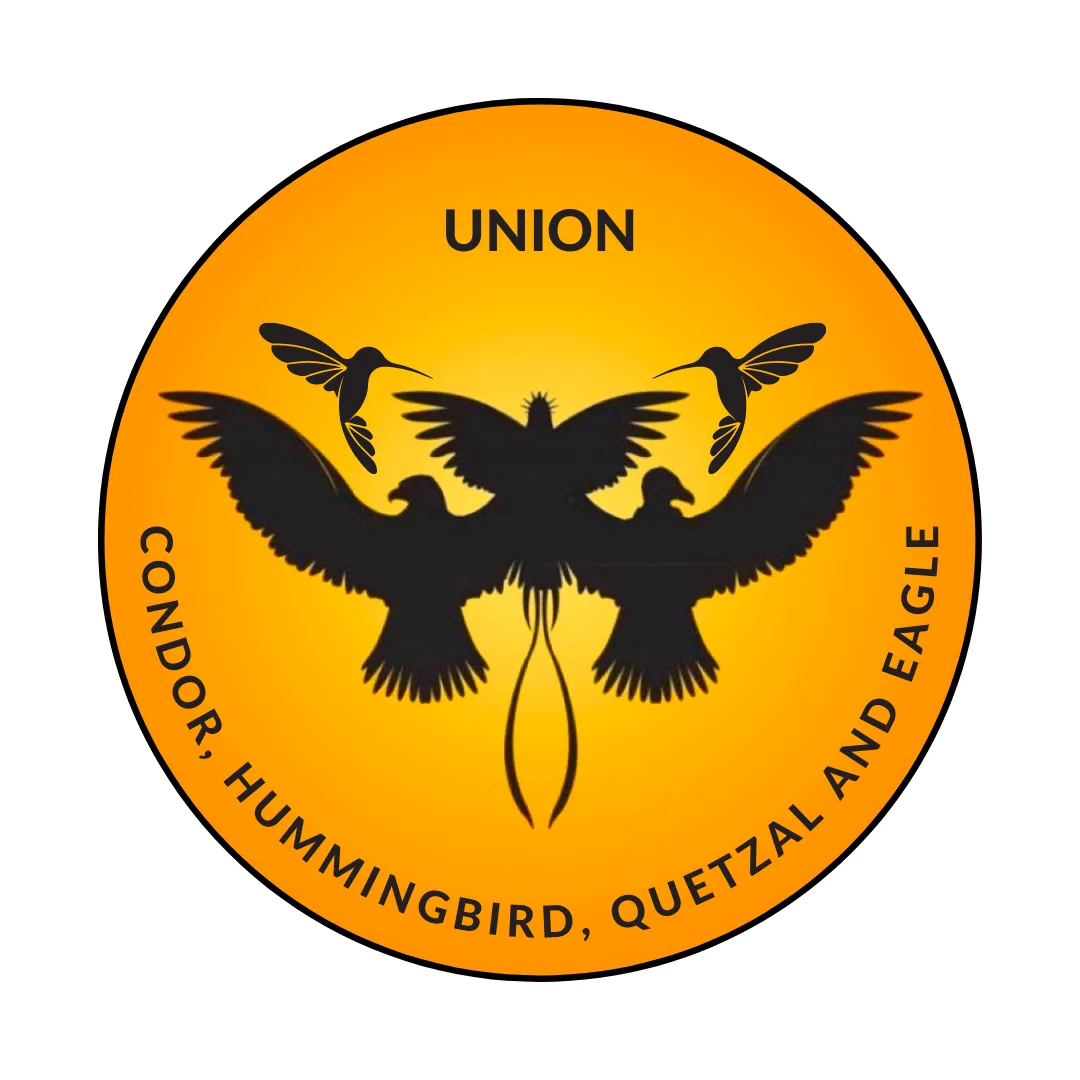
In the tapestry of global transformation, the prophecies of Indigenous peoples resonate as guiding threads, weaving a narrative of profound significance. From the Mayan Prophecies predicting the end of spiritual wintertime to the Prophecy of the Reunion of the Condor and the Eagle, symbolizing Unity and Peace on our Mother Earth, these ancient visions converge on this long-promised “ Day that Shall not be Followed by Night!”
The Lighting of the Eighth Fire represents a time of healing, renewal, and unification of our Human family and its place alongside the Stories and Vision of the Black Elk and the Return of the White Buffalo, a symbol of spiritual awakening and harmony. The Prophecies of the Peacemaker, Quetzalcoatl, Sweet Medicine, Handsome Lake, the Hopi, and the 8th Fire prophesies interlace with this narrative, contributing to the rich tapestry of collective awakening.
As we witness the unfolding of these prophecies, a global awakening is underway, transcending boundaries and fostering unity. The envisioned state of enlightenment is dismantling divisive forces, ushering in an era where shared consciousness replaces conflict. This transformative shift reflects the enduring wisdom embedded in Indigenous cultures.
The efforts of Indigenous spiritual leaders across the Americas and beyond resonate in initiatives promoting deep social networks, environmental protection, and compassion. Through these endeavors, a harmonious and united existence emerges, embodying the promise foretold by the prophecies of diverse Indigenous traditions. In this transformative era, the world is moving towards a lasting peace built on the foundations of ancient wisdom and contemporary initiatives undertaken by the Four Worlds International Institute, the Union of the Condor, Hummingbird, Quetzal, Four Worlds Foundation-Panama and the Four Worlds Global Impact Fund and many other related global initiatives for peace.
The unique path to peace envisioned by Indigenous peoples extends beyond the borders of specific regions, encompassing the entire tapestry of humanity. Across Europe, Africa, the Middle East, Asia, and Australia, conflicts and wars persist, revealing the urgent need for transformative solutions. Even within the Americas, struggles between nation-states, such as Venezuela, Nicaragua, and others, highlight the pervasive challenges rooted in political and ideological differences with the USA and its allies.
Growing economic partnerships and political relationships with China, Russia, and BRICs in Latin American, the challenges facing the Amazon, and the ongoing devastating exploitation of America’s natural resources that are primarily on Indigenous lands foretell a future, as foretold by Indigenous of profound challenges that will be met in a positive, transforming, enlightening, illuming, and unified way.
Amidst these global challenges, Indigenous peoples stand as catalysts for peace, guided by the fulfillment of their prophecies. The Prophecy of the Reunion of the Condor and Eagle actualized on March 21, 1971, Ceremonially confirmed on the Island of the Sun, New Moon, 1972, the formation of the Council of the Union of the Condor, Hummingbird, Quetzal, and the Eagle, in Palenque, Mexico, March 21, 2023, 52 years later, and Lighting of the Eighth Fire, October 28, 2023, in Hidalgo, Mexico signify pivotal moments in the fulfillment of the Prophecy of the Reunion of the Condor and Eagle.
While political conflicts and economic challenges deepen in colonial nation-states, the Indigenous visionaries and their allies are charting a different course. The fulfillment of prophecies serves as a guiding light, indicating that the eighty million Indigenous peoples of the Americas and their Allies of our Human Family are prepared and actively moving forward in their mission.
Through deep-rooted initiatives focused on unity and guided by ancient wisdom, Indigenous peoples and their allies are transcending divisive boundaries and paving the way for a harmonious and peaceful world, fostering a transformative era that transcends geopolitical and cultural differences and births a New Global Civilization.
The manifestation of a profound unity forged among Indigenous peoples, their Allies, and the Nation States of the Americas, known as Abya Yala in Indigenous prophecy, is not merely a convergence of interests but a transformative force destined to reshape the very fabric of the Americas. The prophecies, long foretelling this era of unity, point towards a future where Abya Yala will reclaim its inherent sustainability, harmony, and prosperity, both environmentally and economically.
In alignment with the prophecies, this reunification is not solely about restoring balance but envisages Abya Yala ascending to global spiritual greatness, mirroring the material advancements it has achieved. The harmonious coexistence of Indigenous wisdom and contemporary progress holds the potential to create a global society that radiates spiritual enlightenment and material prosperity in equal measure.
Challenges Facing the Indigenous peoples of the Americas include:
As Abya Yala emerges as a beacon of unity, it illuminates a path towards a new Global Civilization. Founded on principles of justice, unity in diversity, and unwavering respect and love for all of Mother Earth’s children, this envisioned civilization transcends geopolitical and cultural boundaries. It is a testament to the transformative power of collective vision and collaboration, where diverse voices contribute to creating a world that respects the interconnectedness of all living beings.
In this new era, Abya Yala stands not only as a geographical space but as a symbol of hope, resilience, and the potential for positive change. The unity between Indigenous peoples, Allies, and Nation-States of the Americas paves the way for a future where the collective pursuit of justice and harmony becomes the cornerstone of a global society, fostering a world where the well-being of all is prioritized, and the legacy of Mother Earth is safeguarded for as long as the sun shall rise.
In this transformative era, the world is moving towards a lasting peace built on the foundations of ancient wisdom and contemporary initiatives undertaken by the Four Worlds International Institute, the Union of the Condor, Hummingbird, Quetzal, and many other related global initiatives for peace.
Challenges facing Indigenous peoples of the Americas:
Land Rights and Displacement:
Ongoing struggles for land rights and the displacement of Indigenous communities due to resource extraction, development projects, and encroachment on traditional territories.
Cultural Preservation
Threats to the preservation of Indigenous languages, customs, and traditions due to globalization, assimilation, and the erosion of cultural identity.
Environmental Degradation:
Impact of climate change, deforestation, pollution, and resource exploitation on the natural environment, affecting Indigenous peoples’ traditional livelihoods and connection to the land.
Health Disparities
Disproportionate health challenges, including higher rates of chronic diseases, lack of access to healthcare, and inadequate public health infrastructure in Indigenous communities.
Educational Inequities:
Limited access to quality education, cultural bias in curricula, and the need for Indigenous-led educational initiatives to promote a more inclusive and culturally relevant learning environment.
Economic Injustice:
Economic disparities, with Indigenous communities often facing higher unemployment rates, limited economic opportunities, and challenges in accessing financial resources for sustainable development.
Legal Injustices:
Ongoing legal battles for recognition of Indigenous rights, including struggles against discriminatory laws, inadequate legal representation, and challenges in protecting sacred sites.
Social Issues:
High rates of poverty, substance abuse, and mental health issues within Indigenous communities are often linked to historical trauma, systemic oppression, and social inequalities.
Political Representation:
Limited representation and participation in mainstream political processes lead to a lack of influence in decision-making that directly impacts Indigenous peoples.
Violence and Discrimination:
Persistent issues of violence, discrimination, and racism against Indigenous individuals and communities, both historically and in contemporary society.
Access to Resources:
Unequal access to essential resources, such as clean water, housing, and infrastructure, contributes to substandard living conditions in many Indigenous communities.
Youth Empowerment and Education:
There is a need for initiatives promoting the empowerment of Indigenous youth, including education, leadership development, and opportunities for skill-building.
Addressing these challenges requires a holistic approach that recognizes Indigenous peoples’ rights, culture, and unique circumstances while promoting social, economic, and environmental justice.
At the same time, Indigenous peoples possess inherent strengths and contemporary resources that contribute to their resilience and ability to overcome challenges. Here are some of these strengths:
Cultural Resilience:
Deep cultural connections and traditional knowledge provide a foundation for resilience in the face of challenges, fostering a strong sense of identity and community.
Community Cohesion:
Strong community bonds and extended family networks that support mutual aid, cooperation, and collective decision-making provide a social safety net.
Traditional Ecological Knowledge:
Intimate knowledge of local ecosystems and sustainable practices that contribute to environmental stewardship and adaptation to changing environmental conditions.
Spirituality and Holistic Well-being:
Emphasis on holistic well-being, including spiritual, mental, and physical health, contributes to a comprehensive individual and community wellness approach.
Intergenerational Wisdom:
Transmission of knowledge and wisdom across generations, fostering intergenerational learning and mentorship that strengthens cultural continuity and leadership development.
Adaptability:
Historical experiences of adaptation and resilience in the face of colonization and other adversities showcase the ability to navigate and respond to changing circumstances.
Art and Cultural Expression:
Rich artistic traditions, including storytelling, dance, and visual arts, are powerful tools for cultural expression, preservation, and resistance.
Language Revitalization Efforts:
Ongoing efforts to revitalize and preserve Indigenous languages, recognizing language’s crucial role in maintaining cultural identity and communication.
Indigenous Leadership:
Emerging Indigenous leaders actively engaged in advocacy, governance, and community development, working to address contemporary challenges and promote positive change.
Land-Based Economies:
Traditional practices of subsistence and land-based economies contribute to sustainable resource management and economic resilience.
Education Initiatives:
Indigenous-led educational initiatives that integrate cultural teachings and values, empowering youth and promoting a sense of pride in one’s heritage.
Global Solidarity:
Increasing global awareness and solidarity among Indigenous communities, fostering collaboration and shared strategies to address common challenges.
Legal Advocacy and Activism:
Active engagement in legal advocacy and activism to secure Indigenous rights, protect sacred sites, and challenge discriminatory policies.
Media and Technology Use:
Modern media and technology are utilized for storytelling, advocacy, and networking, amplifying Indigenous voices and promoting cultural exchange.
Recognizing and building upon these strengths is crucial for developing sustainable solutions to the challenges faced by Indigenous peoples. Four World’s emphasis on digital communication for global Indigenous well-being aligns with the contemporary strategies that leverage technology for positive change while respecting and preserving traditional values.
The Fourth Way
An Indigenous Contribution to Building Sustainable and Harmonious Prosperity in the Americas and Beyond
The Fourth Way is a movement of our Human Family to address the unfolding crisis of the 21st century, a crisis of multiple dimensions that has slowly revealed itself over the past 20 years since the first draft of the Fourth Way was published. This crisis’s dimensions and scope are unprecedented because it is global and multifaceted, involving the unfolding prospect of economic, political, social, and ecological chaos. This crisis results in the birth of a fundamental organic change on a level very few members of our Human Family may now contemplate.
The inhabitants of Mother Earth now face a choice: will we emerge from this crisis into a new golden age of human understanding rapidly, or will we continue to witness greater and greater social conflict, increasing human suffering, and the loss of ecological health and democratic society until we truly believe that we can build a New World Civilization, based in the Oneness of the Human Family and all Living Beings, free of inequality, injustice and abuse of any form.
This Global Transformation of consciousness will prove to be the greatest global challenge experienced by the Human Family since the dawn of recorded Human History. This transformation will change the foundations of modern economics, the nation-state, our social structures, current agricultural and eating practices, religious cooperation and respect, and modern politics.
Stated simply, among other equally important dimensions, like the environment, we have reached the end of a long cycle of credit and debt expansion increasingly characterized by destructive asset bubbles, income, stagnation, and the enormous concentration of wealth and political power in the hands of the corporate-led global financial elite.
The debt is due and cannot be paid out of current income. In addition to unpayable debt, we face a huge volume of derivatives on that debt that would come due if and when the debt defaults. Since the debt cannot be paid, we face a global crisis that will unravel the established financial and political order globally.
Then you add to the mix the impact of other emerging challenges, like the Coronavirus, true or false, the wars that have erupted in Ukraine and the Middle East, and the growing nuclear tensions on the Korean peninsula, as well as the potential for war between China and Taiwan, which could turn into a global conflict, and the Kogi message that provides a timeline for runaway climate change, the potential for the global devastation of all life on Mother Earth, is clear.
The struggle of ordinary people for economic survival, political power, and even the right to have a degree of personal privacy and autonomy will characterize the next years. Modern communications, computing power, and crowd suppression techniques have radically increased the capacity to track and record all human interactions via telephone, cell phone, email, car, train, bus, or plane and brutally suppress all dissent.
This has all happened in the last few years. Equally, if utilized in a collaborative, principle-centered, purposeful manner, these digital communications technologies can be invaluable tools for forging a whole new social, political, and economic. spiritual, cultural relationship between all Members of the Human Family!
Our environment is increasingly unstable as our climate changes. The last several years have been some of the hottest on record, and we are witnessing unprecedented drought conditions in many parts of the world. The severity of storms is increasing, and we have seen several category-five hurricanes wreak havoc in many parts of the world.
And then Covid-19! This invisible relative, true or false, brought us to our knees. Will our Human Family humble ourselves and listen to the Sacred Healing Teachings of the Sacred Tree, or have we become so caught up in the material world that we had forgotten that sacred, eternal time when we were all gathered before the Sacred Tree of Life, surrounded by the branches of protection, kindness, compassion, healing, forgiveness.
As the Fukushima nuclear disaster demonstrates, current designs expose us to the risk of nuclear meltdowns if power and water are cut off to any nuclear plant—and there are thousands globally. Then, we have the fossil fuel industry. We have entered into a new age of energy insecurity.
Modern corporate agricultural techniques destroy soil health, compromise water quality, and create huge dead zones in our gulfs and bays. Confined animal feeding operations add to the environmental havoc. Traditional farmers are placed at a huge disadvantage as developed economies continue crop subsidies and other policies that destroy rural economies in the developing world.
Meanwhile, human health is deteriorating at a rapid pace as an epidemic of diabetes, obesity, and heart disease devastates the developed world. Food prices are rising while the nutritional quality of food deteriorates. We must return to a diet of fresh, whole foods like those our Indigenous brothers and sisters pioneered. From what we know from cutting-edge research and the reality that our animal relatives feel physical pain as we do, the more vegan, with nutritional advice that fits with our earth suit.
The Fourth Way points the way for Indigenous Peoples to return to their roots and, in the process, contribute to the survival of our Human Family and to the protection, health, and restoration of our Mother Earth. We must relearn the contributions Indigenous Peoples have made to human health and prosperity, to cooperative human social institutions, democratic governance, and human dignity and equality so that we can apply those lessons to the crisis at hand. We must re-learn human survival tools through cooperative effort, partnership, trust, and reciprocity. Let us review some of the history of the Indigenous peoples of the Americas.
After a long winter time of loss and grieving, it is now time for the Indigenous Peoples of Mother Earth to awaken and help lead us through the struggles ahead. The winter for the Indigenous Peoples of the Americas and beyond has lasted over 500 years. It was introduced by a “great die-off” of 85- 90% of all Indigenous Peoples in the Americas, most as the result of European diseases that killed them before they ever saw a European.
Charles Mann, in his book 1491: New Revelations of the Americas before Columbus, quotes scholars who believe that 80-100 million Indigenous Peoples perished from disease by the mid-1600s, a catastrophe on an even greater scale than the “black deaths” in Europe. Many more died afterward as the direct result of hostile colonial policies. Thus, Indigenous Peoples have been subjected to profound challenges resulting from intergenerational trauma, the loss of identity and culture, and have experienced great poverty and abuse. Indigenous people must reclaim their cultures, values, and traditions and take advantage of collective natural resources to play a key role in humanity’s advancement, thus fulfilling their highest potential.
History shows that Indigenous Peoples made important contributions to the Human Family before the devastation of the long-foretold, great spiritual wintertime. If we start with food, we find that 85% of the foods we eat daily throughout Mother Earth were developed and cultivated by Indigenous agronomists in the Americas before the European conquest. The development of many of these foods represented remarkable scientific accomplishments. Europeans used these new foods to improve health and nutrition, leading to a population explosion throughout Europe, especially in Ireland and Scotland, ultimately increasing the number of colonists in the New World. These foods
include potatoes, corn, peanuts, squash, tomatoes, peppers, pumpkins, chocolate, and many types of beans, berries and fruits.
Further, tobacco, sugar cane, and rubber were developed in the Americas and profoundly impacted global economic growth, as did the North American fur trade. Indigenous agronomists developed a form of cotton with longer fibers, making weaving cloth much easier. Europeans had previously worn mostly linen and wool. Indigenous weavers wove some of the finest cotton cloth available anywhere and wore these colorful clothes daily. Many of the great fortunes of Europe and their colonies and the leisurely cultured lives of the economic elite were based on these Indigenous products and on black slavery. See Jack Weatherford, Native Roots, Indian Givers.
The gold and silver of the Americas increased the supply of money and led to great fortunes throughout Europe. The discovery of an island off the coast of Ecuador with hundreds of feet of compacted bird droppings fertilized the crops of Europe until the development of petroleum-based fertilizers. The bounty of foods, timber, minerals, fertile land, and the oil and gas found throughout the Americas truly made the developed world we see today.
Indigenous Peoples gave the world its first view of human freedom. While most assume that Indigenous Peoples of North America adapted to the colonists, the facts show that, at least in the beginning in North America, the adaptation went the other way and fused into a unique “Americanism.” As Ian Fraizer notes in his book On the Rez, “when Columbus landed, there were about eleven people in Europe who could do whatever
they felt like doing.” In many parts of the Americas, tens of millions of Indigenous Peoples customarily lived as they pleased via the Indigenous Legal Order. The colonists saw this and concluded that if Indigenous Peoples lived in freedom, “no tyranny can hold us.” Everyday examples of individual freedom among the Indigenous Peoples of the Americas inspired writers throughout Europe and helped spur the Enlightenment and the American and French Revolutions.
These writers included Rousseau, John Locke, Thomas Moore, Voltaire, Jefferson, and Shakespeare. See Jose Barreiro, Indian Roots of American Democracy. Benjamin Franklin, Thomas Jefferson, and George Washington spoke Mohawk and had an ongoing dialogue with the Iroquois Confederacy.
Members of the Iroquois Confederacy attended extensive meetings with the colonists in the years before the American Revolution. They advised unity based on a system of self-government similar to the Confederacy that ruled the Iroquois Confederacy. The Iroquois Confederacy lasted for centuries, keeping the peace across a broad swath of North America, and was a fundamental influence in the manifestation of the Federal system adopted by the United States and the ideals embodied in the Declaration of Independence.
In many nations, women were well respected and exercised real power. In some cases, tribal societies were matriarchal. Most tribes were egalitarian and accepted each tribal member for the contributions they could each make to the tribe’s welfare.
Even highly specialized civilizations like the Aztecs, Incas, and Mayans, despite questions and discussions needed to understand some of the perceived excesses of these cultures, offered better nutrition, hygiene, and a better standard of living than any European society. The world’s largest and most prosperous cities were found in the Americas during early history.
Europeans were amazed at the bounty of available foods and at the fact that many Indigenous Peoples were taller and healthier than most Europeans. Many Indigenous Peoples learned to use such bounty in an egalitarian and sustainable way. The Iquitos area of the Northern Peruvian Amazon is still considered one of the world’s most bio-diverse regions. In 1542, one explorer, Francisco de Orellana, remarked that there was enough food in one village to feed an army of a thousand for one year. This abundance of food was found throughout the Americas but has since been lost and replaced by the non-sustainable agricultural practices and mono-cropping techniques that characterize modern farming. This has led to a loss of knowledge of the permaculture techniques that served Indigenous peoples for centuries.
Now, most Indigenous Peoples suffer from levels of malnutrition and chronic disease that were unknown before colonization. All of this will be reversed by reviving the farming and permaculture techniques pioneered by Indigenous Peoples.
One example of sustainable farming technology was the development of “terra preta” or “Indian dark earth” by Indigenous Peoples in the Amazon. This ingenious combination of partially combusted organic material (a form of charcoal) with pottery shards stimulated microfauna and created high levels of microbial biomass, dramatically increasing soil fertility and allowing the soil to be worked for years with minimal fertilization. The Kayapo in central Amazonia continues to create terra preta today. Instead of destroying soil fertility, Indigenous people learned how to improve the soil sustainably, which modern humans have not yet learned. In fact, it is now thought that much of the Amazon basin was one huge permaculture providing a variety of healthy, sustainable food—all owing to the genius of the indigenous population that had learned to work with and not against Mother Earth. See, Charles C. Mann, 1491.
The Fourth Way will renew this tradition of working with Mother Nature in a way that benefits all Members of the Human Family.
INTRODUCTION - The Fourth Way
The Fourth Way reflects the view that the Human Family is at a crossroads facing diverging paths; on one side lays the path of conflict, militarism, economic insecurity, and war, on the other, a sacred path leading to mutual understanding, cooperation, and sustainable, harmonious prosperity. “We,” the like-minded Indigenous Peoples of Mother Earth, offer the Fourth Way based on the conviction that Indigenous Peoples, in the fullest sense of our understanding, have the vision, the guiding principles, the values, the growing capacity, and the collective resources to co-create a peaceful and harmonious future for our children and grandchildren. We submit that our Indigenous Peoples who care for Mother Earth and all living beings hold an important key to peace, security and sustainable well-being for all members of the Human Family.
In the Fourth Way, we discuss the issues and outline a strategy for the constructive engagement of all concerned. Our collective future is at stake. The implementation of the Fourth Way requires each individual to look at the world around us in a new way.
We are accustomed to seeing the world through a prism uniquely anchored in our own background experience and to the narrative or founding “myth” of our Indigenous land or group. We are specially bound by religious belief and tradition. We must learn to respect both religious beliefs and religious differences.
The Fourth Way respects all forms of religious belief and freedom of conscience. We must learn to widen our prism to see and understand more than we did before, to see ourselves as others see us, and to see the issues we face from differing points of view. In the end, we must come to understand the true meaning of Black Elk’s vision, that despite our differences, we are, in fact, all related.
BLACK ELK’S VISION
Then I stood on the highest mountain of them all, and round beneath me was the whole hoop of the world. And while I stood there, I saw more than I can tell, and I understood more than I saw; for I was seeing in a sacred manner the shapes of all things in the spirit, and the shape of all shapes as they must live together like one being. And I saw that the sacred hoop of my people was one of many hoops that made one circle, wide as daylight and as starlight, and in the center grew one mighty flowering tree to shelter all the children of one mother and one father. And I saw that it was holy.
Then, as I stood there, two men came from the east, head first like arrows flying, and between them rose the Daybreak Star. They gave me a herb and said: “With this on earth you shall undertake anything and do it.” It was the Daybreak-Star herb, the herb of understanding, and they told me to drop it on the earth. I saw it falling far, and when it struck the earth, it rooted and grew and flowered, four blossoms on one stem, a blue, a white, a scarlet, and a yellow, and the rays from these streamed upward to the heavens so that all creatures saw it and in no place was there darkness.
The Four Worlds Guiding Principles for Building a Sustainable and Harmonious World
These Sixteen Indigenous Principles for building a sustainable and harmonious world community emerged from a 40-year reflection, consultation, and action process within Indigenous communities across the Americas. They are rooted in the concerns of hundreds of Indigenous elder leaders and thinkers and in the best thinking of many non-Indigenous scholars, researchers, and human and community development practitioners.
These guiding principles constitute the foundation for healing and developing ourselves (mentally, emotionally, physically, and spiritually), our human relationships (personal, social, political, economic, and cultural), and our relationship with Mother Earth. They describe how we must work and what we must protect and cherish. We offer these principles as a gift to all who seek to build a sustainable and harmonious world community.
PREAMBLE
We speak as one, guided by the sacred teachings and spiritual traditions of the four Directions that uplift, guide, protect, warn, inspire, and challenge the entire human family to live in ways that sustain and enhance human life and the lives of all who dwell on Mother Earth, and hereby dedicate our lives and energies to healing and developing ourselves, the web of relationships that make our world, and the way we live with Mother Earth.
THE GUIDING PRINCIPLES
Starting from within, working in a circle in a sacred manner, we heal and develop ourselves, our relationships, and our world.
STARTING FROM WITHIN
Human Beings Can Transform Their Worlds
The web of our relationships with others and the natural world, which has given rise to the problems we face as a human family, can be changed.
Development Comes From Within
The human and community development process unfolds from within each person, relationship, family organization, community, or nation.
No Vision, No Development
A vision of who we can become and what a sustainable world would be like works as a powerful magnet, drawing us to our potential.
Healing Is A Necessary Part Of Development
Healing the past, closing up old wounds, and learning healthy habits of thought and action to replace dysfunctional thinking and disruptive patterns of human relations are necessary parts of sustainable development.
WORKING IN A CIRCLE
Interconnectedness
Everything is connected to everything else; therefore, any aspect of our healing and development is related to all the others (personal, social, cultural, political, economic, etc.). When we work on any one part, the whole circle is affected.
No Unity, No Development
Unity means oneness. Without unity, the common oneness that makes (seemingly) separate human beings into a “community” is impossible. Disunity is the primary disease of “community.”
No Participation, No Development
Participation is the active engagement of the minds, hearts, and energy of the people in their own healing and development process.
Justice
Everyone (regardless of gender, race, age, culture, religion, or sexual orientation) must be accorded equal opportunity to participate in the process of healing and development and to receive a fair share of the benefits.
IN A SACRED MANNER
Human beings are both material and spiritual in nature. It is, therefore, inconceivable that the human community could become whole and sustainable without bringing our lives into balance with the requirements of our spiritual nature.
Morals and Ethics
Sustainable human and community development requires a moral foundation centered on the wisdom of the heart. With the loss of this foundation, morals and ethical principles decline, and development stops.
The Hurt of One Is the Hurt of All: The Honor of One Is the Honor Of All
The basic fact of our oneness as a human family means that development for some at the expense of the well-being of others is not acceptable or sustainable.
Authentic Development Is Culturally Based
Healing and development must be rooted in the wisdom, knowledge, and living processes of the culture of the people.
WE HEAL AND DEVELOP OURSELVES, OUR RELATIONSHIPS AND OUR WORLD
Learning
Human beings are learning beings. We begin learning while we are still in our mother’s wombs, and unless something happens to close off our minds and paralyze our capacities, we keep learning throughout our entire lives. Learning is at the core of healing and development.
Sustainability
To sustain something means to enable it to continue for a long time. Authentic development does not use up or undermine what it needs to continue.
Move to the Positive
Solving the critical problems in our lives and communities is best approached by visualizing and moving into the positive alternative we wish to create and by building on our strengths, rather than giving away our energy to fight the negative.
Be the Change You Want To See
The most powerful strategies for change always involve positive role modeling and the creation of living examples of the solutions we are proposing. By walking the path, we make the path visible.
A BRIEF HISTORY OF THE SIXTEEN PRINCIPLES
The Sixteen Principles for Building a Harmonious and Sustainable World emerged from an extensive process of consultation with Indigenous spiritual, cultural, and community leaders spanning more than two decades.
This consultation process began with an historic gathering that took place during the closing days of December 1982 on the high plains of Southern Alberta. This gathering of forty traditional elders and community leaders came together to find a solution to the terrible darkness of substance abuse, poverty, suffering, and death that seemed to have engulfed nearly every Indigenous community in Canada and the United States and to share Indigenous visions and prophecies of the future.
Four core principles emerged from this traditional council that became the foundation and guiding framework for extensive development, learning, and action in hundreds of communities around the world. These four core principles are as follows:
1. Development From Within
Healing and development must come from within the communities of people who desire change and must largely be directed by those people.
2. No Vision; No Development
If people have no vision of human possibility other than the one in which they find themselves, they cannot heal themselves, they cannot develop, and, ultimately, they cannot survive. Culture is the mother of vision. Developing people need to rediscover the life-preserving, life-enhancing values and insights of their own traditional experiences.
3. Parallelism: Individual and Community Development are connected.
The development of individuals and the development of their families and communities go hand-in-hand. Personal and social developments are interdependent.
4. A great Learning enterprise is required.
Learning drives the process of development. People have to learn how to live in the world as individuals, families, and communities in new life-preserving and life-enhancing ways. Learning is the fundamental dynamic of human development.
Four years after the initial gathering (in 1987) another elders’ gathering was called to review the work under way. The original four principles were expanded to seven, adding (at the direction of elders and spiritual leaders attending the second visioning conference) such concepts as “the spiritual and moral dimensions of development are inescapable”; “development must be shaped and guided from within the culture of the people,” and the importance of integrating the “top-down and bottom-up approaches”, because both grassroots participation and strong leadership, as well as effective institutions, are needed. In July 1991, the American Indian Science and Engineering Society and Four Worlds International sponsored a gathering of Native American elders in Loveland, Colorado, to discuss further the Guiding Principles and Indigenous visions and prophecies of the future.
Finally, for seven days, in the summers of 1993 and 1994, major conferences were held in Lethbridge, Alberta, Canada, attended by some 500 Indigenous peoples each year, for reflection and dialogue on their experiences in healing and developing their communities. Based on this in- depth reflection and consultation process, Sixteen Guiding Principles emerged that included past principles. Still, they much more clearly reflected what had been learned about what works and what is needed in the process of community transformation toward sustainable well-being and prosperity.
It is important to note that these Sixteen Guiding Principles have been tested and reviewed by many Indigenous (and other) communities and have been found to be an effective guide for positive transformational processes. A principle is not a recipe; however, it is a statement of fundamental truth. It describes the nature of things as they are, what is basic or essential, what works and what doesn’t, what must be included, and what cannot be left out. These Sixteen Guiding Principles reflect the experiences and distilled wisdom of hundreds of communities and Indigenous nations as they struggle to heal themselves and develop a sustainable and harmonious pattern of life.
Finally, it is important to stress that these Sixteen Guiding Principles, as with all life, are in draft. They are not the last word. We have certainly not learned all that we have to learn. New guiding principles will emerge, and new insights about the meaning of the guiding principles we already know will come to light. Consider this an invitation to dialogue.
AN INDIGENOUS PERSPECTIVE
The Indigenous Peoples of Mother Earth, who still have a connection to their land, language, culture, history, and spiritual traditions, are the poorest and most socially and politically marginalized populations in every country they reside. They have the poorest health and worst infant and child mortality levels. They are the most exposed and vulnerable to environmental pollutants. They have the lowest levels of education and the highest levels of perceived powerlessness, political oppression, and frustration.
Indeed, many Indigenous Peoples have been, and are still being, pushed into extremes of poverty and misery, or even to the brink of extinction in some regions, all in the name of “progress” or “development.” Many have been forced to leave their traditional lands, sometimes at gunpoint, after having been falsely accused of being “rebels” (or, more recently, “terrorists”) by those who intended to profit from the seizure of Indigenous land. Indigenous land holds much of the world’s remaining natural resources, including oil and gas, as well as other minerals, forest products, and water, which is increasingly being commodified as the foundation of all life.
Millions of Indigenous Peoples have watched helplessly as their traditional means of livelihood were wiped out by unsustainable environmental practices used by large transnational fishing, timber, oil, and mining corporations, by plantation-style agricultural operations, and by large government-subsidized agribusiness corporations usurping agricultural markets in their countries. Thousands of Indigenous small farmers can no longer earn a basic income because of the intentional destruction of local agricultural markets through predatory global trade practices dictated by the agribusiness industry. These farmers have joined the millions of illegal immigrants flooding into the United States. When viewed through the eyes of Indigenous people, these conditions are not exaggerations; they are the unembellished facts of life.
AN INDIGENOUS RESPONSE
Over the years, there have been a variety of responses among Indigenous Peoples to this cruel set of conditions, ranging from assimilation and passive resignation to resistance. At the same time, there has always been a powerful core of Indigenous elders and spiritual leaders who advocated holding on to the ancient spiritual vision of the oneness of the human family. The teaching is that the way out of this period of oppression and suffering Indigenous peoples have endured is not through violence but rather through healing the broken trusts and building constructive partnerships with all nations and peoples. These elders and spiritual leaders have continued to believe in the ancient prophecies, including the Reunion of the Condor and the Eagle, the Time of the Eighth Council Fire, the Return of Quetzalcoatl, the Return of the White Buffalo, the Hopi and Mayan Prophecies, the Emergence of the Fourth World and the fulfillment of Black Elk’s Daybreak Star Prophecy of the Human Family as the children of one mother and one father nourished and shaded by the Tree of Life with the promise of renewal and rebirth. In the past, those who advocated resistance and violence overcame their wise voices and vision, but we believe that the time has now come to witness the fulfillment of their vision.
Indigenous Peoples have traditions rooted in community, sharing, reciprocity, and mutual responsibility somewhat akin to the political philosophies at the foundation of the Canadian confederation: namely, that every person is a “trust of the whole,” and as such, holds rights and privileges as well as responsibilities. For example, it is likely that many Indigenous movements will oppose private ownership of natural resources, but would support the development of these resources if the community benefits.
Policymakers must understand that attempting to make policy without understanding culture is a dead end and that one cannot equate culture with values. Culture is what people share, not just what they believe. Indigenous people share BOTH culture AND a system of values often different from the developed world’s. There is an Indigenous Legal Order, A key factor in diffusing violence and advancing economic prosperity is developing an understanding of what it is like to see the world (past, present, and future) through the eyes of those who believe they have nothing left to lose.
With the rise of Indigenous leadership in the Americas, new hope has been created with the prospect of political power due to recent successes in elections reviving the hope of changing unresponsive governments. The old passive resignation is being replaced by social and political activism, but chronic poverty and lack of power endure. This is a potent recipe for one of two outcomes: conflict or renewal and advancement. Those who hope for peaceful and harmonious outcomes should support renewal and advancement.
INDIGENOUS ANALYSIS
Conversations with Indigenous leaders across the Americas have provided the following analysis:
**A. Indigenous Peoples are facing grinding poverty and have endured **the ongoing suppression of self-development efforts by our governments (i.e., the governments of the nation-states in which they reside, including many Indigenous communities within Canada and the U.S.). In some regions around Mother Earth, there is hope for change. What will the reaction of the world community be? Will self-development and new leadership be supported or crushed by violence, assassination, or lack of support?
B. Many Indigenous Peoples see only three options:
1. Assimilation - to give up our Indigenous identities, history, culture, spiritual beliefs, and way of life and become part of the blended homogenous mass. Some of our people have tried to do this, and most of them have lost their land and remain marginalized, poor, and increasingly desperate.
2. Resignation -to accept powerlessness, poverty, victimization, sickness, and despair as our destiny; in other words, to give up.
3. Resistance – to enter into organized struggles to defend our lands, families, and lives and win concessions from our governments. Resistance can range from non-violent protests to armed struggle, including participation in the black market for drugs and weapons.
We believe that there is a Fourth Way: Empowerment and Constructive Development – to create organized Indigenous and related social movements focused on promoting the well-being and prosperity of the people and on electing and supporting leaders who are truly responsive to the majority of the people, leaders who will not only improve education, health care, infrastructure, and economic development but will also work to create social and political “spaces” within the countries where Indigenous people reside, for true participation in an inclusive and equitable project of rebuilding nations.
This approach is not merely political. It also implies a systematic reclamation and recovery of Indigenous cultural foundations, identity, and language and re-anchoring social, economic, and political change in the spiritual and cultural values and traditional knowledge at the heart of Indigenous cultures. This approach in no way implies a retreat into the historical past. Still, rather it is an active engagement in the challenge of shaping the future of nations within the framework of life-preserving, life-enhancing, and sustainable values and patterns of action in harmony with all members of the human family.
Indigenous leaders have noted that those Indigenous groups that take up arms get a great deal of attention. Whether or not those who participate politically and win elections will achieve anything remains to be seen. If not, armed struggle will be all that is left.
This active participation has implications for Indigenous communities and the rest of the Hemisphere’s marginalized poor, many of whom have Indigenous roots and are increasingly identifying with their Indigenous backgrounds. These relatives have significant cultural, spiritual, economic, and political contributions to make in implementing and developing the Fourth Way strategy across the Americas.
Towards Implementing the Fourth Way Strategy, We spoke about four options Indigenous people see for themselves: Assimilation, Resignation, Resistance, or Constructive Development. Empowerment and constructive development are the “Fourth Way” that will lead to sustainable peace, social justice, and shared economic prosperity, and they should be vigorously and wholeheartedly pursued. As shared earlier, Indigenous spiritual leaders have always known and advocated this pathway. It is the way of healing, peace, and partnership building.
What is relatively new is that many leaders of Indigenous movements across the Americas are now more open than ever to “The Fourth Way” because they are beginning to see that the other three pathways (and especially the pathway of violence and conflict) are creating even deeper misery and suffering for their people. Many Indigenous people have tried the other three pathways and understand that another path is necessary. The
The challenge is that “The Fourth Way” is not a path Indigenous people can walk alone. They will need the collaboration, support, and true partnership of their governments, the business community, NGOs, international funding agencies, and our Human Family. In the work of Four Worlds across the Americas over the years, we have had the opportunity to sit in community-level meetings with thousands of Indigenous people and their leadership from many different tribes and nations. What we have seen and heard in these meetings is the same consistent message:
-
The vast majority of Indigenous peoples want what most people everywhere on Mother Earth want: peace, freedom from poverty and disease, an end to oppression, respect for their cultures, languages, and Mother Earth, a reasonable level of sustainable prosperity and well- being for their families and communities, access to education (including higher education), opportunities to sustainably and harmoniously participate in the global economy, and a meaningful voice in shaping the policies, programs, and conditions that impact their lives.
-
Governments and the people who have held the reins of political and economic power in their countries often present a stone wall of ignorance, prejudice, and greed, with no significant will to understand the appalling realities and conditions of Indigenous peoples and no real awareness that their wealth production activities (in oil, gas, agriculture, forestry, mining, etc.) are, at best, cutting Indigenous people out of any opportunity for economic advancement, and, at worst, setting into motion environmental, economic, political and social forces that are directly destroying the lives of Indigenous communities.
With new leadership coming to power across the hemisphere, it is important that political change be carefully channeled to achieve positive outcomes. The recent struggles in Bolivia demonstrate political leaders’ challenges in reconciling competing national and international interests.
-
As viewed through the eyes of many Indigenous people, the forces of globalization centered in the institutions and programs of the International Monetary Fund, the World Bank, and large transnational corporations, and manifested as well in many so-called aid and development programs also seem to be driven by the policies of the wealthy and powerful. These policies (it is perceived) are creating and perpetuating the intolerable conditions with which Indigenous people are now living. This perception continues despite the supposed efforts of the World Bank and the Inter-American Development Bank to increase their focus on the role of spirituality and culture in development.
-
Indigenous people are increasingly becoming organized and politicized in their efforts to pressure governments and international institutions for change. Their organizations and movements are powerful enough to directly challenge and destroy the legitimacy and power of some governments. Indigenous people have been successful recently in electing leaders who have pledged their support for changing this pattern. Will these new government leaders be successful? Now, as governments elected with Indigenous participation and leadership take power, it is critical that they succeed and that the movement of harmonious, constructive development through spiritual empowerment spreads across the Americas. Indigenous people across the Americas ask: What will the developed world’s response be to these new political movements? Will they be supported or undermined and opposed? Will we see constructive engagement and development or a new cycle of militarization, assassinations, and military coups?
AN INDIGENOUS CULTURAL AND SPIRITUAL AWAKENING AND GROWING UNITY
Despite the challenges, a spiritual awakening occurs throughout the Indigenous world. This awakening comes from within Indigenous peoples in response to years of suffering and potential destruction, as well as from their cultural and spiritual treasures of Sacred prophecies, gifts, teachings, songs, ceremonies, and the spiritual guidance of wise teachers and elders both past and present.
Throughout the Indigenous world, there is a mosaic of prophecies that share, in essence, that after a long wintertime of suffering, a new spiritual springtime will emerge for Indigenous tribes and peoples, which will lead to a spiritual awakening among other members of the human family throughout the Americas and around the world. As this awakening progresses, a powerful new spirit and energy are released within the Indigenous world. This empowering spirit has its roots in the Indigenous peoples’ strong belief in the promises of ultimate justice and renewal found within Indigenous prophecies. However, this growing, animating, dynamic, and empowering spirit can be directed towards rapidly and systematically building a new world civilization, beginning in the Americas or co-opted and translated into further oppression, violence, and terror.
This is the choice we face. The ancient prophecies of an Indigenous awakening and renewal steadily progress toward fulfillment. This development should be welcomed, as the prophecies also speak of how this Indigenous awakening and renewal will benefit the entire human family by helping to usher in an era of global peace, prosperity, and well-being.
SO WHAT IS THE “FOURTH WAY”?
The Fourth Way consists of a multi-pronged strategy for empowering Indigenous peoples to move toward sustainable peace, prosperity, and well-being, taking into account Indigenous communities’ history, culture, and values. The Fourth Way entails the following lines of action:
I. Constructive diplomatic work, both from the top down and from the bottom up, to empower Indigenous people and to assist governments and national as well as international institutions to make critical policy and program shifts (out of enlightened self-interest) that will help to create an enabling environment for viable partnerships to be built between Indigenous peoples across the hemisphere and between Indigenous people and the governments of the countries in which they reside. This diplomatic work would also assist Indigenous leaders in moving past feelings of mistrust and suspicion into a process of consultation leading to constructive partnerships.
What is needed are new strategic initiatives that will allow Indigenous people to contribute to and receive a just share of the wealth of the nation-states in which they reside, but do not require those now in positions of wealth and power to feel that they will lose everything. The guiding principle of these strategic initiatives should be harmonizing the extremes of wealth and poverty. We see each government’s diplomatic corps playing a critical role in this aspect of the work, in partnership with specialists in Indigenous peoples’ development.
**Partnership Building **Extensive and sustained partnership-building work is needed.
a. Inter-Indigenous partnerships. These will entail partnerships between Indigenous people and nations across the Americas for mutual assistance in development, economic cooperation, and educational activities. These partnerships and related activities should include exchange programs in English, French, Portuguese, and Spanish through the creation of language institutes (especially for young people), as well as scholarships and internships focused on building Indigenous capacity and developing Indigenous leadership necessary to implement the Fourth Way;
b. Indigenous to Government Partnerships. Constructive partnerships must also be developed between Indigenous people and the governments of the countries where they reside, aimed at giving Indigenous people a real voice in shaping the policies and programs that impact them. These partnerships must ultimately result in significant improvements in the social and economic life of the Indigenous communities;
c. Indigenous institutions and international development agencies. Collaborative working partnerships are also required between appropriate Indigenous institutions and selected NGOs and international development and funding agencies focused on various aspects of development assistance and capacity building;
d. Expanded partnerships between newly elected Indigenous leadership and the governments they now control and the governments of Canada and the U.S. must be forged, including direct support and assistance in advancing development objectives, diffusing conflict and violence, and stopping militarization, assassinations and military coups.
e. North-south Indigenous peoples’ partnerships. Finally, collaborative working partnerships must be developed between Indigenous people in the north (Canada and the United States) and their counterparts in the south to share knowledge, capacity, and resources for mutual aid, trade, and development.
This connection existed for centuries before it was broken apart by European colonization and the subsequent decimation of Indigenous nations across the Americas. For example, an ancient prophecy predicts the “Reunion of the people of the Condor (i.e., Indigenous people of the south), and the people of the Eagle, (i.e., the Indigenous people of the north).” It predicts a great era of peace, well-being, and prosperity will follow when this Reunion is fully realized.
So strong is the belief in this prophecy among Indigenous people that the Otomi people in the state of Mexico have built a vast ceremonial amphitheater dedicated to the “Reunion of the Condor and the Eagle.” The focal point of this amazing construction (which rivals the ancient Mayan, Aztec, and Zapateca pyramids in size, grace, and beauty. which was built largely by the volunteer labor of thousands of poor Indigenous people out of love and faith in the prophecy) is a gigantic stone carving of a Condor and an Eagle joined in a loving embrace.
At this location, the first Reunion of the Condor and Eagle, International Indigenous Trade and Social Development Agreement and Unity Pact was signed on May 5, 1999, between Indigenous Leaders of more than 100,000 peoples from Mexico and representatives of First Nations from Canada and the U.S.
Following the first Reunion of the Condor and Eagle Agreement and Unity Pact in Mexico, further Sacred Agreements and Unity Pacts based on the Sixteen Principles for Building a Sustainable and Harmonious World were signed at the Indigenous Summit of the Americas in Ottawa, Ontario, in March 2001, and at the Reunion of the Condor and The Eagle Indigenous Action Summit in the Commonwealth of Dominica in March 2003. These Sacred Unity Pacts now unite Indigenous representatives and their allies from Greenland, Canada, the United States, Mexico, Guyana, Guatemala, Venezuela, Ecuador, Peru, Bolivia, and the Commonwealth of Dominica, with populations of more than 57 million Indigenous peoples.
As well, in April 2002, a fourth Sacred Agreement and Thaayrohyadi Serafin Bermudez de la Cruz, General Co-ordinator of the Otomi National Council, and Phil Lane Jr., signed the Reunion of the Condor and Eagle: International Indigenous Trade and Social Development Agreement and Unity Pact, on May 5, 1999. The Unity Pact was signed with Canadian and European supporters and NGOs in Bern, Switzerland.
III. The creation of effective participatory governance institutions and mechanisms through which Indigenous people can negotiate constructively with governments and the business community to address their ongoing needs and concerns and through which they can manage and direct their development programs and processes.
IV. Targeted and sustained development assistance to support comprehensive social and economic development programs in the heart of Indigenous nations focusing on such critical issues as education, social and economic development, leadership, governance and institution building, and civil society. The focus should also be on strengthening food production and food security, business and enterprise development, sustainable environment and resource management, primary health care, cultural revitalization, and building and preserving a culturally appropriate social safety net. This targeted aid must be sustained for at least a decade as capacity is built and an autonomous development process is fostered.
The Fourth Way (a pathway that moves beyond assimilation, resignation, and resistance to actual empowerment) works towards Indigenous nation-building and development. It occurs within a context of cooperation and partnership with government, business, and civil society in general and within the legal framework of each nation-state within which Indigenous peoples reside.
IS THIS REALISTIC?
Twenty years ago, such a proposal might have seemed fanciful outside the context of Indigenous communities. Still, events in New York, Afghanistan, Iraq, Iran, Egypt, Libya, Syria, Russia, Georgia, Palestine, Bolivia, Ecuador, Peru, Chile, Uruguay, Brazil, Argentina, Colombia, the European Union, and many other places have overtaken us and made it crystal clear that the disempowered and impoverished masses can no longer be viewed as a “neutral” environmental factor to be largely ignored in the process of doing business and running countries.
At this stage in history, no country in the Americas can afford to continue doing “business as usual.” The risks are simply too great. While it is true that making the shifts that will be required in a “fourth-way” approach will not be without costs, the costs of failing to invest in Indigenous Peoples’ development and that of those who have become the “marginalized poor” will be very great indeed and holds the potential to destabilize entire societies.
The Fourth Way strategy and analysis respect human dignity, calls for the empowerment of people, and comprises a framework for action that can be implemented anywhere in the world where sustainable development and nation-building constitute critical lines of action in diffusing terror, violence and poverty, and creating conditions that lead to constructive development, spiritual empowerment, social justice, and economic prosperity.
CONCLUSION
Ending terror and violence cannot be accomplished by military means alone. We must also assist in empowering people to achieve a socially just and reasonable measure of well-being and prosperity. Recent experience in Iraq and Afghanistan shows that a heavy-handed military “solution” may make situations much more difficult to resolve. Indeed, much of what is needed to eliminate the scourge of terror and violence from the face of our Mother Earth is related to empowering the Human Family to become engaged in constructive processes of change and in bringing processes of harmonious development and social and economic justice to the dispossessed and the poorest in every region of Mother Earth.
The Fourth Way is more than just a strategic option or an alternative path for Indigenous Peoples of the Americas (as well as Human Beings like them elsewhere in the world). It is the only option leading to sustainable peace and prosperity and an essential component in the struggle to end violence and poverty.
This strategy can be selectively employed in other areas of the world where the pressure of prolonged social and economic injustice and poverty has greatly increased the susceptibility of those populations to desperate and extreme measures, including terror and violence.
At this uncertain crossroads in human history, Indigenous Peoples and their Allies have a unique and powerful role as champions of peacemaking and sustainable development. These are critical lines of action in diffusing violence and poverty across the Americas and worldwide. We know that the governments of Canada and the U.S., as well as other governments, face difficult and expensive decisions and that national security must be a very high priority.
THE FOURTH WAY IS A STRATEGIC SECURITY INITIATIVE
The Fourth Way is a strategic security initiative. From an Indigenous perspective, the Fourth Way offers a strategic option for Indigenous Peoples to provide spiritual leadership to support the transformation of frustration, violence, hopelessness, and poverty into sustainable and harmonious processes of constructive development, initially in the Americas and then worldwide.
AN INDIGENOUS CALL FOR URGENT, COLLECTIVE ACTION FOR PROTECTING AND RESTORING THE SACRED TO ALL MEMBERS OF THE HUMAN FAMILY
The spiritual foundation of the International Indigenous Leadership Gathering is based on the understanding of the fundamental oneness and unity of all life. All members of the Human Family are part of the ancient Sacred Circle of Life. Since we are all part of the Sacred Circle of Life, we are all Indigenous Peoples of Mother Earth. This makes every Human Being responsible for the well-being of one another and for all living things upon our Mother Earth.
Therefore, whether or not the nation-states, multinational corporations, or international development agencies that surround us are willing or able to participate with us at this time, it is clear our Indigenous Peoples and Allies are moving forward in rebuilding and reunifying the Americas and beyond, through the Natural Laws and Guiding Principles that are inherent in our Indigenous World View and Legal Order on an eternal and spiritual enduring foundation.
-
We have the ancient prophecies and a clear vision of a future of social justice and collective prosperity for the Americas. Beyond that, we are in the process of manifesting. This new global civilization that is unfolding, as promised by the Ancient Ones and the Ancient of Days, fully honors the Natural Laws and Rights of Mother Earth and the Unity and Diversity of the Human Family. This New Spiritual Springtime foretold by our Elders is unfolding globally, as sure as the sun rises every morning.
-
We have a strong, enduring, and unbreakable spiritual foundation of cultural values and guiding principles that have empowered us to survive and arise with greater strength and wisdom than ever, after a great spiritual wintertime. This long spiritual wintertime was filled, at times, with the utmost human cruelty, violence, injustice, abuse, and physical and cultural genocide.
Despite these challenges, throughout the Americas and around Mother Earth, our Indigenous Peoples are reawakening their spiritual and cultural identities and healing our sacred relationships between ourselves, Mother Earth, and all human family members.
-
Together, with our other Indigenous Peoples and other Members of the Human Family, we have the cultural, spiritual, scientific, technological, social, environmental, economic, and agricultural capacities and wisdom needed to co-create and rebuild our Families, Tribes, and Nations stronger and more unified than ever before.
-
Our Indigenous Peoples of Mother Earth have the growing collective social and economic capital and vast natural resources to bring our greatest dreams and visions to reality. This includes fully protecting, preserving, and restoring our Beloved Mother as the sacred heritage of all generations yet to come!
Furthermore, it is crystal clear that these collective resources empower us to become a primary spiritual and economic force in the Americas and throughout Mother Earth.
We are now and are destined in the future to play a greater and greater role as key global leaders in wisely mandating the sustainable and harmonious ways Mother Earth’s gifts and resources will or will not be developed! We will ensure that when the development of Mother Earth’s natural resources is not sustainable, no matter how much profit is to be made, they will not be developed!
Our sacred places and the healthy life of our beloved Mother Earth are not for sale and exploitation for any price!
-
We, the Indigenous Peoples of the Eagle of the North (Canada and the U.S.), have the material resources to directly support our Indigenous Relatives of the Condor of the South (Latin America) in developing their collective resources as they choose. The Condor of the South equally has critical resources to share with the Eagle of the North. Our greatest strength yet to be fully realized is our spiritual and cultural unity.
-
By utilizing emerging digital communications technologies and corresponding green technologies and economies, in harmony with our vast, collective social, economic, cultural, and spiritual capacities, we are manifesting, as promised, a future with social, environmental, and economic justice for all members of the Human Family and our beloved Mother Earth!
-
The primary challenge that stands before us as Indigenous Peoples and as a Human Family in rebuilding the Americas and beyond is disunity. This disunity has been directly caused by genocide and colonialism. This genocide and colonization have resulted in unresolved inter-generational trauma and internalized oppression that is in the process of being fully recognized and addressed. As we move courageously and wisely forward, in greater and greater love, compassion, justice, and unity, we are reconnecting to our enduring and unbreakable spiritual and cultural foundation for healing, reconciliation, and collective action for “Protecting and Restoring the Sacred, “everywhere on Mother Earth.
With the realization of this spiritual and cultural foundation for prayerful, wise, and unified action, all that is needed for our ultimate victory will gracefully and assuredly unfold at the right times and places, as foretold by our Ancient Ones.
With Warm and Loving Greetings,
Hereditary Chief Phil Lane Jr., Ihanktonwan Dakota, and Chickasaw Nations Chairman -Four Worlds International Institute and member of the Union of the Condor, Hummingbird, Quetzal, and Eagle
About the Author:
Hereditary Chief Phil Lane Jr. is an internationally recognized Indigenous leader whose life’s work, spanning 58 years, has focused on healing, human development, and the rebuilding of the right relationship among Indigenous Peoples and the wider Human Family. Born in 1944 at the Haskell Indian Residential School in Lawrence, Kansas, he is an enrolled member of the Ihanktonwan Dakota and Chickasaw Nations. He has worked across Mother Earth, guided by a commitment to uplift, cultural survival, and a just, sustainable, and harmonious future. His leadership has consistently emphasized that durable social change does not begin in policy alone; it starts in values, responsibility, and the restoration of trust.
His training bridges community-grounded Indigenous knowledge and extensive formal education in public affairs, education, and curriculum. He studied at institutions including the University of Washington (culminating in a Master of Public Administration), and National University (advanced study in Curriculum and Instruction), with additional specialist preparation in creative administration, fundraising, and proposal development, and a fellowship at Harvard Business School in International Arts Administration. This combined foundation—practical, administrative, and spiritual—shaped a career focused not only on vision but also on implementation, evaluation, and the building of structures that communities can actually use.
Chief Lane served as a tenured Associate Professor at the University of Lethbridge for 16 years (1980–1996), specializing in Holistic Education and Curriculum and Instruction. He was given tenure after his first year. In 1982, along with forty Indigenous Elders, Spiritual and Community Leaders, he founded and coordinated what became the Four Worlds International Institute (FWII), a globally respected model for human, community, and economic development grounded in culture and spirituality. Through FWII, and through Four Directions International (its economic development arm), he helped advance a practical, outcomes-based framework for community renewal, anchored in the Sixteen Indigenous Guiding Principles for Building a Sustainable and Harmonious World—principles meant to function not as slogans, but as operating laws for rebuilding families, institutions, and nations.
Across decades, his work has extended into international development, evaluation, and convening—including leadership as Primary Investigator for a CIDA evaluation of a Royal Thai Government and UNICEF Primary Health Care initiative in Northeast Thailand (1990–1993), and later work within the CIDA-funded SEARCH Program (2010–2013).
In that same period, he advanced the Digital Fourth Way and ASEAN initiative, an effort to strengthen digital literacy, digital networks, and community-centered social media as instruments for dignity, rights, and development, guided by the understanding that modern tools must serve human values, not replace them. His long arc of work ties together the inner and outer worlds: personal healing, cultural identity, local capacity, and system design.
As an author, producer, and movement builder, Chief Lane has helped shape Indigenous-centered education and media, including influential curricula and productions such as The Sacred Tree (co-author) and major film and television projects that address cultural misrepresentation and community resilience.
Over time he has also carried and expanded a unifying global vision: the Fourth Way as a principle-centered path beyond assimilation, resignation, and conflict, the building of Deep Social Networks for child protection, education, and environmental justice, and the living prophecy of Reuniting the Condor, Hummingbird, Quetzal, and Eagle, a call to restore unity among Indigenous Peoples and allies for the protection and renewal of Mother Earth. This is the ground from which he writes: not as an observer of history’s fracture points, but as someone who has spent a lifetime building the conditions for trust, unity, and renewal before systems reach the point of no return.