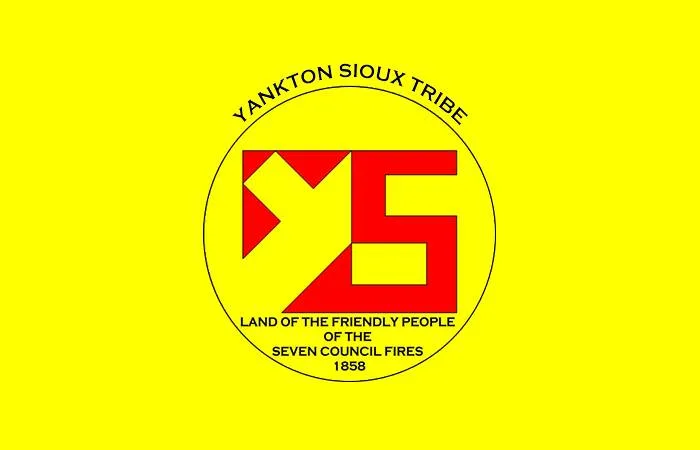
The Ihanktonwan Dakota, Dwellers or People at the End of the Horn, have walked Mother Earth since time immemorial, carrying the sacred responsibility of peacemaking, diplomacy, and unity among nations. We are part of the Oceti Sakowin, the Seven Council Fires, a living embodiment of ancient wisdom that stretches far beyond the borders now imposed upon them.
Our name—Ihanktonwan, People at the End of the Horn—speaks to our role as those who stand at the threshold, guide, and ensure that what is broken may be mended.
The Roots of the Ihanktonwan: Keepers of the Peace
Before the encroachment of settlers, treaties, and borders that sought to divide what was once whole, the Ihanktonwan lived along the powerful currents of Mníšoše, the Missouri River. Our lands stretched across the prairies of what is now South Dakota, Nebraska, Minnesota, and Iowa. In this vast and bountiful territory, we thrived in balance with the land, the buffalo, and the extraordinary life cycles.
Our place within the Oceti Sakowin is unique. Traditionally we are the bridge between the Eastern Dakota and the Western Lakota, mediating disputes, forging alliances, and ensuring harmony among their people. But our influence extended beyond their nation. We were known to the Ponca, Omaha, Arikara, Cheyenne, and other nations as skilled negotiators, able to bring warring sides together and restore the balance when it was threatened.
This role was not simply a choice. This role is a sacred duty. Our Ihanktonwan Oyate understood that peace was not just an agreement between nations—it was a way of being, a law of existence, something woven into the very fabric of the universe by Wakan Tanka, the Great Spirit.
The First Treaty and the Beginning of Betrayal
As settlers pushed westward, the U.S. government sought to negotiate with the Oceti Sakowin. The Ihanktonwan, true to their nature as peacemakers, were the first to sign a treaty with the United States: the Treaty of Fort Laramie in 1851. This treaty recognized the vast lands of the Dakota people, acknowledging their sovereignty and promising that our ways of life would be respected.
However, as history has shown, the ink on these treaties was barely dry before the U.S. government broke them. 1858, under intense pressure, the Ihanktonwan were forced to cede millions of acres of our homeland and confined to a reservation along the Missouri River. We were told this land would be ours forever.
Yet, forever did not last long.
The Loss of Land and the Drowning of a People
With each passing decade, more land was taken. The government imposed policies aimed at erasing our Dakota way of life—boarding schools, forced assimilation, and suppression of language and ceremony. However, perhaps one of the most significant wounds came in the 1940s and 1950s when the U.S. government dammed the Missouri River under the Pick-Sloan Plan.
Entire villages were drowned, including our home community of White Swan. Burial grounds, sacred sites, and the very lands where generations had been born and buried disappeared beneath the rising waters. Homes, farmland, and the heartbeat of the Ihanktonwan Oyate were taken, yet again, in the name of "progress."
And yet—we have endured.
Because the Ihanktonwan are more than the land they stand on, stolen treaties or flooded lands cannot erase our identity, teachings, and role as peacemakers and bridge-builders.
2025: The Ihanktonwan and the Path of Global Peacemaking
Now, in 2025, the role of the Ihanktonwan has expanded beyond the plains of Dakota, beyond the borders of the United States, and even the bounds of the Oceti Sakowin. Their ancient responsibility, their duty since immemorial, has become a global calling.
The world is in crisis. War, division, environmental destruction—humanity stands at a breaking point. But as they have always done, the Ihanktonwan stand at the threshold, guiding the way forward.
This is no longer just about treaties. This is no longer just about one person.
The teachings of the Ihanktonwan are now engaged in conversations on a global scale—at the United Nations, in climate justice movements, and in the struggle for Indigenous sovereignty worldwide. Their diplomacy is no longer just between nations of the plains. Their diplomacy is between the world's leaders, the world's faith traditions, and the movements for peace and justice rising in every corner of Mother Earth.
This is a manifestation of the Ihanktonwan, Albino White Bull Buffalo Prophecy fulfilled by Owl Man, Brown Bear, and more than 300 other Ihanktonwan under the leadership of Stuck By the Ree.
This prophecy foretold that a great spiritual wintertime was coming and before it a White Albino Bull Buffalo would appear. It was promised that if this White Buffalo gave it life, this sacrifice, the memory of this prophecy and it's fulfillment, we survive the bitter winter and in the new Spiritual Springtime we would spiritually stronger and wiser that ever. Our only challenge is the disunity caused by the divide and conquer strategies of colonization and physical and cultural genocide.
All related Ihanktonwan’s, including all our hunka relatives, like the Peoples of Chief’s Gall’s and Mad Bear, are the direct recipients of this prophecy. As well as, our Hunka and other Relatives like the Carsons, Morales, Wolter's, Goodall's, St. Georges, Browns, Georges, Cadotte's, Fleury's, Pease's, Lindeman's, Strong Heart's Locke's, Fast Horses, and many others.
Grandmother Ella Deloria told us that the greatest qualities of a Dakota is to be a good relative. I also learned many years ago that we must not rest until we make every one we feel spiritually close and connected too, a bother or sister, a niece or nephew, a grandmother of grandfather, or a cousin, of a granddaughter and grandson, and then you will know exactly how to treat them.
The Sacred Union of the Condor, Hummingbird, Quetzal, and Eagle has begun, where the Indigenous nations of the North and South rise together, as prophesied, with one voice, in unprecedented, unified action.
The call of the Ihanktonwan now echoes alongside the voices of the Amazonian elders, the Maori wisdom keepers, the Tibetan monks, the African griots, the Indigenous communities of Australia, the Pacific, SE Asia, and the spiritual leaders of every tradition who still remember the old ways.
The End and the Beginning
The Ihanktonwan, the People at the End of the Horn, were always destined to stand at the threshold of significant change.
But this name does not mean an end in how the Western world understands it. In the way of the Dakota, every end is also a beginning.
And now, as humanity faces the greatest crossroads in its history, the Ihanktonwan are still here. Still standing. Still peacemakers. Still guiding the way.
Their message is clear:
There is no future in division, survival in greed, and peace in domination.
The only way forward is unity. The only way forward is balance. The only way forward is to remember who we are.
So, as the world's nations seek a way forward, they are now looking to the Ihanktonwan Oyate.
The People at the End of the Horn.
The People of the End.
The People of the Beginning.
The People who have carried the sacred way of peace through every storm, loss, and attempt to erase them.
At this time, I would like to honor some relatives who are directly related by blood to this Prophecy and who have passed to the Other Side Camp, including Dekshi’s Greg Zephier, Percy Archambeau , Henry Spotted Eagle, Chuck Keeler, Joe Shields Sr., and Jr, Joe Abdu Sr., Thansi’s Russell Means, Galen Drapeau Sr., and Loren Zephier-Chief Golden Light Eagle, and other relatives, who are directly related by blood to the Prophecy, who dedicated their lives to uplifting the People, within and without the Oceti Sakowin and beyond the US Border.
Their prayers, songs, ceremonies, and dedication to serving and uplifting the People continue to echo across Mother Earth and the Universe.
And in their voices, in their songs, in their prayers, the whole world can hear their call:
Unite humanity. Restore Mother Earth. The time is now.
Lala, Deksi, Ate, and Brother Phil -Mitákuye Oyás’iŋ. We are all related.
Šúŋkmanu Hé Miyédo! Čhaŋnúpa Sápa Hé Miyédo!
Ĥeȟáŋ Wičhášta/Delória Tiwašpaye, Iháŋktȟuŋwaŋ, and Chickasaw Nations