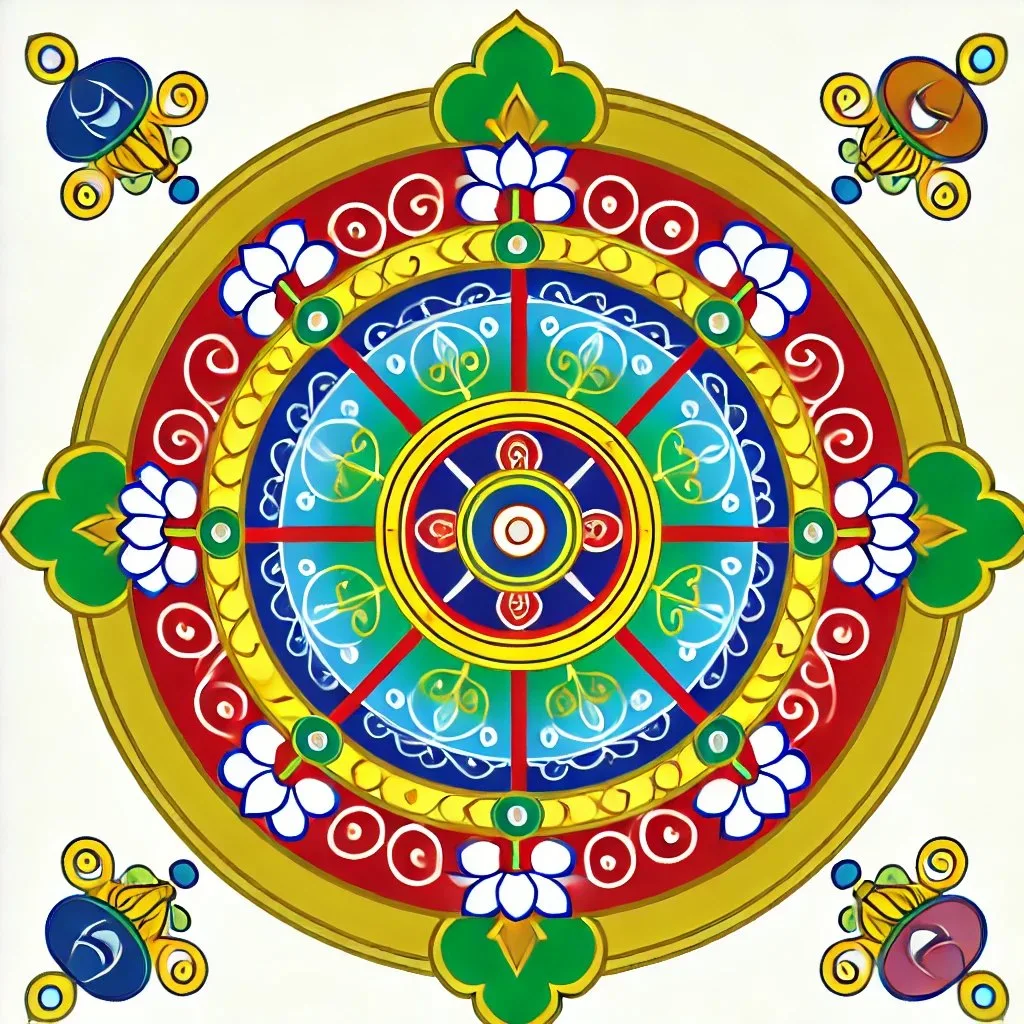
The Buddha's Four Noble Truths and the Noble Eightfold Path are profound teachings that guide individuals toward spiritual liberation and enlightenment.
When interpreted through Dakota symbolism and language, these teachings gain an additional layer of meaning, reflecting the universal principles shared across cultures. This synthesis of Buddhist and Dakota wisdom highlights the interconnectedness of all life, the pursuit of harmony, and the importance of spiritual integrity.
The Buddha's Four Noble Truths in Dakota Symbolism
The Truth of Suffering (Dukkha) - Wačháŋtuŋyaŋ (Hardship/Challenges) represents the unavoidable challenges that life presents. The Šúŋkawakȟáŋ (horse) symbolizes the journey through these hardships, as the horse is a companion in both travel and burden. The čhaŋnúŋpa (sacred pipe) reminds us that suffering is a shared experience, one that binds communities together in mutual acknowledgment and respect.
The Truth of the Origin of Suffering (Samudaya) - Wówašake (Cause/Power)reflects the roots of suffering, often found in attachment, desire, and ignorance. The Tȟatȟáŋka (buffalo) symbolizes the powerful forces within us—forces that can either nourish or lead us astray. Just as the buffalo is central to life, understanding and managing our desires are crucial to preventing suffering.
The Truth of the Cessation of Suffering (Nirodha) - Wówašte (Goodness/Peace) embodies the end of suffering and the realization of peace. The Ȟokšíčhoka (sacred hoop) represents the completion of a spiritual journey, symbolizing wholeness and the potential for a life free from suffering. Mní (water) signifies the purification of the spirit, leading to a state of tranquility where suffering no longer holds sway.
The Truth of the Path to the Cessation of Suffering (Magga) - Wókičhuŋze (The Way/Path), the path to overcoming suffering, is symbolized by the čhaŋnúŋpa (sacred pipe) and Tȟokáhe (the first or leader). These symbols guide individuals on their spiritual journey, with Wí (the sun) illuminating the way forward, representing wisdom, integrity, and right action.
The Buddha's Noble Eightfold Path in Dakota Symbolism
Right Understanding (Sammā ditthi) - Wóčhekhiya, the act of prayer and seeking understanding, mirrors the clarity of vision needed to perceive the Truth. The morning star (Wičháȟpi Wahúŋkȟaŋ) symbolizes this guiding light, leading to the wisdom that all life is interconnected.
Right Intention (Sammā saṅkappa) - Waóhola signifies the purity of intention and the respect necessary to live in harmony with others. The Ȟokšíčhoka (sacred hoop) symbolizes the unity and interconnectedness of life, reflecting the intention to live with compassion and love.
Right Speech (Sammā vācā) - Wówačḥiya, the practice of truthful and respectful speech, is symbolized by the čhaŋnúŋpa (sacred pipe). The sacredness of words is emphasized, as language is used to build peace and understanding within the community.
Right Action (Sammā kammanta) - Wóksape, or wisdom, guides the practice of right action. The Tȟatȟáŋka (buffalo) symbolizes strength, humility, and the sustaining of life. Right action is characterized by integrity and ensuring that one's deeds contribute positively to all beings.
Right Livelihood (Sammā ājīva) - Wówašte, the practice of goodness and kindness, is represented by Makȟá (the earth). This teaches that livelihood should honor and protect Mother Earth, ensuring that our way of life is sustainable and nourishing to the community.
Right Effort (Sammā vāyāma) - Waókiye, meaning to help or assist, symbolizes the effort to cultivate positive mental states. Wí (the sun) reflects the persistent effort to dispel ignorance and illuminate the path of diligence and perseverance.
Right Mindfulness (Sammā sati) - Wówašiŋg̣a denotes awareness and thoughtfulness. Mní (water) represents the purity and clarity of mind necessary for mindfulness, flowing with the natural currents of life and staying present in each moment.
Right Concentration (Sammā samādhi) - Wóyakapi, the practice of reflection and meditation, is symbolized by Čhaŋtéwašte (the excellent heart). This represents the focused meditation that leads to spiritual unity and deep inner peace, centered in connection with Wakȟáŋ Tȟáŋka (the Great Spirit).
Integrating the Buddha's teachings with Dakota symbols and words offers a rich, interconnected understanding that bridges traditions, emphasizing the universal pursuit of balance, harmony, and spiritual enlightenment.