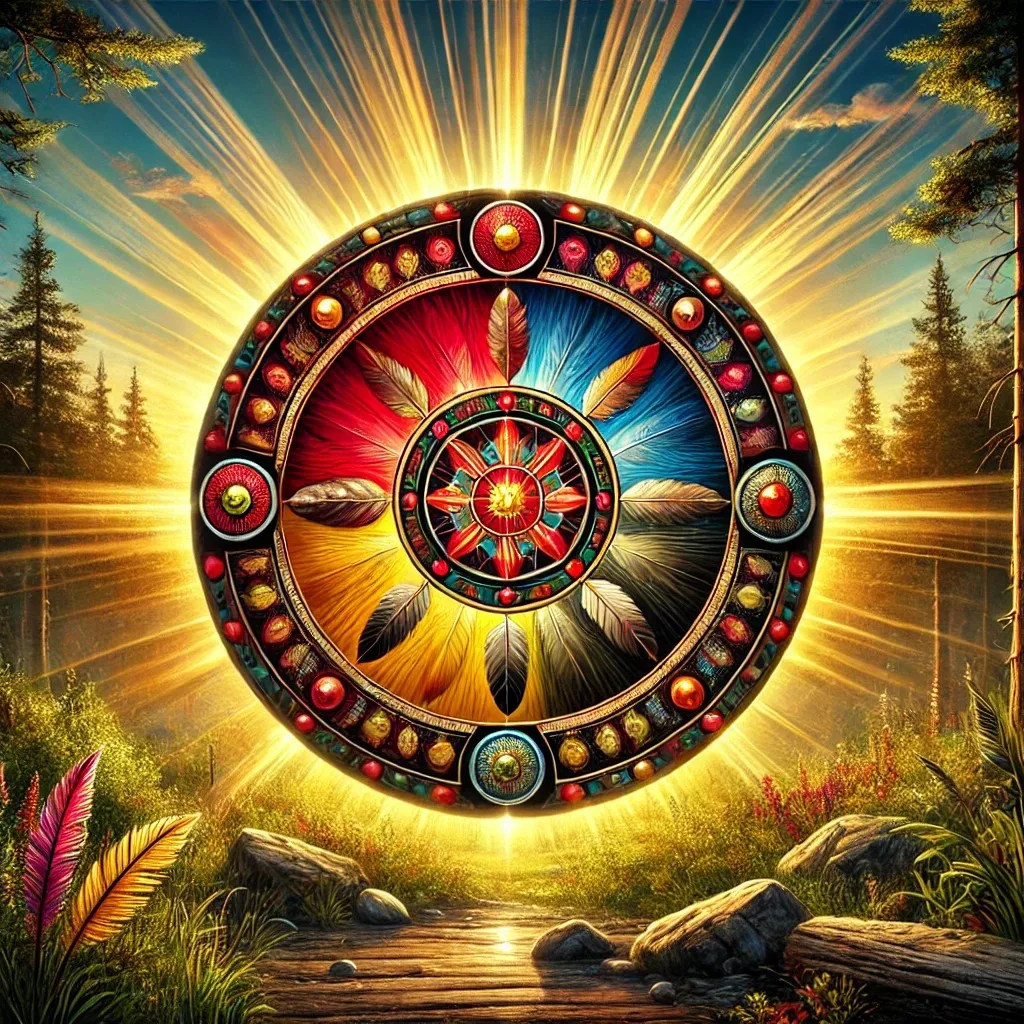
From the Indigenous perspective, the Five Ways of Understanding can reflect the sacred teachings of balance, humility, interconnectedness, and emotions, all guided and unified by Divine Grace, sometimes called Spirit or Volition.
These ways represent the harmony of the physical, mental, emotional, and spiritual realms woven together within the sacred circle of life and the power of volition. They emphasize the importance of understanding through interconnected pathways while acknowledging the Creator's guiding presence at the center.
1. The Senses: Connection to the Physical World
The senses—sight, hearing, touch, taste, and smell—are gifts from the Creator that ground us in the physical realm. They allow us to experience the beauty and diversity of creation. However, they are not infallible and can mislead, like the mirage in a desert. This reminds us of the teaching of humility: to recognize our perceptions' limits and seek deeper understanding beyond what is immediately visible.
From an Indigenous perspective, the senses also evoke awe and wonder as they connect us to Mother Earth and her cycles. The rustling of leaves, the warmth of the sun, and the fragrance of sweetgrass are not merely sensory experiences but sacred reminders of our place in the circle of life.
2. Emotions: The Voice of the Heart
Emotions are the sacred fire that brings warmth and meaning to human experience. They connect us and to all our relations, fostering compassion (wóunsila) and joy (čhąŋte wíyukha, "a happy heart"). Like the senses, emotions must be honored and guided with care, for they can either uplift or overwhelm.
Indigenous teachings recognize emotions as a pathway to understanding that bridges the physical and spiritual worlds. When emotions are aligned with the love of the Creator, they become a powerful force for healing and unity. Sharing emotions through ceremony, storytelling, or acts of kindness transforms them into sacred expressions of the heart’s connection to the divine.
3. Intellect: The Flowing River of Reason
The intellect, or wóksape (wisdom), is revered as a gift for reasoning and exploring the mysteries of existence. Like the flowing river, it carves new pathways and shapes the land, constantly seeking greater understanding. Yet, reason alone is incomplete; it must be balanced with reverence for the unseen and unknown.
The teaching of humility reminds us that intellect without spiritual guidance can lead to confusion and division. True understanding arises when the mind works in harmony with the heart, the senses, and the spirit, acknowledging the interconnectedness of all knowledge.
4. Tradition: The Wisdom of the Ancestors
Tradition is the voice of those who came before us, carried forward in sacred stories, songs, and ceremonies. It connects us to the wisdom of our ancestors, grounding us in a shared identity and a deeper understanding of the world. However, tradition must remain dynamic and open to renewal and reinterpretation in light of evolving experiences and insights.
Gratitude (wóphila) is the guiding emotion of tradition, as we honor the sacred gifts passed down through generations. From an Indigenous perspective, tradition teaches us the importance of belonging, reciprocity, and the interconnectedness of all our relations. Through tradition, we learn to walk in balance with Mother Earth and one another.
5. Divine Grace/Spiri/Volition: The Sacred Center
At the center of the circle lies Divine Grace, sometimes called Spirit or volition, the guiding presence of Wakan Tanka, the Great Spirit, who unites and harmonizes the senses, emotions, intellect, and tradition. Through this sacred connection, we find clarity, purpose, and unity. Divine Grace transcends human limitations and aligns us with the Creator's will.
The teaching of love (wówačhiŋ) radiates from this sacred center, fostering the oneness of humanity and the healing of all creation. Spirit is the source of balance and interconnectedness, the force that transforms knowledge into wisdom and action into sacred offerings.
A Sacred Circle of Comprehension
The Five Ways of Understanding—senses, emotions, intellect, tradition, and Divine Grace—form a sacred circle, each part vital to the whole. They remind us that true understanding arises from balance and harmony among these ways of learning, guided always by the Creator. Through this framework, we see the interconnectedness of all life, the necessity of humility, and the power of love to unite and heal.
From my Indigenous perspective, the Five Ways of Understanding are not just ways of knowing but ways of being—practices that reflect the sacred teachings of unity and reciprocity with all creation. This perspective calls us to walk the Red Road with humility and gratitude, honoring the Creator’s guidance as we seek to unite humanity and restore Mother Earth.
Mitákuye Oyás’iŋ—We are all related!
Šúŋkmanu Hé Miyédo! Čhaŋnúpa Sápa Hé Miyédo!
Ĥeȟáŋ Wičhášta/Delória Tiwašpaye, Iháŋktȟuŋwaŋ, and Chickasaw Nations.