
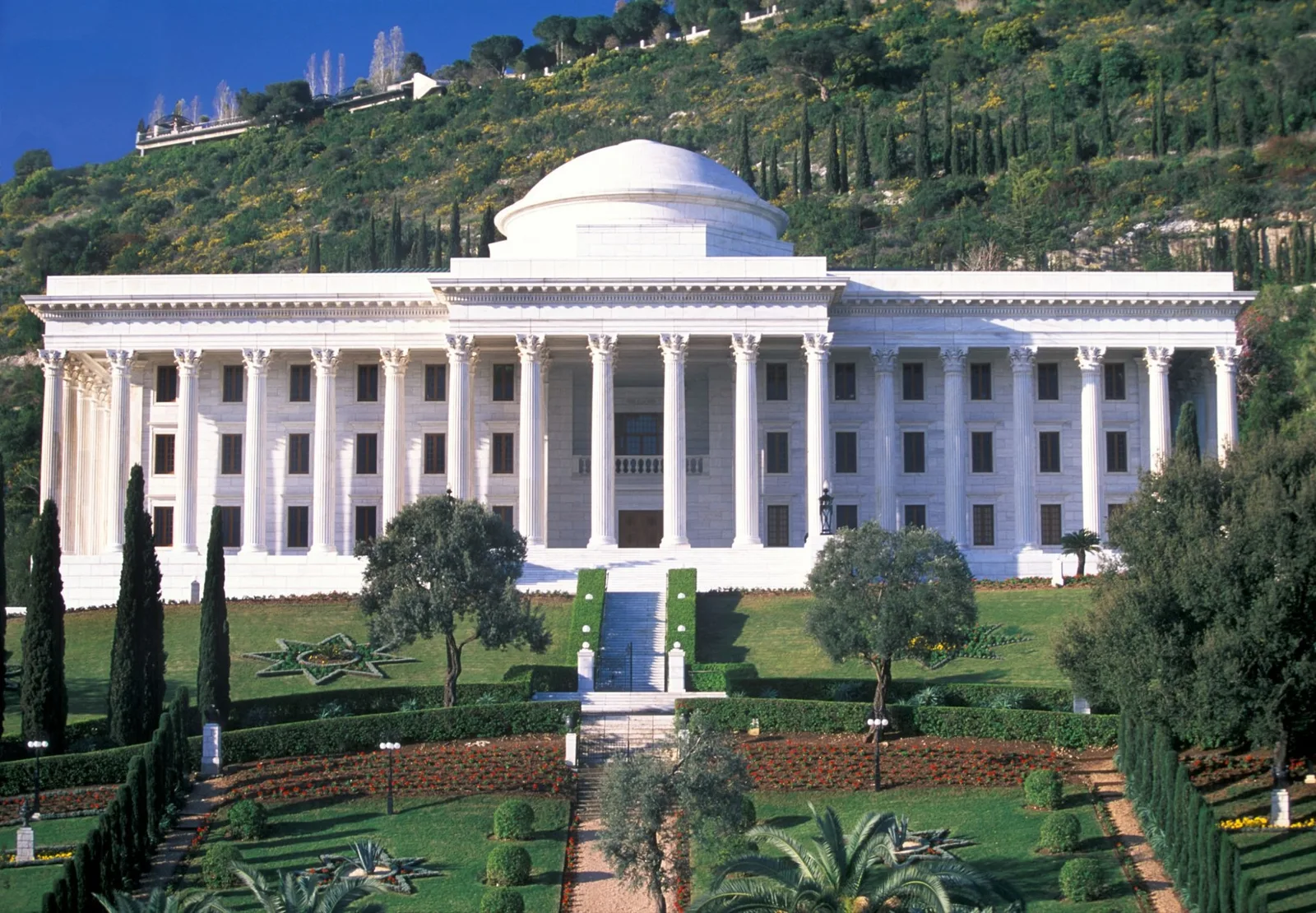
In recent years, the Universal House of Justice has repeatedly called the Bahá’í world to move beyond inward-looking religious community life and to become an active, healing, constructive presence in the wider life of humanity. The message is not simply that Bahá’ís should teach the Faith in a narrow sense, nor that they should stand apart from the suffering of the world.
The message is that the followers of Bahá’u’lláh must become builders of spiritual and material civilization, working shoulder to shoulder with neighbors, families, youth, leaders, institutions, and “like-minded groups and organizations” for the upliftment of all.
The House of Justice has described the aim of the present series of Plans as the release of the “society-building power” of the Faith. This means learning how to “raise vibrant, outward-looking communities,” contribute to the betterment of society, and build relationships of trust with all who long for justice, unity, and healing. This is a sacred summons to action in the world, not escape from the world.
In the 30 December 2021 message launching the Nine-Year Plan, the House of Justice made clear that the Bahá’í community must see “everyone as a potential partner to collaborate with.” This is a profound statement. It means that Bahá’ís are not to divide the human family into insiders and outsiders, believers and nonbelievers, and the worthy and the unworthy. Rather, every soul, every people, every community, every organization sincerely seeking the betterment of the world can become a service partner.
The House of Justice also speaks of Bahá’ís seeking opportunities to “support the activities of like-minded groups and organizations.” This is direct guidance for collaboration. It confirms that Bahá’ís should not wait for all constructive work to be carried out under Bahá’í names or Bahá’í institutions.
Wherever people are laboring for peace, education, the protection of the environment, the empowerment of women, the upliftment of children and youth, public health, justice, or community well-being, Bahá’ís can bring friendship, principle, consultation, humility, and service.
The Riḍván 2022 message strengthened this outward-looking vision by describing the global conferences that brought together “many other well-wishers of humanity” who shared a “longing to foster unity and better the world.” This phrase is very important. It recognizes that the longing for unity is not confined to Bahá’ís.
The Spirit of our Creator is stirring the hearts of many peoples, cultures, faiths, and communities. The role of the Bahá’í community is not to dominate this movement, but to serve it, nourish it, learn within it, and help give it coherence.
The Riḍván 2023 message went even further. It said the Bahá’í community increasingly sees “kinship, not difference.” It described gatherings where Bahá’ís consulted not only with individuals and families but also with “local leaders and authority figures.” These gatherings created the conditions for a “transformative conversation about spiritual and social progress.”
This is a direct invitation to build bridges with the whole of society: with civic leaders, educators, public servants, Indigenous leaders, youth, artists, families, and all who bear responsibility for the well-being of their people.
The same message is also named practical fields of action: “improving public health, protecting the environment,” and drawing on the power of the arts. This shows that the House of Justice is not speaking only about abstract spiritual ideals. It calls for learning and action under the real conditions of human life: health, land, education, culture, environment, family, community, and the healing of social relationships.
In the Riḍván 2024 message, the House of Justice responded to the worsening condition of the world by saying that “heartfelt concern” must become a sustained effort to build communities that “offer hope in place of despair, unity in place of conflict.”
This is one of the clearest recent statements of the Bahá’í response to humanity’s suffering. The response is not despair, withdrawal, argument, or condemnation. The response is to build. The response is to create living examples of unity. The response is to become people who generate hope.
That same message gives a direct and beautiful command: “Extend then to everyone the hand of friendship.” It also speaks of “common endeavor, shared service, collective learning.” These words summarize the path. Bahá’ís are to go out into the world with open hands, not closed fists; with a spirit of service, not superiority; with a willingness to learn, not the assumption that they already possess every answer.
In its May 2024 message to the Institute for Studies in Global Prosperity, the House of Justice described Bahá’ís as “true practitioners of peace.” This is not a passive identity. A practitioner does the work. Peace is not merely admired, prayed for, or discussed. It is practiced through relationships, consultation, education, community-building, justice, healing, and constructive action.
The same message affirms that “every individual has agency” and the “capacity to play a part.” This makes the call universal. No one is too small, too young, too old, too poor, too busy, or too wounded to contribute something to the healing of the world.
The Riḍván 2025 message reports that “grassroots engagement with society” has made major strides. It mentions initiatives in education, agriculture, health, the environment, women’s empowerment, and the arts. It also notes that civic leaders and others responsible for education and social development are “seeking to collaborate in the search for practical solutions.”
This confirms that the world itself is beginning to recognize the constructive power of Bahá’í-inspired action when it is humble, practical, principled, and rooted in genuine concern for the whole community.
The 31 December 2025 message to the Counselors offers still more direct guidance. It says that Bahá’ís and Local Spiritual Assemblies are “open to working alongside the institutions of society.” It also describes relationships with local government expanding into a “sense of shared mission,” even to the point of becoming “a people moving as one.”
This is a powerful vision. It shows that Bahá’í institutions, while avoiding partisan politics, are not meant to be isolated from the people’s needs. They are to become trusted sources of moral insight, consultation, service, and unity.
The Riḍván 2026 message brings this same theme into the present moment. It says the conversation must be extended to “ever-widening circles of friends, neighbours, and other like-minded souls.” It says Bahá’ís seek to “collaborate with others and to learn together,” while pursuing social change “without political ambition or self-interest.”
This is the balance: deep engagement with society, but without partisan entanglement; courageous service, but without ego; moral clarity, but without condemnation; collaboration, but without losing the spiritual purpose of the Faith.
Taken together, these messages form one clear direction. The Bahá’í community is being asked to become a healing, learning, outward-looking, society-building people. The House of Justice is calling the friends to enter the world’s pain without being overcome by it.
To work with others without competing for power; to uplift communities without imposing; to collaborate without partisanship; to serve without self-interest; and to build patterns of life that show humanity another way forward.
The heart of the message is this: Bahá’ís are not called to stand above society, apart from society, or against society. They are called to move within society as servants of unity, practitioners of peace, builders of hope, and humble collaborators in the spiritual and material upliftment of humankind.
The Bridge to Indigenous Peoples and the Vision of ‘Abdu’l-Bahá
Only after this universal guidance is clearly understood can we fully appreciate its special importance for Indigenous peoples. The call of the Universal House of Justice is to all humanity, and to the Bahá’ís everywhere, to arise and enter the life of society with love, humility, service, and collaboration. But within this universal movement, there is a sacred and particular vision given by ‘Abdu’l-Bahá concerning the Indigenous peoples of the Americas.
‘Abdu’l-Bahá called the friends to attach great importance to the Indigenous population of America. He foresaw that Indigenous peoples, when educated, guided, and illumined by divine teachings, would become so luminous as to enlighten the whole world. This is not a small or secondary statement. It is a world-embracing spiritual vision.
This means that the work before the Bahá’ís is not merely to reach inward toward those already within the Bahá’í community. It is to reach outward with love and respect to all Indigenous peoples, whatever faith, sacred tradition, church, ceremony, spiritual path, or cultural inheritance they follow. The key is not religious narrowness. The key is relationship. The key is not control. The key is recognition. The key is not assimilation. The key is illumination.
Indigenous peoples are not simply another population to be included in a program. They carry spiritual gifts, ancient covenants, sacred memories, responsibilities to Mother Earth, and teachings of relationship that humanity desperately needs at this hour. They carry the wisdom of the council fire, the sacredness of language, the strength of Elders, the vision of youth, the dignity of women, the responsibilities of clan and family, and the understanding that all life is related.
The world is suffering because it has forgotten the relationship. It has separated the human being from the Earth, knowledge from wisdom, religion from love, economics from justice, and power from humility. Indigenous peoples, standing in the fullness of their spiritual dignity, can help humanity remember the original instructions: that we are one human family, living on one Mother Earth, under one Creator.
Therefore, the guidance of the Universal House of Justice and the vision of ‘Abdu’l-Bahá belong together. The House of Justice calls the Bahá’ís to become outward-looking, society-building, peace-practicing servants of humanity. ‘Abdu’l-Bahá reveals that Indigenous peoples carry a special spiritual capacity to illumine the whole world. Together, these teachings call for a new movement of relationship, respect, accompaniment, healing, and shared service.
This sacred work must be carried out with humility. Bahá’ís must approach Indigenous peoples not as objects of teaching, but as relatives, partners, protagonists, and bearers of spiritual gifts. The purpose is not to erase what Indigenous peoples carry. The purpose is to honor it, walk beside it, learn from it, and help create conditions in which that light may shine ever more fully for the healing of the whole human family.
The call, then, is clear. Bahá’ís are to go out into society and work with all people of goodwill. They are to build with neighbors, leaders, families, youth, institutions, and communities. And in this great movement of service, Indigenous peoples must not be treated as peripheral. They are central to the fulfillment of a world-enlightening vision foreseen by ‘Abdu’l-Bahá.
The hour has come to widen the circle. The hour has come to extend the hand of friendship. The hour has come to walk with all peoples, and especially to honor the sacred spiritual power of Indigenous peoples, so that together we may help illumine the path toward the oneness, healing, and peace of the whole human family.