The story of the 1962 Joe Gomez Election Campaign for Student Body President of Walla Walla High School unfolds in that rare space where youthful rebellion, deep questioning, memory, and lasting meaning all come together. It begins in Walla Walla, when I was 17, at the old Wa-Hi, where we, the Class of 1962, were the last to walk its halls before the high school moved in 1963.
In those days, there was a feeling, unspoken but widely shared, that we were somehow invincible, that life stretched endlessly ahead of us. Yet, not long after, reality came quickly and hard. Friends and classmates were being wounded and killed in Vietnam, and we began to understand that we were neither forever nor invincible.
Now, looking back from many years later, as more of our classmates make their journey to what I call the “Other Side Camp,” those of us still here recognize something profound: we have already lived beyond expectation. Every day forward feels like a gift, something extra, something to be grateful for.
It was in that earlier time, before life revealed its deeper truths, that the idea of Joe Gomez was born. One day, while driving my old pickup truck to track practice in March 1962, a small group of us found ourselves in that familiar space of youthful imagination, half boredom, half creativity, and just enough rebellion to make something happen.
We decided, in that old pickup, to launch a campaign for Student Body President. There was just one small detail that made it all the more interesting: Joe Gomez did not exist.
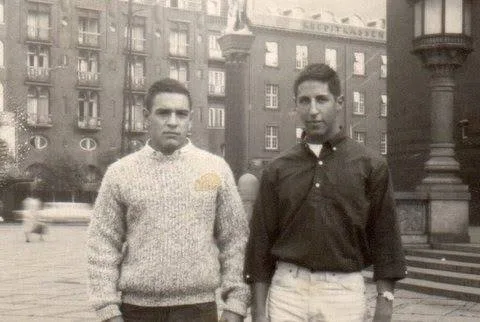
That was the fun of it. Mike Friedman, my primary co-conspirator, was right there in the middle of it, the same Mike who I would later, after graduating from High School, hitchhike to Europe. In a way, this campaign was part of a larger spirit of adventure that was already beginning to shape our lives.
There was also something else quietly present in those days, something we didn’t always speak about directly but could feel all around us. The attitudes toward our Mexican relatives and people of Mexican descent were often shaped by prejudice and misunderstanding. And so, whether fully conscious or not, choosing the name
Joe Gomez carried a subtle meaning. It was, in its own humorous and creative way, a quiet statement, lifting up a name that might otherwise have been judged or overlooked, and placing it at the very center of admiration and excellence. Wrapped in laughter, it also challenged the attitudes of the time.
From there, we began to build Joe Gomez into the perfect candidate. We told everyone he was a new student who had just arrived in Walla Walla. And what a student he was. He could run the 100-yard dash in ten seconds flat, broad jump over twenty feet, run the 200 yards in under twenty-three seconds, and pole-vault much higher than I, and I was the Jr. Olympics Pole Vault Champion and Record Holder, for our region, at that time.
As well, Joe Gomez was super intelligent, warm, friendly, and very handsome. In other words, he was everything anyone could want in a leader. And because no one had ever seen him, no one could disprove anything we said. That was part of the magic; Joe Gomez became whatever people imagined him to be.
For weeks, we carried the campaign forward. At first, we put up posters openly. Then, as the administration, especially Vice-Principal Kramer and our Student Body President, “Speedy” Folsum, became increasingly unhappy, we got more creative.
We would ask to leave class, supposedly to go to the bathroom, and along the way, we would put up posters. They had to be small enough to sneak out of the classroom.
Sometimes we would stash them in the bathrooms, then come back later and post them. During breaks and lunch hours, the administrators would tear them down. And just as quickly, we would put them back up again.
It became a kind of rhythm, almost like a game, but beneath it all, something else was growing. People were paying attention. Students were talking. The campaign for a person who did not exist was becoming the most alive thing at Wa-Hi.
Eventually, Vice-Principal Kramer called me into his office, convinced that I was one of the originators and ring leaders. I still smile when I think about that. I have no idea how he came to such a conclusion. But he was serious.
He told me that if the Joe Gomez campaign did not end, he would not allow me any school time to visit colleges or universities I might want to attend. That was no small threat. And yet, we did not stop. In fact, the opposition encouraged us to keep moving forward.
The day before the school-wide Student Body Election Assembly, we held a secret meeting at our old house on Mill Creek. Present were Mike Friedman, Ron Esselton, who was badly wounded in Vietnam, myself, and my father, who served as our elder advisor.
Together, we created the Joe Gomez Manifesto, a one-page statement that we are still searching for today. In essence, it said that Joe Gomez had decided to humbly withdraw from the election because he did not want to participate in a system based on personality and social status without the participation of all. We phrased it as” a bunch of sheep led by a Bo Peep.”
But we also made one thing clear: if Joe Gomez was attacked at the assembly, we would defend him. It was signed, the Joe Gomez Election Campaign.
Through what can only be described as a mysterious and highly effective network, we managed to print more than one thousand copies of the manifesto, somehow using the school’s own copying machines. How that happened remains a bit of a mystery. As we like to say, only the shadow knows.
At the same time, we developed a plan. If Mr. Kramer criticized Joe Gomez at the assembly, we would rush the stage, physically restrain him, and I would deliver a speech defending Joe Gomez as a reflection of our sovereign rights. Looking back, it is clear the plan was not fully thought through. And it is a very good thing that it never happened.
On the morning of the assembly, we organized junior and sophomore conspirators to distribute the Joe Gomez Manifesto at every entrance to Wa-Hi. I made sure that one copy went into the administration office mail slot for our principal, Mr. Tidrick, and another under Mr. Kramer’s door.
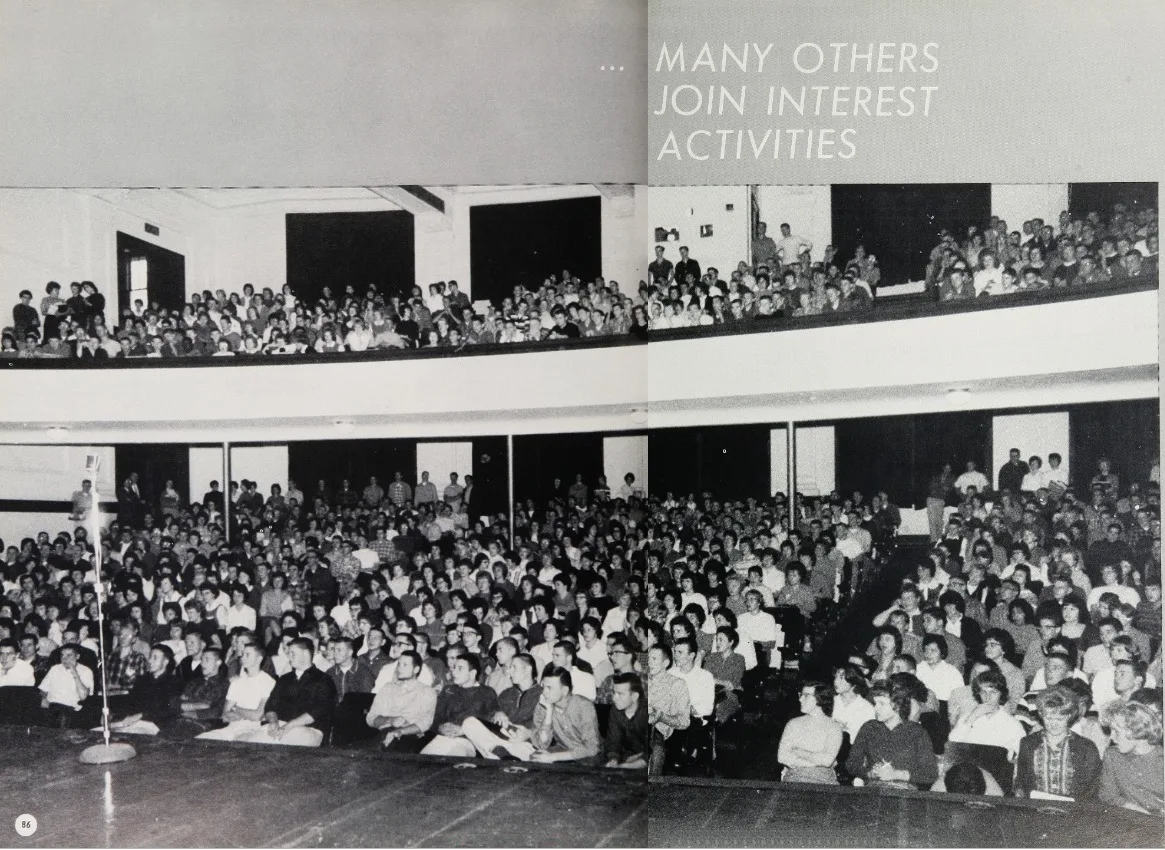
Inside the auditorium, more than 1000 students took their seats in the usual way, jocks and friends in the middle rows, seniors in the front, juniors behind them, and so on. I found myself sitting between Ed Weitz and Ron Bradstreet, literally perched on one leg of each, near where I appear in the old attached photograph, alongside my friend Mike Dunham, who has since made his journey to the Other Side Camp, and Ed Weitz.
What happened next was something none of us expected. As students read the manifesto, the auditorium grew very quiet. As they say, you could hear a pin drop. There was a feeling in the air, a kind of anticipation, a sense that something unexpected was about to unfold.
Then the curtains parted, and Principal Tedrick stepped onto the stage. Around his neck hung a sign that read: “I’m for Joe Gomez.”
In that moment, everything changed. The tension dissolved. The confrontation we had prepared for simply vanished. Principal Tedrick understood what was happening, not necessarily the details, but the spirit behind it. Looking back, I can say with full gratitude: he saved the day.
At the time, I remember feeling disappointed that our plan to rush the stage never happened. But with time, I have come to understand how fortunate that was.
Things unfolded in a way that preserved relationships rather than breaking them. Mr. Kramer and I later became friends. He even wrote me a strong letter of recommendation to the University of Washington. “Speedy, ” our Student Body President, and I made peace as well, and later we lived together at the University of Washington. What began as tension became connection.
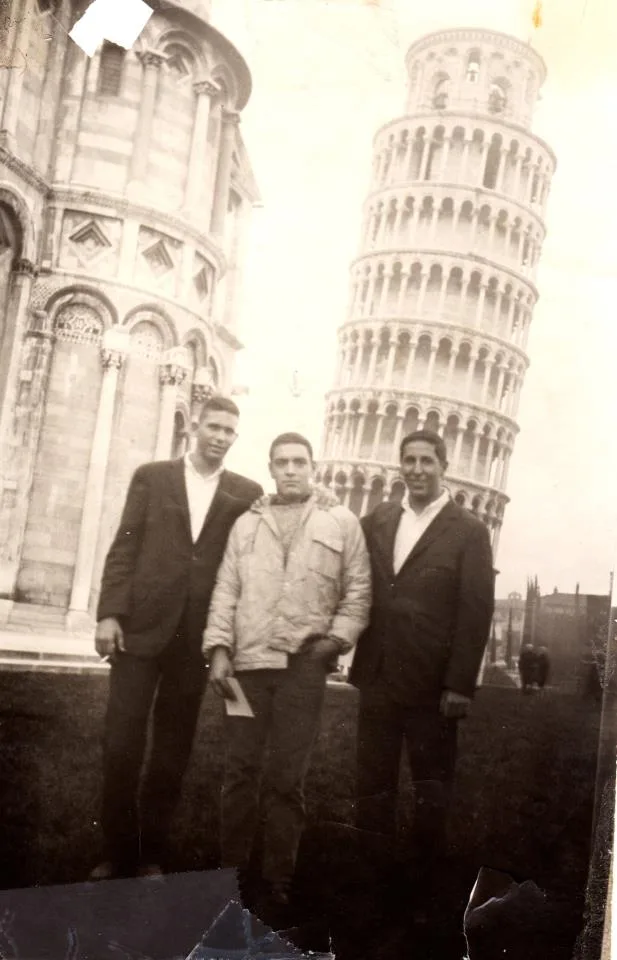
After Wa-Hi, life moved forward into our hitchhiking journey across the United States from Walla Walla to New City and then into Europe. It took 44 rides, and almost five days, some of them wild, like the Bible salesmen who took us through Nebraska and introduced us to a whole new level of colorful language. That journey became another chapter of our life’s journey, sometimes humorous, sometimes wild, sometimes deeply emotional and human.
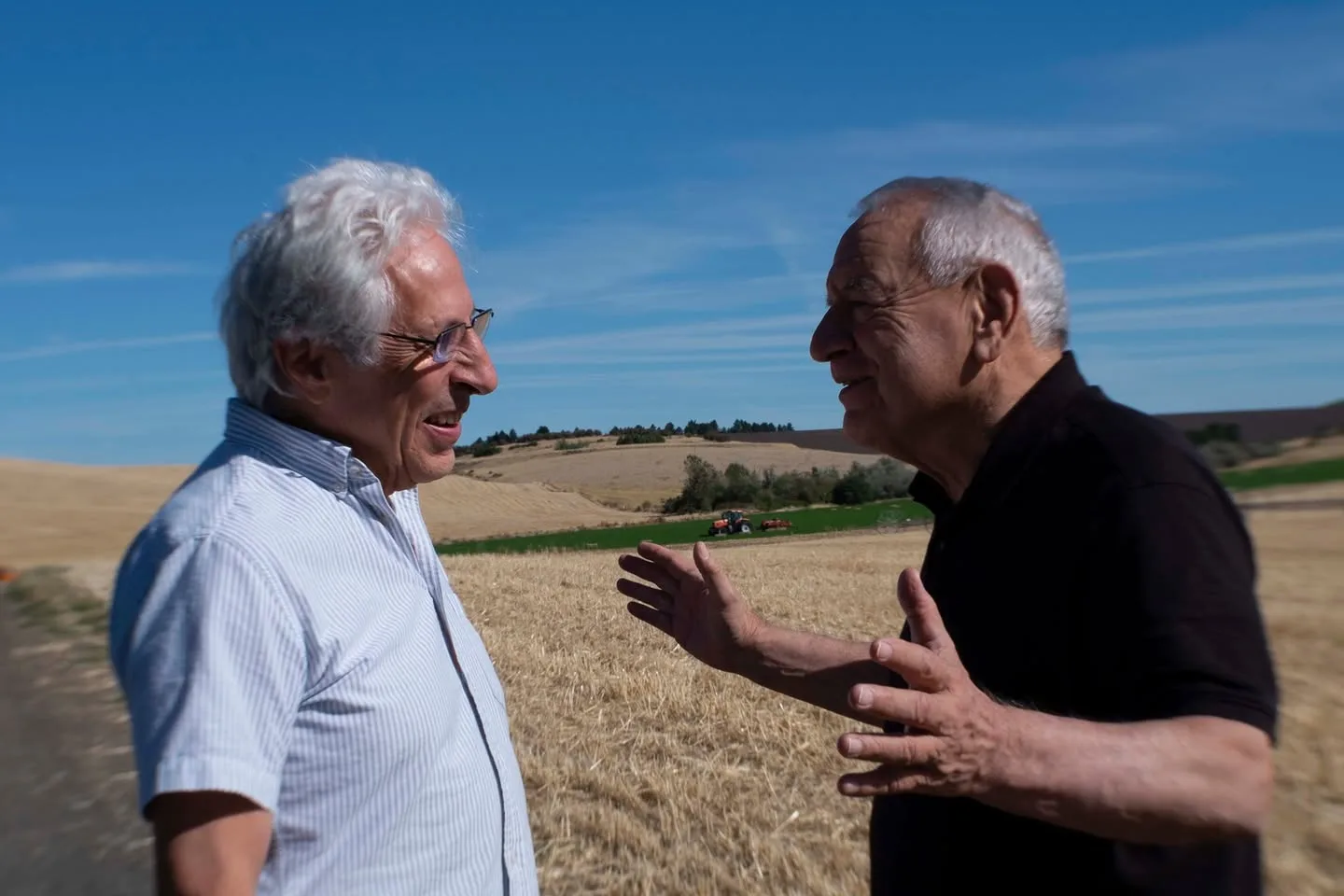
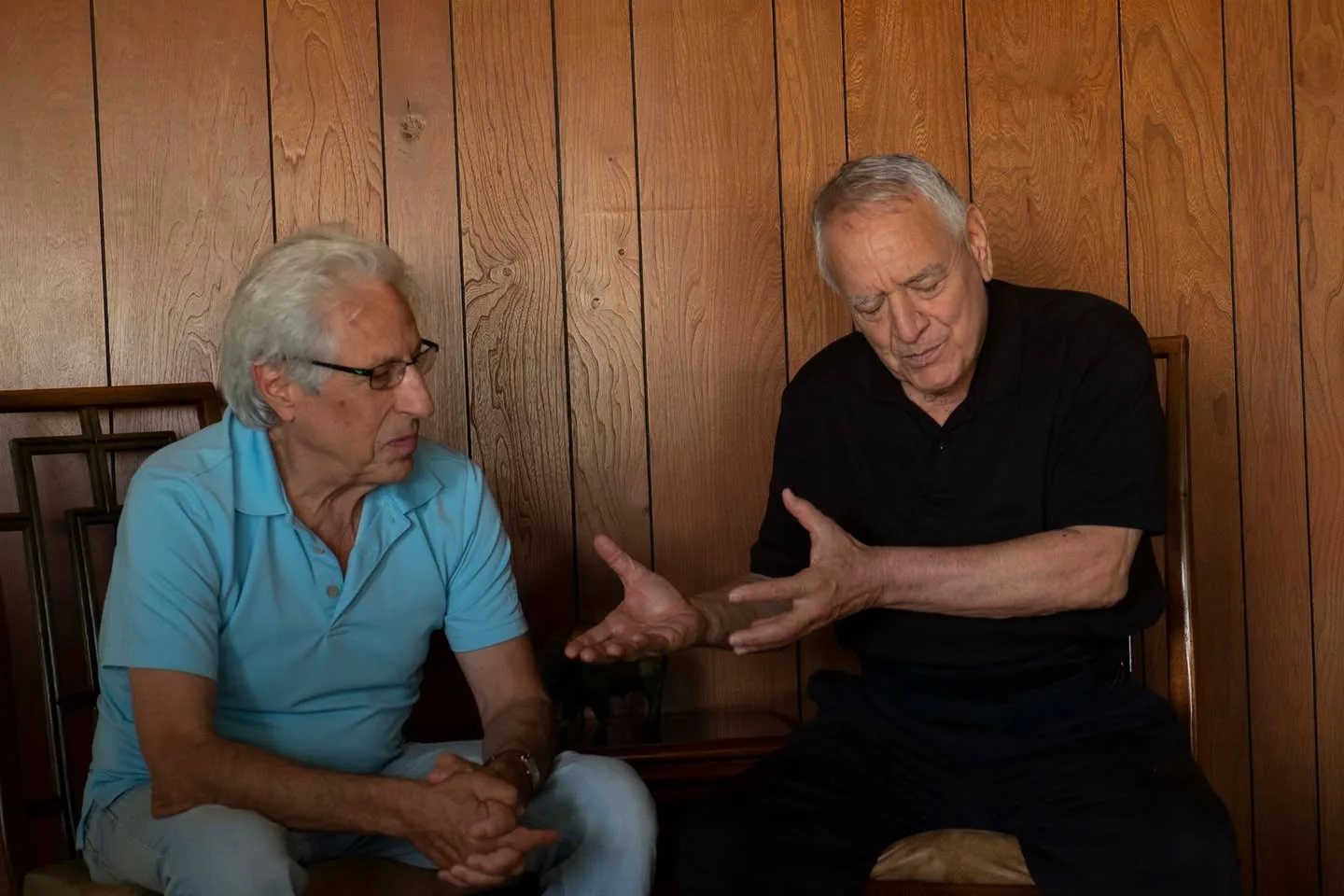
In 2019, Mike and I came together again at our old home on Mill Creek, spending three days being filmed by Dinah Morrison, the daughter of my classmate Dean Morrison and his beloved wife, Verdie. Dean sat nearby, laughing and cheering us on. Our friend of many years, Steve Allen, of Steve Allen Photography, captured still images.
As we revisited those memories, we laughed, we reflected, and we healed. Some will call parts of that journey we recorded “very wild,” and they were, but there was also something deeply freeing about letting go, about remembering, about feeling it all again.
And so this story, now being shaped into a series, carries something unique. It may be presented as a story, but it is not based on a true story. It is a true story.
In the end, Joe Gomez never existed. And yet, somehow, he revealed something very real. He gave us a way to question the system, express ourselves, bring people together, and even challenge the prejudices of the time.
What began as a humorous rebellion became something deeper: a reflection of voice, participation, dignity, and the courage to imagine something better. Sometimes, the most powerful truths do not arrive through seriousness alone. They arrive through laughter.