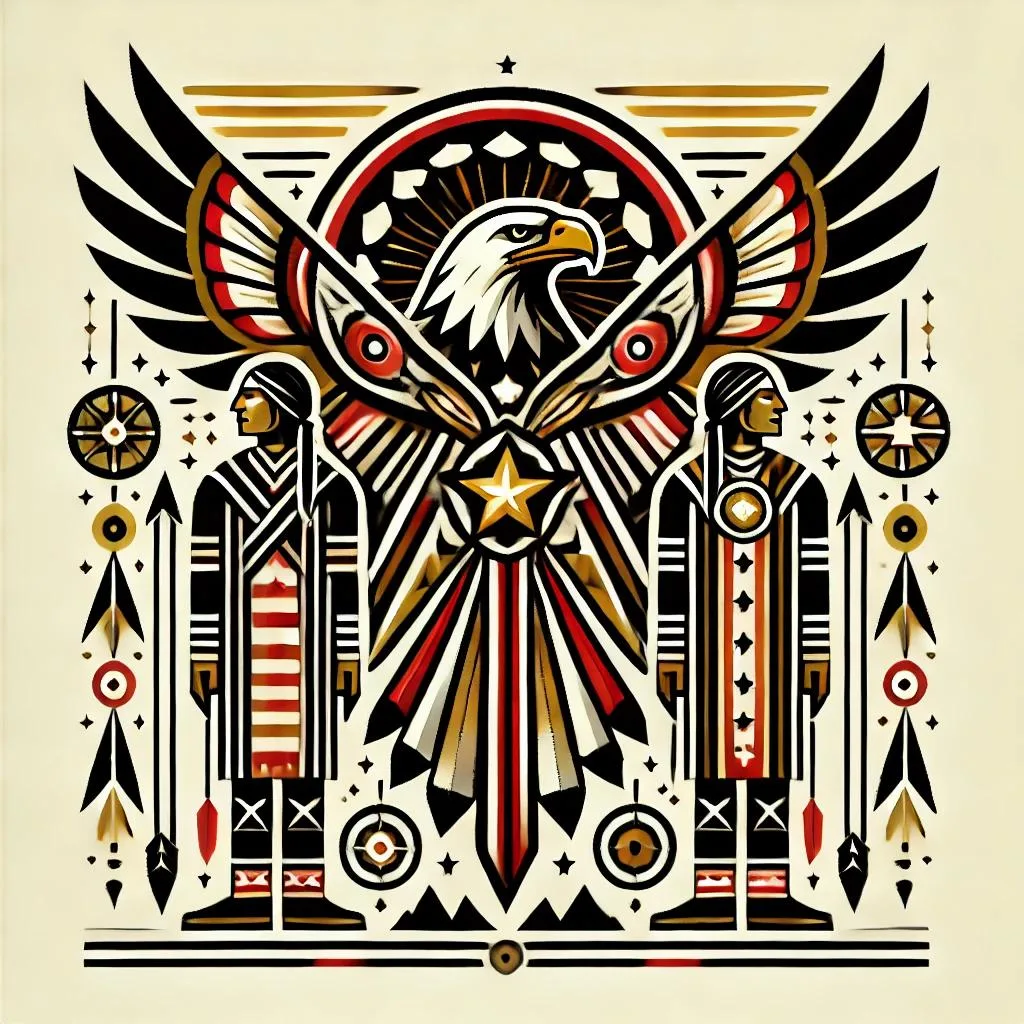
Sacred Oneness: The Eternal Truth Beyond Duality
In the boundless wisdom and love of our Creator, Wakan Tanka, the Maker of All Good Things, the beauty of creation unfolds in pairs, each harmoniously complementing the other. This awe-inspiring design, wowicake tanka (great truth), of balance and harmony, is intricately woven through all life forms, from the tiniest čhaŋšáša (red willow) to the grandeur of our animal relatives.
All our relatives, human, animal, or plant, mirror this divine principle, embodying a sacred equality and interdependence that sustains the entirety of Ina Maka (Mother Earth).
In the wojapi (plant world), we see the beauty of this balance. There are male and female plants, each with woohoda (respect) for their place and purpose, sharing equally in the sacred beauty of their kind. Both are essential, and their roles are intertwined, reflecting the sacred circle, čhaŋgléška wakan (medicine wheel).
The tree that bears fruit may be seen as more visible in its contribution. Still, its gifts depend entirely on the unseen and often unrecognized presence of others—trees that provide shade, soil stability, and homes for countless beings. Together, they fulfill their purpose in harmony.
In the wamakȟaŋ (animal kingdom), the equality of males and females is a testament to the sacred principle of mitákuye oyás’iŋ (all my relations). This principle teaches us that all beings are interconnected and essential in the great web of life. Each gender, with its unique strengths, contributes to the whole in balance, as wówačhaŋtognaka (generosity of spirit) flows through all their actions, fostering a sense of unity and belonging.
Yet, when we turn to oyáte wičasa na wíŋyaŋ (human nations of men and women), we see a troubling departure from this sacred harmony. Unlike our plant and animal relatives, where balance is inherent, humanity has allowed inequity, wakíčhuzo (disrespect), to take root. Women, the wiwáŋyaŋg wašté (sacred, beautiful beings), the life-givers, nurturers, and wisdom-bearers, are often treated as though they are lesser, denied the rights and privileges that are their birthright.
This imbalance is not wóyute wakan (sacred law) but arises from ignorance, miseducation, and the loss of wóohitika (courage) to live in alignment with the Creator’s truth.
Wakan Tanka has made no distinction of superiority or inferiority between wičháša (man) and wíŋyaŋ (woman). Both are equal in the eyes of the Creator, Táku Wakan Ska (Great Spirit of Purity). Why does humanity impose such distinctions, withholding wowíčhake (truth) and justice? If women were given the same wóunspe (knowledge) as men, their wačíŋyaŋ (potential)-their inherent ability to contribute and succeed-would shine brightly.
Women possess waštélaka (tender hearts), greater receptivity, and a profound waóhola (intuitive reverence) that flows from the depths of their being. These are not weaknesses but sacred gifts that complement men's strengths and are essential for maintaining balance in our world.
It must be acknowledged that women have been held back in some areas, but this is a temporary condition rooted in the denial of opportunity. This is not inherent but a wound inflicted by humanity’s failure to honor wóohola (sacred respect). Despite this, women's power shines through, instilling a sacred peta owíŋža (fire of hope and optimism about the future).
When a mother is wóuŋspe wakan (spiritually educated), wise, and strong in spirit, she raises children guided by these virtues. She becomes the first teacher, guide, and example of wóyuonihaŋ (virtue), a set of moral and spiritual principles including compassion, courage, wisdom, and humility. A mother’s influence shapes her children and the future generations of her tiyóspaye (extended family).
This truth is reflected in the teachings of Pte Ska Win (White Buffalo Calf Woman), who reminds us of women's sacred role in bringing forth wisdom, guidance, and the sacred wowíčhake wakan (truths) that sustain life.
Women's responsibilities as life-givers and sacred teachers demand they receive every possible opportunity to fulfill these roles. It is unthinkable that such an essential part of creation, entrusted with the future of humanity, should be denied the tools to fulfill her sacred purpose.
True justice, the justice of Wakan Tanka, demands the full equality of men and women. This is a matter of rights and survival, for humanity cannot heal the wounds inflicted upon itself or Ina Maka (Mother Earth) without balance.
Dignity before Wakan Tanka does not depend on gender but on the wóiyupte (purity) and wačháŋtognaka (generosity of heart). The virtues of wówačhȟaŋtognaka (compassion), wóohitika (courage), wóksape (wisdom), and wóyuonihaŋ (humility) belong equally to all.
The bounty of the Great Spirit flows to all without discrimination, empowering humanity to progress toward wólakota (peace and harmony). When men recognize and honor women's equality, there will be no need for struggle, for justice will flow naturally like the sacred rivers of Ina Maka, nourishing all.
The path forward requires us to remember the sacred teachings of wóhoda (respect) and balance. The Creator has given us all the gifts we need to restore harmony. Let us honor the čhaŋgléška wakan (sacred circle of life), where all are interconnected and equal, walking together as brothers and sisters to fulfill our shared purpose of uniting humanity and healing Ina Maka.
As we walk the sacred path of life on Ina Maka (Mother Earth), it is easy to focus on the duality of this physical world, the owíčhakte (limitations) of time and space, where male and female, day and night, life and death seem separate and distinct.
Yet, when we step beyond this transitory realm and take our journey into the spiritual world, we awaken to a profound truth: the soul, wanáǧi, is not bound by the dualities of this earthly existence. Neither male nor female has any race, ethnicity, or class. The soul exists as a pure reflection of the Oneness of our Creator, Wakan Tanka, and the sacred unity of all existence.
In this higher realm of wówačhake wakan (sacred truth), we see clearly that all forms of prejudice—whether rooted in gender, race, ethnicity, or social status—are not only intolerable but entirely meaningless. These divisions are constructs of the physical world, born of ignorance and fear. They hold no weight in the spiritual reality, where the soul, wanáǧi, shines in its true form: a sacred light reflecting the infinite love and unity of the Great Spirit, Táku Wakan Ska.
The soul, wanáǧi, is indivisible, untouched by the external distinctions of the material world. It is a vessel of wóiyupte (purity) and wówačhantognaka (generosity of heart), carrying the eternal connection to the Creator and all beings within it. This truth compels us to confront and dismantle all forms of discrimination in this life, knowing that they are unjust and contrary to the sacred teachings of mitákuye oyás’iŋ (all my relations). When we harm another through prejudice, we harm the sacred web of life itself.
As we understand that the essence of our being, our soul, transcends all divisions, we are reminded of our shared destiny and sacred responsibility to live in harmony with one another. The physical world of duality is a temporary stage, but the unity of the spirit is eternal. This understanding calls us to walk the path of wólakota (peace and harmony), treating all with woohoda (respect) and wóohitika (courage), always striving to reflect the Oneness of our Creator in our actions.
.
Remember that this earthly journey, though fleeting, is an opportunity to grow in love, justice, kindness, compassion, unity, and all the spiritual qualities called male by some cultures and female in others in this physical world of duality. With duality, we have the gift and power of choice.
By embracing the truth of the soul’s Oneness, we can heal the divisions among us, honor the sacred teachings of wóyute wakan (holy law), and prepare for the eternal journey that awaits us all in the embrace of the Creator, Wakan Tanka.
Mitákuye oyás’iŋ
Shunkmanu He Me Yedo! Chanupa Sapa He Me Yedo!
Hinhan Wicasta/Deloria Tiospaye, Ihanktonwan, and Chickasaw Nations