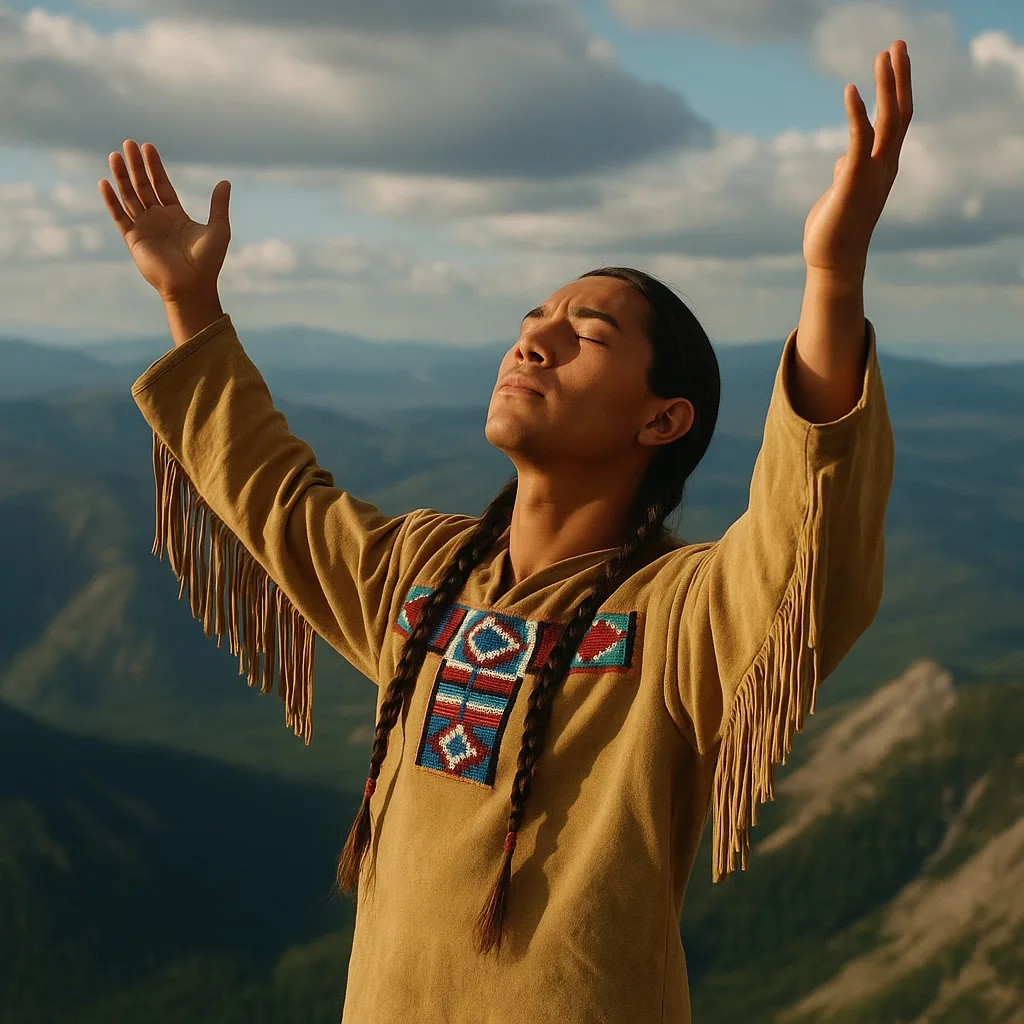
When we lift our voices, our songs, and our prayers to Wakȟáŋ Tȟáŋka—the Great Mystery, the Maker of All Good Things—we do so not for fear of the burning fire, nor desire of some shining meadow of plenty. For both fire and the meadow bow low before Wakȟáŋ Tȟáŋka, as all Creation does.
Our worship is to be like the flowing of the river: it runs not because it fears the dryness of the desert, nor because it longs for the embrace of the lake, but because the river was made to flow. So are we made to pray, to sing, to honor.
If we bend our knees only because we are afraid of suffering, then our prayers are chained. If we bow our heads only because we hope for reward, then our prayers are tied to shadows. But if we pray for the sake of the Great Mystery alone—without fear, without bargain—then our hearts are like the eagle flying high, with no tether but the wind of Spirit.
The actual prayer, the prayer of a good heart—čhaŋté wašté—is like the smoke rising from the čhaŋnúpa (Sacred Pipe). It rises pure and straight, carrying only love, humility, and thanksgiving. It does not need to be long, for the Great Mystery does not count our words, but listens to the truth of our spirit.
To walk in this way is to enter the lodge of peace, to step upon the red road with steady feet. For though the fire of hardship may surround us, and though the meadows of plenty may open before us, still we stand, still we pray, still we give thanks—for the sake of Wakȟáŋ Tȟáŋka alone.