Part 1- The Challenge and Solution to the Growing Collective Impact of AI Data Centers on Our Human Family and Mother Earth
What we are witnessing across Mother Earth is not simply the growth of an industry. It is the emergence of a new global foundation: a vast digital infrastructure quietly reshaping how humanity lives, thinks, and relates.
Today, there are roughly 8,000 to 10,000 data centers already operating worldwide, forming the invisible web that carries our communication, knowledge, and increasingly, our intelligence itself. Yet what truly defines this moment is not what already exists, but what is rapidly unfolding before us.
Across every major region of the world, hundreds of new large-scale data centers are currently under construction, with an estimated 150 to 300 of these being hyperscale or AI-focused facilities, massive complexes designed specifically to power artificial intelligence.
Beyond these, thousands more are in planning or early development stages, forming a pipeline of expansion that stretches far into the coming decade. Some projections suggest that over 3,000 additional data centers could be built globally between 2026 and 2035, illustrating the sheer magnitude of this transformation.
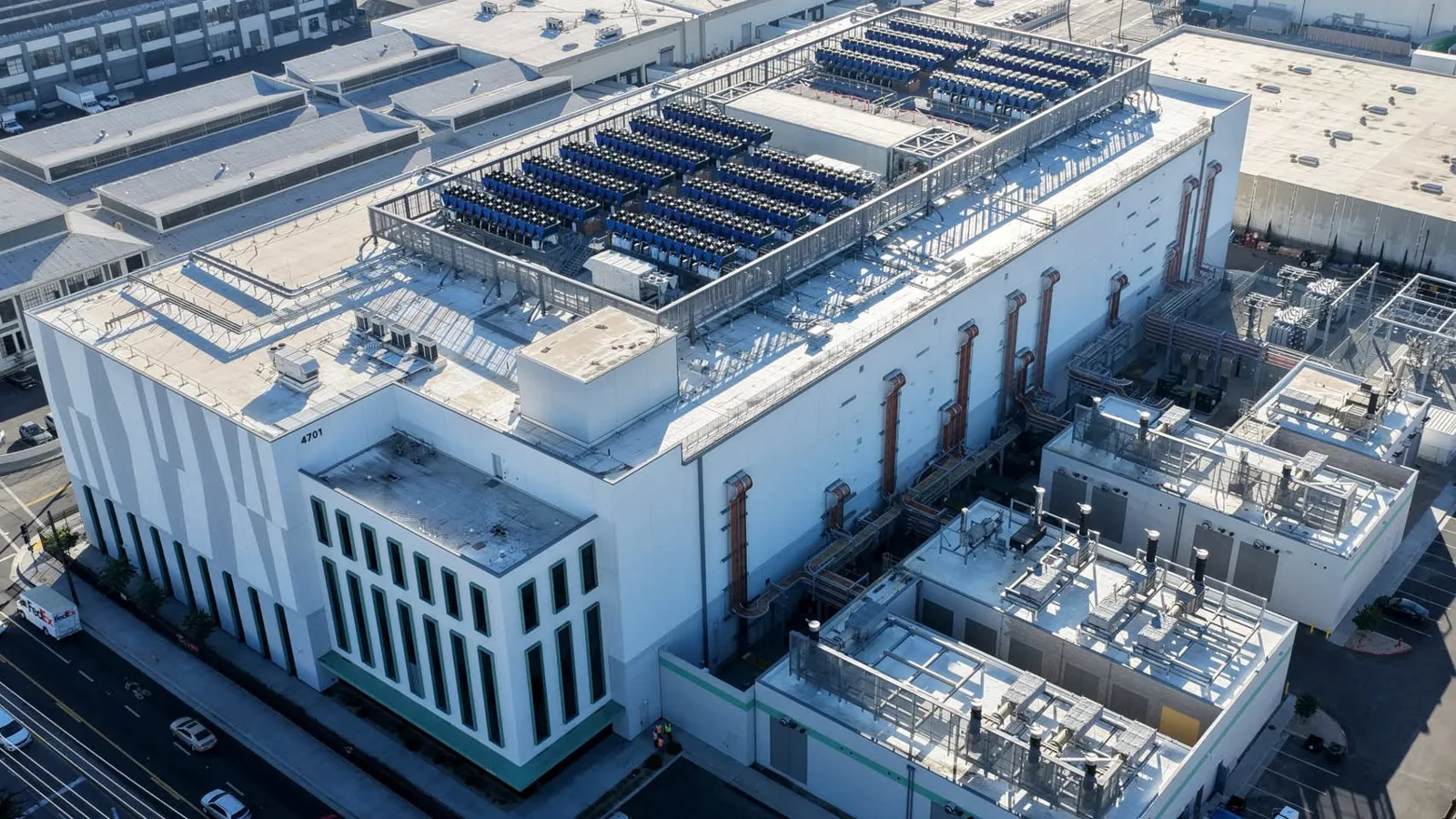
These structures are not small or modest. Many of the new facilities now being built are the size of multiple football fields, consuming hundreds of megawatts of power, sometimes equivalent to the energy needs of entire small cities.
What once were simple server buildings have now become industrial-scale engines of computation, requiring enormous flows of electricity, water for cooling, land for expansion, and materials drawn from deep within our Mother Earth.
Driving this expansion is a global convergence of powerful actors, each moving with urgency and intention. The major technology companies, Amazon, Microsoft, Google, Meta, Oracle, and NVIDIA, are at the forefront, building vast hyperscale networks to train and deploy increasingly powerful AI systems.
Alongside them, nations are moving strategically in their own interests. In China, companies like Alibaba, Tencent, and Huawei are constructing massive regional clusters aligned with national priorities such as the “Eastern Data, Western Computing” initiative.
In the Middle East, sovereign-backed efforts involving organizations like G42 and Saudi Aramco are investing billions to establish leadership in AI infrastructure.
North America remains the largest concentration, with major expansions across Texas, Virginia, Arizona, Alberta, and Quebec.
Europe is growing quickly but faces limits imposed by energy availability and environmental concerns, with over 100 major facilities planned or underway in countries such as Ireland, Germany, and the Nordic nations.
Meanwhile, Asia is becoming one of the fastest-growing regions, with more than 200 facilities in development or expansion, particularly in China, India, and Southeast Asia.
What makes this moment fundamentally different from anything that has come before is the nature of the technology itself. These are not traditional data centers designed simply to store information or run websites.
They are AI training facilities, housing vast clusters of advanced processors that require five to ten times as much electricity as earlier generations. They are edge data centers, moving computation closer to communities, and sovereign data systems, reflecting nations' growing desire to control their own digital futures.
This new generation of infrastructure is not passive. It is active, dynamic, and deeply integrated into society's functioning.
When we step back and look at the whole, we begin to see that this is not just construction, it is a reordering of power on Mother Earth. Data centers are becoming the new oil fields, not in the sense of fuel extraction, but as sources of influence and capacity.
They are the new trading routes through which information, intelligence, and value flow. They are the new centers of influence, where decisions about knowledge, algorithms, and systems shape the future of humanity itself.
Nations and corporations alike are now asking profound questions: Who owns the data? Who controls the intelligence? Who benefits from the flow of knowledge? These are not just technical questions. They are questions of justice, relationship, and responsibility.
And so we arrive at the deeper layer of this moment. The issue before us is not merely how many data centers are being built, nor how large or powerful they will become. It is about how we, collectively, will guide their creation and use responsibly.
If guided by competition, this infrastructure will deepen division, accelerate extraction, and further concentrate power. If guided by principles of respect, reciprocity, justice, and responsibility, it holds unlimited potential to uplift and humanity, support learning and healing, and strengthen our relationship with our Mother Earth.
The solution, then, is not to stop the growth of this system, which is neither realistic nor necessary. The solution lies in transforming not only how it is guided, but how we move toward planetary cooperation, reducing unnecessary duplication, and placing infrastructure in ways that honor the balance of ecosystems.
As well, means developing technologies that use less water and energy and give back to the communities they touch. It means ensuring that the benefits of this new digital foundation are shared across the human family, not held by a few.
Above all, it calls for a shift in consciousness, from seeing this as a race to be won to recognizing it as a shared responsibility to be carried together. Because in the end, these systems will shape how humanity thinks, learns, and relates for generations to come.
The question is not simply how many data centers we will build. The question is: Will we build a system that serves life, or one that quietly, but quickly consumes it?
What we are witnessing across Mother Earth is the quiet emergence of a vast and powerful layer of human activity, one that operates largely unseen, yet touches nearly every aspect of modern life.
Today, global data centers are estimated to consume approximately 500-650 terawatt-hours (TWh) of electricity each year, roughly 3–5% of total global electricity use. Some analyses, such as those from the International Energy Agency, suggest slightly lower current baselines. Still, all agree on one central truth: this demand is rising rapidly, driven by the accelerating expansion of artificial intelligence.
To understand the scale of this energy use, it helps to bring it into human terms. The entire city of New York consumes roughly 50-60 TWh per year. This means the global network of data centers already uses 10 to 12 times as much electricity as New York City.
In other words, what we are building is not just a digital convenience. We are building an infrastructure system whose energy appetite rivals that of entire nations. It stands alongside the world's industrial systems, shaping energy demand in ways increasingly difficult to ignore.
Yet energy is only part of the story. Flowing alongside it, is the immense use of water. Globally, data centers are estimated to consume between 200 and 400 billion gallons of water per year, including both direct cooling and energy-related indirect water use.
This water is drawn from rivers, lakes, and underground aquifers, and much of it is used in cooling systems, where it evaporates, meaning it does not return to the local ecosystem in the same form. What appears as a digital process is, in reality, deeply tied to the physical cycles of our Mother Earth.
At the level of a single facility, the scale becomes even more tangible. A large AI-focused data center can consume up to 5 million gallons of water per day, enough to supply 15,000 to 20,000 households. When multiplied across hundreds of such facilities, this becomes a global pattern of extraction that can shape the future of entire regions.
To put this into perspective, a yearly total of around 300 billion gallons corresponds to the water needs of millions of people, or a significant portion of the residential demand of a major urban center like Chicago.
What is driving this rapid expansion is the transformative force of artificial intelligence. Traditional data centers already required significant energy, but AI systems represent a new order of magnitude.
These facilities can use five to ten times more electricity per site, driven by the computational intensity of training and running large-scale models. They also require more advanced cooling systems, which further increases water demand.
This is not simply growth; it is accelerated growth, where each new generation of technology demands exponentially more resources than the last.
Looking forward, the trajectory becomes increasingly clear. By 2030, global data center energy use could exceed 1,000 TWh per year, effectively doubling current consumption.
Water demand is likely to follow a similar path, potentially doubling or more as AI systems become embedded in daily life across industries, governments, and communities. This is not a distant or theoretical future; it is the continuation of trends already in motion.
When we bring all of this together, we begin to see that data centers are no longer just technological installations. They are points of connection between human intention and the living systems of our Mother Earth.
Each facility draws water from natural sources, draws energy from power grids that often rely on the Earth’s resources, and releases heat back into the environment. The digital world we are creating is not separate from the natural world—it is deeply embedded within it.
This realization invites us to look beyond the numbers and into the relationships they represent. At this scale, decisions about infrastructure are no longer isolated or purely technical. They influence watersheds, energy systems, ecosystems, and communities.
The placement of a single large data center can affect water availability, energy pricing, and environmental conditions across an entire region. These are choices that ripple outward, shaping not just technology, but life itself.
And so we arrive at the deeper question that stands before humanity. The expansion of this infrastructure will continue; this much is clear. But the way it unfolds is still open.
Will these systems be built in ways that extract without balance, placing increasing strain on our Mother Earth’s systems? Or will they be guided by principles of regeneration, respect, and shared benefit, aligning technological progress with the well-being of Mother Earth and our Human Family?
Because at this scale, the stakes are profound. A single decision about where and how to build is no longer local; it becomes planetary. It can influence the health of rivers, the resilience of communities, and the stability of entire regions. What we are building is not just a network of machines, but a living relationship between humanity and Mother Earth herself.
In Part 2, we will share what we see as the only solution and pathway to addressing the growing threat of AI Data Centers as we move toward 2030, and the consequences if we don’t choose the Path to Unify Humanity, End War, and Restore our Mother Earth.