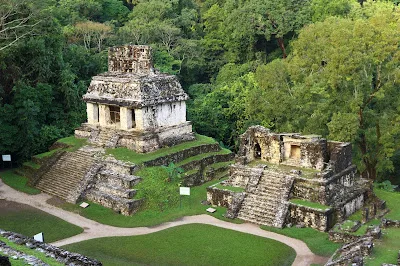
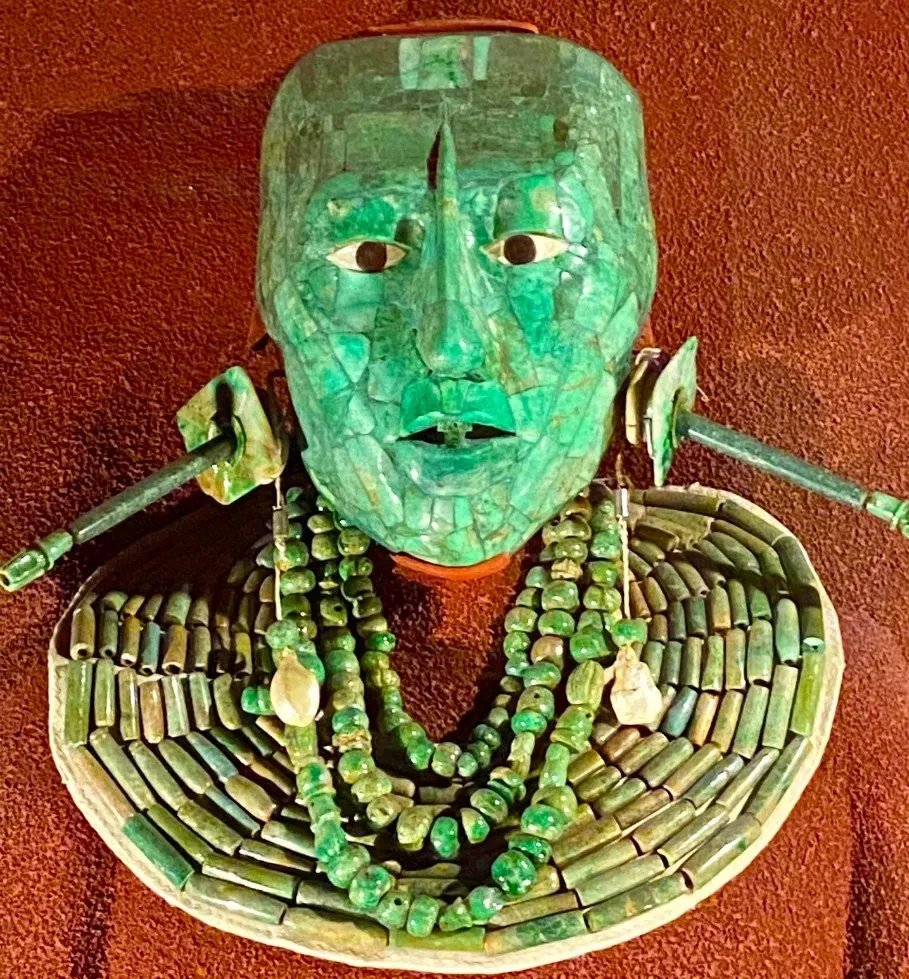
Palenque-In exploring the significance of Pacal Votan and understanding the enigmatic figure of Valum Votan, a daily contemplation arises involving a deerskin marked with the renowned low-relief sculpture discovered on the sarcophagus lid at the base of the Pyramid of the Inscriptions in Palenque on Crystal Moon 17 (June 15) 1952. This intricate image, known to modern civilization for only 45 years, holds a profound mystery.
Alberto Ruz Lhuillier, the archaeologist responsible for uncovering this secret after exactly 1260 years, identified the entombed figure as Uaxac Ahau, 8 Sun, marked by the galactic signature—the first of the "thirteen clear signs" inscribed on the sarcophagus lid. Among the contemporary Lacandon Maya, this figure is associated with the mythic "halach uinich" or "true man" known as the Great Pacal or Pacal Votan.
Around the year 1692, two Jesuit priests in Chiapas referred to a lost text titled "The Trials of Votan," chronicling the mythic accounts of Pacal Votan, a legendary Maya king whose existence extended to the time of Noah and the Tower of Babel. His celestial home was in the stars of Valum Chivim, and his adventures included four journeys to the "Rock of Heaven" via the ladder of 13 serpents. Incarnating near Nah Chan (Palenque), at a mysterious site called Valum Votan, Pacal Votan built a Tower of the Winds at Palenque and constructed his elaborate tomb, concealing all knowledge of it, save for a few marks on the stone floor and enigmatic glyphs in the temple atop the Pyramid of the Inscriptions.
Crucially, the Telektonon, along with the inscriptions of Palenque, reveals that Pacal Votan was unique in reasserting the matriarchal lineage traced back to Bolon Ik, White Solar Wind Woman. Devoted to the wind, Pacal Votan expressed profound reverence for the precious breath of Bolon Ik and the mystical essence of womanhood symbolized by the 28-day cycle of the Thirteen Moons.
Me