Origin, History, and Twelve Guidelines for Talking, Sharing, and Healing Circles
Introduction
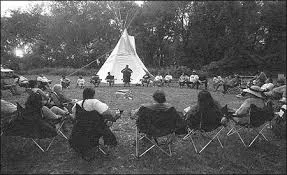
Talking Circles, also known as Sharing and Healing Circles, are sacred gatherings that create a safe space for individuals to share their feelings, perspectives, and experiences. Rooted in Indigenous traditions, this process fosters trust, emotional connection, compassion, and empathetic understanding among participants. By providing an environment free from criticism or judgment, talking circles allow for open dialogue and collective healing.
A Brief History of the Origin and History of Four Worlds Talking Circles (1975–2024)
The Talking Circle teachings utilized by the Four Worlds International Institute were prayerfully passed down by Cree Elders Abe Burnstick and Eddie Belrose at the Sweat House Lodge in Corvallis, Oregon 1975. These teachings originated from Arapaho Elder Raymond Harris of the Wind River Reservation in Wyoming in the late 1960s.
The Sweat House Lodge pioneered its approach, becoming the first alcohol and drug treatment center to incorporate the Sweat Lodge as a recognized treatment modality. Alongside these healing practices, Elders Abe and Eddie shared profound teachings of the Talking Circles and conveyed prophecies that are now unfolding.
One such prophecy foretold the advent of the internet, described metaphorically as when the "Everywhere Spirit was made Physically Manifest on Mother Earth." They emphasized the importance of using this gift wisely, acknowledging that digital technology and the internet could lead to unity or disintegration, depending on the values and morals of those utilizing it.
For over 50 years, these Talking Circle teachings have been shared by those who learned at the Sweat House Lodge and other spiritual relatives taught by Elders Abe and Eddie. Since 1982, Four Worlds has prayerfully and formally disseminated these teachings across Turtle Island and beyond. They are now widely used within Indigenous communities, NGOs, businesses, and government organizations and are shared through the Four World's Indigenous University.
The Twelve Guidelines for Talking Circles
'
The following guidelines ensure that Talking Circles creates a safe place for sharing, listening, and exploring different points of view without criticism or judgment. This process also strengthens our understanding, appreciation, and respect for perspectives other than our own.
A Talking, Sharing, and Healing Circle can address moral or ethical issues without offending or hurting anyone. Confidentiality is fundamental: whatever is shared in the Circle stays there. Participants are free to respond as they feel, provided they adhere to these guidelines:
1. Share Heartfelt Issues, Not Personalities
Focus on discussing issues, principles, and challenges—not individuals. Address comments directly to the question or topic at hand. Avoid both negative and positive remarks about other participants' contributions. Speak from the heart and express yourself positively.
2. One Person Speaks at a time
Only one person should speak simultaneously while everyone else listens nonjudgmentally. Consider using a method to signify who has the floor, such as systematically going around the circle. Using a talking object like a stone or stick passed to the next speaker.
3. Silence Is an Acceptable Response
No one should feel pressured to speak if they prefer not to share. There must be no negative consequences for choosing to pass when it's their turn.
4. Everyone Is Invited
Encourage all participants to share while ensuring that no one dominates the discussion. Create an inclusive environment where everyone feels welcome to contribute.
5. Equal Opportunities to Speak
No one should speak a second time until everyone has had the opportunity to talk once. Likewise, no one should speak a third time until everyone has spoken twice.
6. No Judgment
Foster an atmosphere of patient, nonjudgmental listening. This will encourage quieter participants to speak up and help more vocal individuals balance their participation. Systematically inviting each person to share can help even out participation.
7. Optimal Group Size
It's often better to hold Talking Circles in groups of five to nine people. Smaller groups ensure that everyone has ample time to speak without feeling rushed.
8. Non-Judgmental Leadership
Circle leaders should facilitate the discussion by neutrally acknowledging contributions neutrally. Avoid comparisons or judgments (e.g., saying "good comment" or "great"). A simple thank you or nod of acknowledgment suffices. Leaders may clarify comments when necessary.
9. No Put-Downs of Any Form
Please just make sure to disregard any comments that belittle others or oneself. This includes self-deprecating remarks like "I don't think anyone will agree with me, but..." Could you set up a gentle way to signal the speaker if this guideline is breached
10. Express Yourself Freely
Participants should feel free to express themselves in any manner they are comfortable with, sharing personal stories, using examples or metaphors, or making analytical statements.
11. Active Listening with Love and Compassion
Encourage participants to express loving and compassionate feelings to the speaker consciously. This will support the speaker and keep listeners engaged rather than planning their responses.
12. Share Time Equally and Justly
Be mindful of the time to ensure everyone has an equal opportunity to share. At the beginning, note the number of participants and estimate the time each person can speak.
Conclusion
The Talking Circle is a powerful communal sharing, healing, and understanding tool. By adhering to these guidelines, participants can create a respectful and supportive environment that honors each person's voice. Through Talking Circles, communities strengthen their bonds, foster empathy, and promote collective well-being.
Source: Excerpted from The Sacred Tree Curriculum Guide, produced by the Four Worlds International Institute,