
The Restoration of Truth, Justice, Nobility, and the Sacred Unity of Our Human Family
An Extraordinary Hour of Sacred Prayer
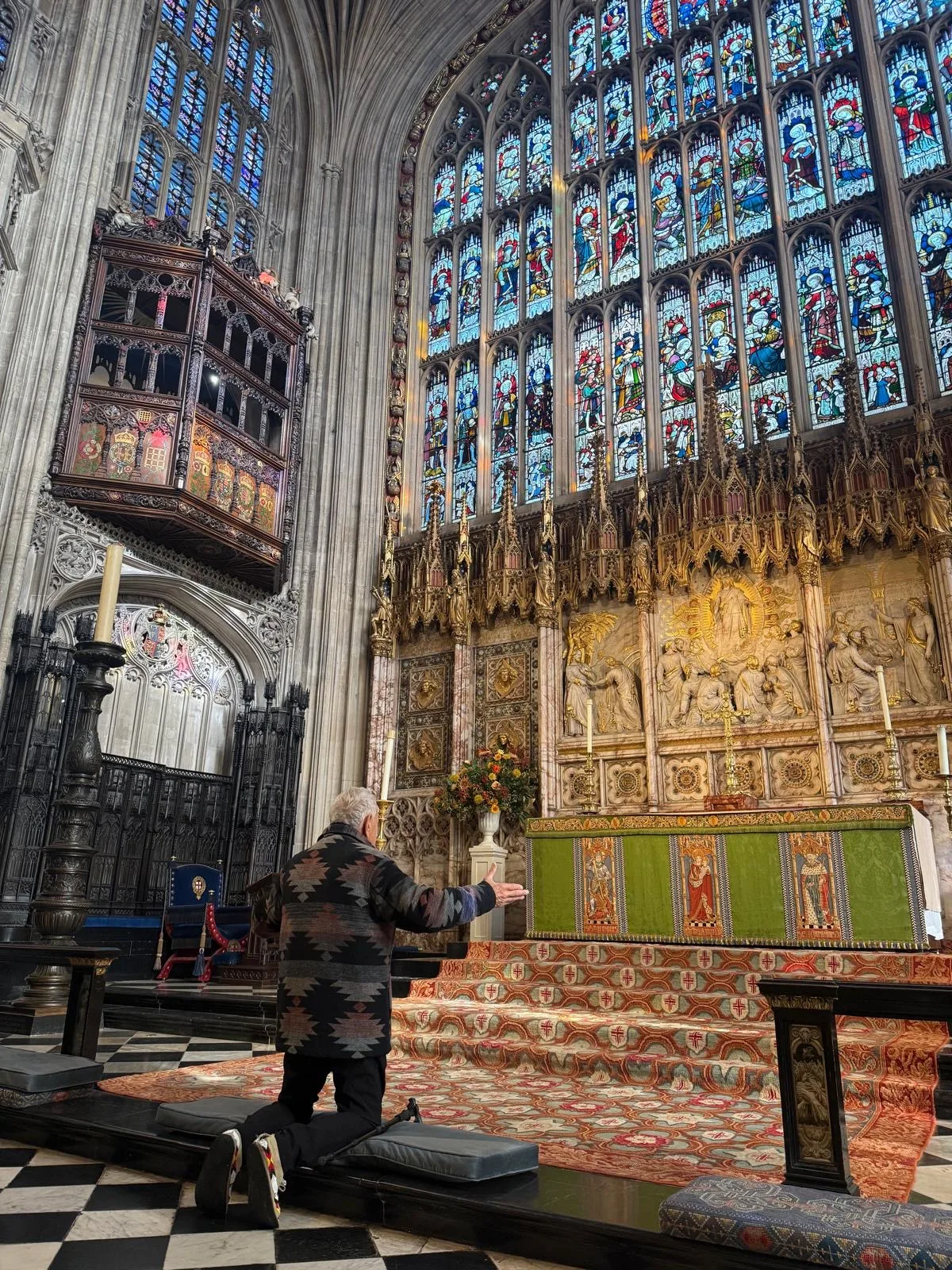
On October 27, 2026, I experienced one of the most profound spiritual moments of my eighty-two winters upon Mother Earth. Inside St George’s Chapel at Windsor Castle, in the spiritual heart of the British monarchy, I was blessed with an extraordinary opportunity to offer prayers that I believe carry profound meaning for the Indigenous peoples of British Columbia, the royal family, and the healing of our one human family.
Although St George’s Chapel was closed to visitors, our dear Sister’s Jo’s kindness and arrangements granted me special permission to enter and pray as I chose. When we arrived at Windsor Castle, the Changing of the Guard was taking place. It was a beautiful beginning to a day whose spiritual significance I could never have fully anticipated. Sister Jo met us at the gates, and when we reached the chapel, the doors were opened to us.
For nearly an hour, I was free to move through that magnificent sacred place, praying among the resting places and memorials of generations of British hereditary kings, queens, princes, and princesses. Because we were alone, I could pray quietly, sincerely, and without interruption, just as I had been taught throughout my life.
I was not there simply to admire the extraordinary architecture or reflect upon the historical importance of those buried or memorialized within its walls. I was there to enter into spiritual communication, through prayer, with those who had gone before us. I approached them as beloved relatives within our one human family, each carrying the history of their earthly lives, their accomplishments, their mistakes, their relationships, and their responsibilities.
I have always understood prayer as a living relationship with those who walk beside us and those who have journeyed into what our people call the Otherside Camp.
Many spiritual traditions, each with their own understanding, affirm that our existence reaches beyond this physical life. I believe we are eternal spiritual beings, and that love, compassion, and prayer are not confined by time and space. What awaits us remains part of the Great Mystery.
As I moved through St George’s Chapel, I experienced an extraordinary spiritual presence. A depth of sacred feeling that I cannot fully express in words. I felt it throughout my being, in my heart and spirit, as though the distance between the world we see and the spiritual worlds had become very small.
Whether others would experience that same presence, I cannot say. I can only speak truthfully about what I experienced. And what I experienced was profoundly real to me. The spiritual strength, clarity, love, and sense of sacred communion I received during those prayers have remained with me ever since.
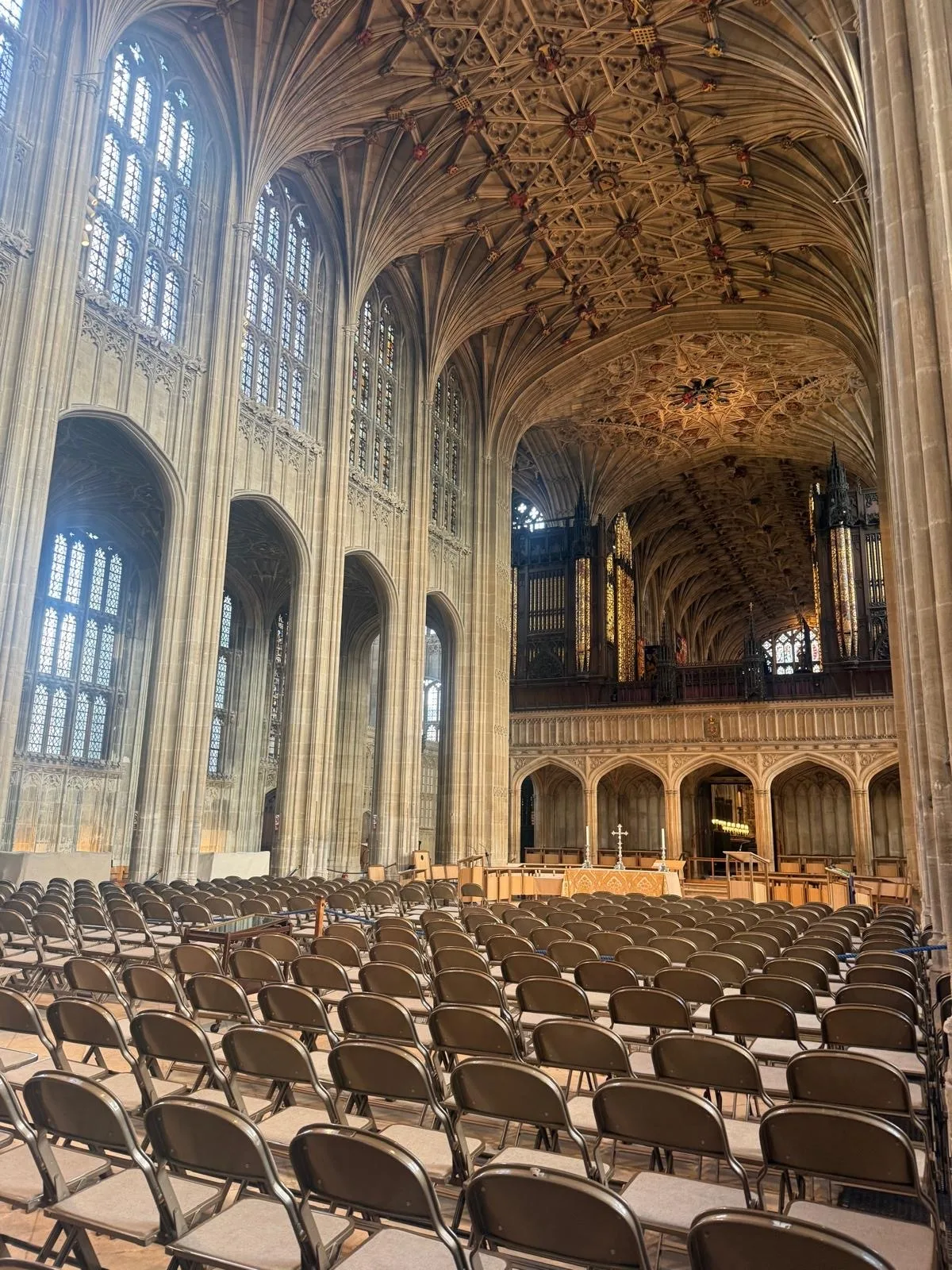
The Spiritual Heart of the British Monarchy and the Order of the Garter
St George’s Chapel is not simply another ancient place of worship. Its spiritual and historical foundations reach back to 1348, when King Edward III established the Most Noble Order of the Garter and the College of St George at Windsor. King Edward IV began the present magnificent chapel in 1475, and it was completed in 1528, during Henry VIII’s reign.
For nearly seven centuries, this sacred place has been associated with the highest traditions of British hereditary leadership, Christian worship, royal ceremony, and the Order of the Garter. Its magnificent architecture, heraldic banners, memorials, sacred furnishings, and resting places speak to generations of history and the solemn responsibilities associated with the British Crown.
The Order of the Garter, Britain’s oldest and most senior order of chivalry, has long embodied ideals of honor, courage, loyalty, duty, and service. Its spiritual home is a place where prayer and hereditary responsibility have been joined across generations.
Standing within those magnificent walls, I reflected upon the profound responsibilities carried by hereditary leaders. The kings and queens of Britain were not simply individuals exercising political power. Their authority was accompanied by sacred ceremonies, solemn oaths, religious traditions, and ideals intended to give moral meaning to the responsibilities of leadership.
Yet genuine nobility cannot be measured simply by royal titles, ancient ceremonies, magnificent buildings, or inherited privileges. True nobility must ultimately be measured by how power is exercised, the protection extended to the vulnerable, the dignity afforded to every human being, and the courage to uphold justice even when it requires confronting difficult truths.
These understandings are also deeply rooted in the teachings I received from my Elders. Hereditary leadership is not simply a privilege to be inherited. It is a sacred responsibility to serve the people, protect the vulnerable, preserve our ancestors’ wisdom, and safeguard the well-being of generations yet unborn.
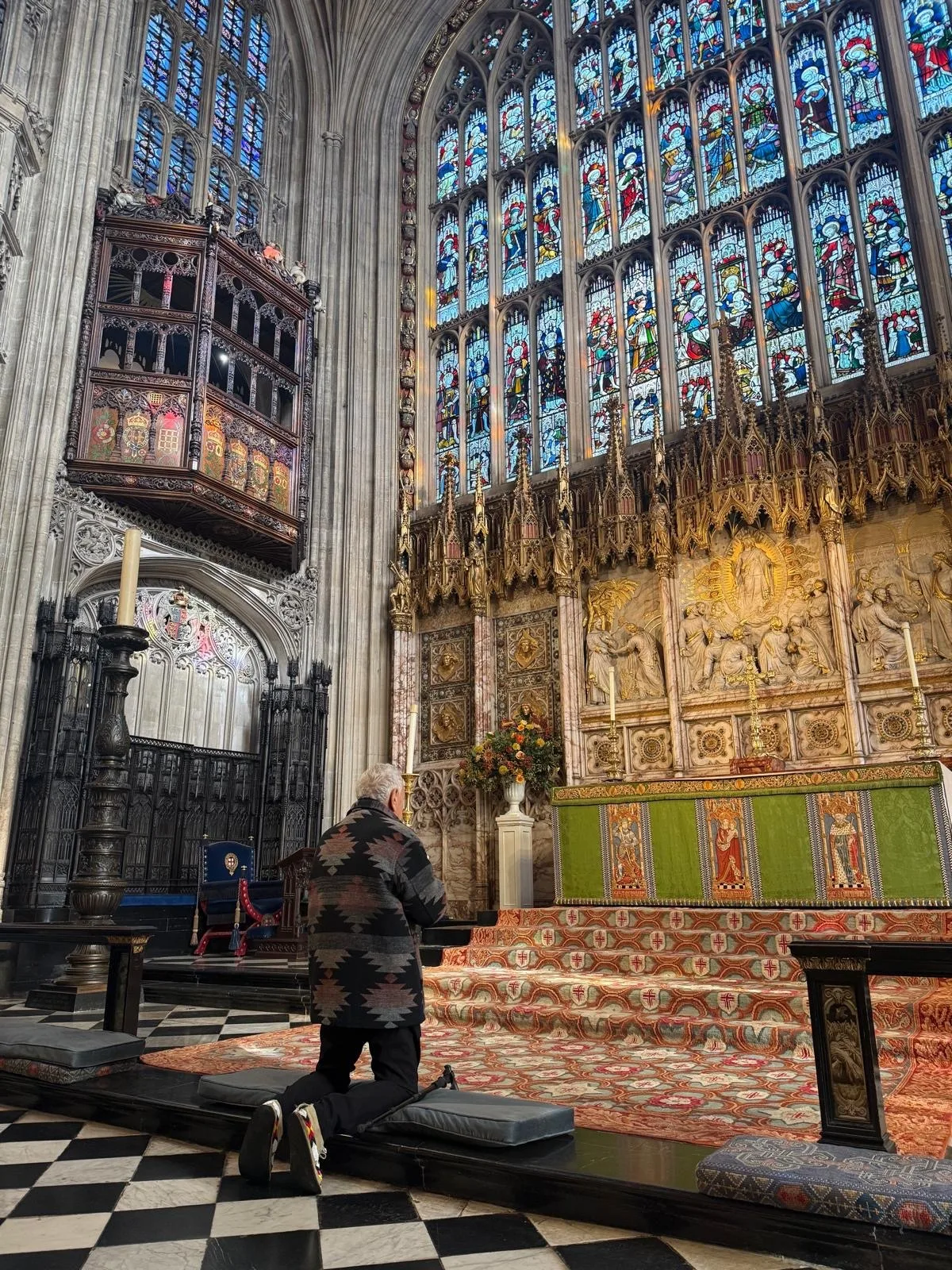
As I prayed within St George’s Chapel, these two traditions of hereditary responsibility came together in my heart. I was standing within the spiritual home of the British royal lineage as an Indigenous hereditary Chief, carrying teachings entrusted to us by our Elders and praying for the restoration of right relationships between peoples whose histories had become intertwined through centuries of colonization.
Praying With the Royal Ancestors
During that sacred hour, I offered prayers at the resting places and memorials of many generations of the royal family. I remembered King Edward IV and Queen Elizabeth Woodville, King Henry VI, King Henry VIII and Queen Jane Seymour, and King Charles I. I prayed in remembrance of King George III and Queen Charlotte, King George IV, King William IV and Queen Adelaide, King Edward VII and Queen Alexandra, King George V and Queen Mary, King George VI and Queen Elizabeth the Queen Mother, Queen Elizabeth II, and Prince Philip.
I also included in my prayers the princes and princesses represented in the chapel’s history, including Princess Amelia, Princess Augusta Sophia, Prince Edward, Duke of Kent, Prince Frederick, Duke of York, Princess Charlotte of Wales, and the children of King George III and Queen Charlotte who had died young.
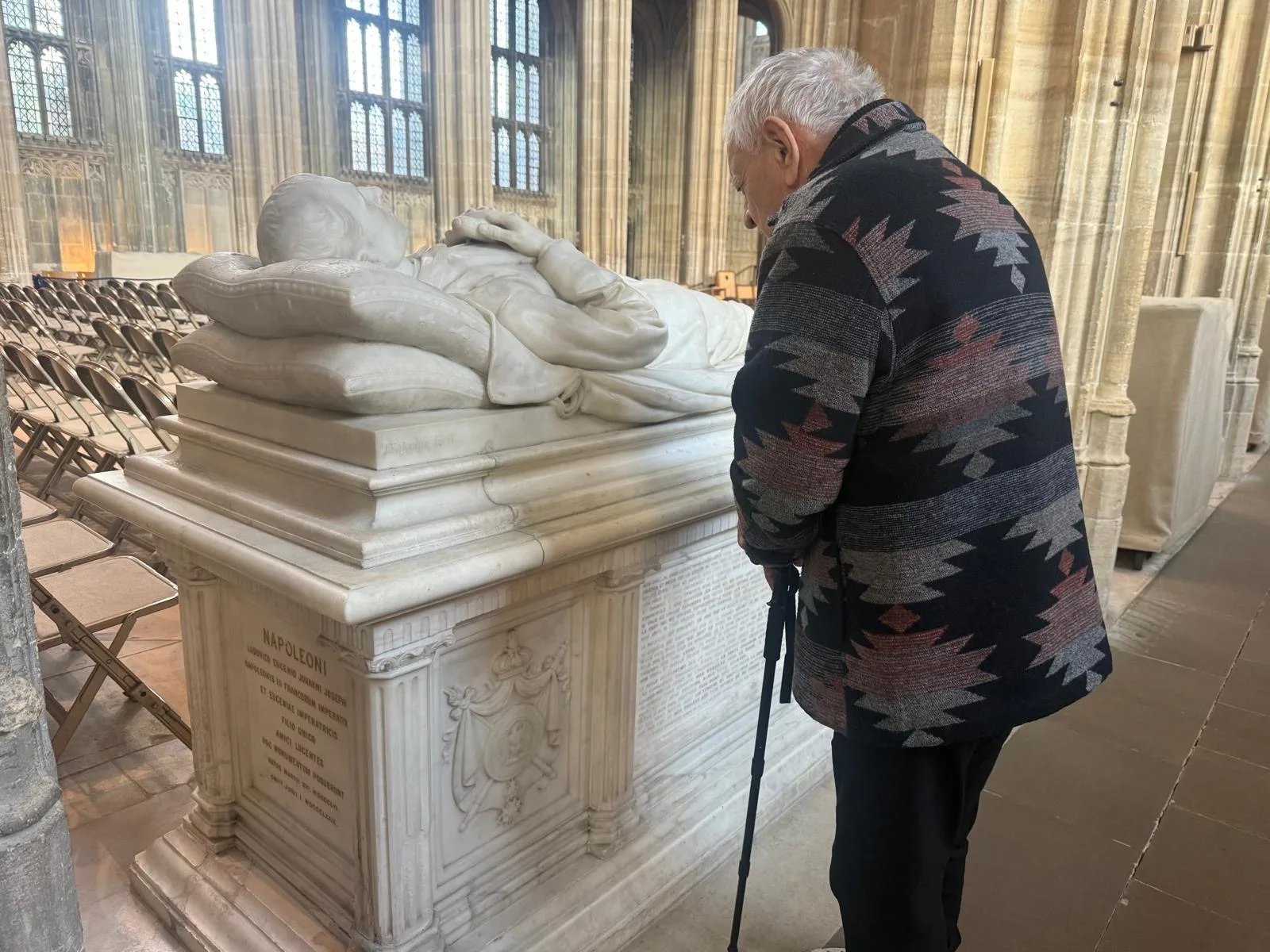
I prayed at the memorial to Louis-Napoleon, the Prince Imperial, whose life ended during the Anglo-Zulu War, far from his homeland. He passed to the Other Side Camp very young and very lonely.
I included other members of the royal families whose resting places and memorials form part of that sacred place’s long history. Some are buried in individual tombs and memorial chapels, while others, including King George III and Queen Charlotte, rest within the Royal Vault beneath St George’s Chapel. I prayed in remembrance of them within that sacred setting, recognizing that their earthly remains, memorials, and histories were gathered in one place.
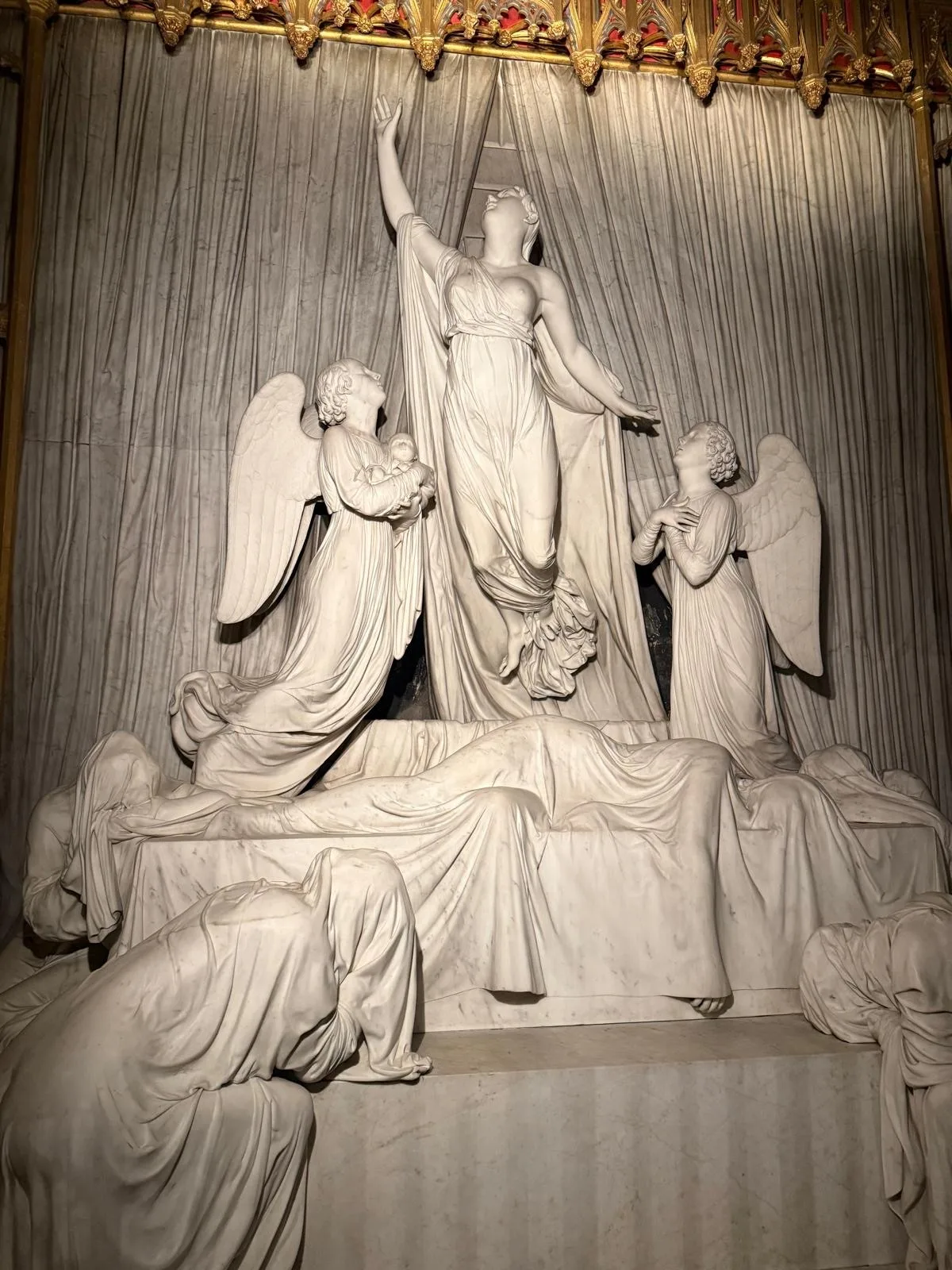
As I prayed, I did not see these individuals merely as names in history books. I approached them spiritually as relatives whose earthly lives had ended, but whose decisions and influence continued to shape the world we live in.
I shared my heartfelt feelings concerning the history of their lineage, the extraordinary responsibilities they had carried, and the suffering endured by Indigenous peoples through centuries of colonial expansion. I reflected that every human being can accomplish great things, and every human being also makes mistakes.
When those with immense power make mistakes, the consequences may continue for centuries, affecting entire Nations and generations yet unborn. But I did not enter St George’s Chapel carrying hatred, bitterness, or a desire to condemn those who had gone before us.
I entered seeking spiritual understanding, compassion, forgiveness, and healing. I prayed that truth might become the foundation for correcting past injustices and establishing new relationships between peoples whose histories had become so deeply connected.
My Sacred Prayers With King George III and Queen Charlotte
I spent particularly meaningful time praying with King George III, Queen Charlotte, and members of their family. King George III was the reigning monarch when the Royal Proclamation of October 7, 1763, was issued, establishing important principles concerning Indigenous lands and the Crown’s relationships with Indigenous Nations in North America.
The Royal Proclamation recognized that Indigenous lands could not simply be taken through unauthorized private settlement or purchase and established procedures governing the Crown’s acquisition of such lands. Its provisions became foundational to the development of Crown–Indigenous relations and the treaty-making process in Canada.
As I prayed with King George III, one understanding became unmistakably clear within my heart. There is no way, shape, or form that I can accept approximately 95 percent of British Columbia, territory that was never ceded through historical treaties, being treated simply as Crown land, as though the Indigenous Nations who occupied, governed, protected, and cared for those territories for countless generations had never existed.
The historical reality is that most of British Columbia was not covered by the kinds of historical land-cession treaties negotiated in many other parts of Canada. Nevertheless, enormous areas of those territories came to be administered as Crown land. The question of how this occurred, and upon what historical, legal, and moral foundations those claims were made, deserves the most comprehensive and independent examination possible.
I believe this history reveals a profound contradiction between the Crown’s stated responsibilities toward Indigenous peoples and the subsequent dispossession of Indigenous Nations across much of British Columbia. The precise legal application of the Royal Proclamation of 1763 to British Columbia remains a question requiring careful historical and legal interpretation.
But those legal debates do not erase the deeper reality that Indigenous Nations possessed their own territories, systems of governance, laws, sacred places, and responsibilities long before British colonial authority was asserted over them.
If the Crown recognized that Indigenous lands required special protection against unauthorized acquisition, how could it later treat vast territories as Crown property without treaties, meaningful consent, or the just resolution of Indigenous title? This was one of the central questions I carried into my prayers with King George III. And I believe it remains one of the most important questions that an independent investigation must answer.
I also prayed with Queen Charlotte, remembering that the islands once called the Queen Charlotte Islands now carry their Indigenous name, Haida Gwaii. In my prayers, I wanted her to understand that restoring the name of those islands was never intended as an expression of personal disrespect toward her. It was an act of restoring the dignity, identity, memory, and rightful recognition of the Haida people and their ancient relationship with their homeland.
The name Haida Gwaii speaks to a relationship with the land that extends far beyond the colonial period and the naming of those islands after the British royal family. We do not need to dishonor one people to restore another’s honor. Genuine reconciliation must make room for truth, respect, dignity, and justice for everyone.
I offered prayers for Princess Charlotte of Wales, granddaughter of King George III and Queen Charlotte, whose memorial recalls the tragic loss of a young life, and for the other members of their family. I reflected upon the love, grief, hopes, and responsibilities that are part of every family, including royal families. Beneath the crowns, titles, and distinctions of history, we remain members of one human family, subject to the same sacred mysteries of life, death, suffering, and spiritual growth.
The Great Smallpox Catastrophe and the Destruction of Indigenous Nations
As I prayed, my thoughts turned to one of the darkest chapters in the history of British Columbia: the catastrophic smallpox epidemic of 1862–1863 and the decisions made by colonial authorities that contributed to its spread among Indigenous peoples. By 1862, British authorities and medical practitioners had in-depth experience with smallpox.
Vaccination was already an established preventive measure, and quarantine was recognized as an important way to limit transmission. The disease had been known for centuries, and its devastating effects upon vulnerable populations were well understood.
When smallpox appeared in Victoria, many settlers sought vaccination. Contemporary reports indicate that approximately half the town’s settler residents had been vaccinated within weeks. Yet Indigenous peoples living in and around Victoria, particularly those who had traveled from northern coastal communities for trade, employment, and other purposes, were not afforded equivalent protection.
Vaccination and quarantine were available possibilities, and some Indigenous peoples received assistance, but the colonial response was profoundly unequal. As the disease spread, authorities ordered Indigenous people to leave, including people who were already infected or had been exposed to smallpox.
Authorities destroyed abandoned homes and encampments. Families were driven away, and Crown colonial police and naval vessels participated in forced removals. Indigenous men, women, children, and Elders traveled northward in canoes and other vessels, carrying an infection that would spread through coastal communities and into the interior.
The consequences were catastrophic. Thousands upon thousands of Indigenous people died. Entire communities suffered devastating losses, and the consequences continue to be felt through generations.
What makes this history especially disturbing is that the danger was understood. Colonial officials and settlers knew that smallpox could spread from person to person and that vaccination and quarantine could reduce its impact. Contemporary observers warned that forcing infected Indigenous people away from Victoria could carry the disease into communities farther north.
Yet the expulsions continued. Other doors were available: vaccination, quarantine, medical care, shelter, and protection. Why were those doors not taken?
For me, this is one of the most important moral questions arising from that catastrophe. The disease itself was not a human decision. But the forced removal of vulnerable people, when the probable consequences were foreseeable and protective measures were available, raises grave questions of responsibility. I believe the historical record provides a compelling basis for investigating serious, preventable, and foreseeable destruction of Indigenous lives.
Whether the decisions involved deliberate destruction, what individual officials knew and intended, and whether particular conduct meets legal definitions of genocide must be established through independent historical and legal investigation.
The distinction matters because the truth must be strong enough to stand upon its own evidence. We must establish who knew what, when they knew it, what alternatives were available, who made the decisions, and what consequences those decisions were expected to produce.
Colonial correspondence, naval records, government instructions, medical reports, newspapers, Indigenous oral histories, and the accounts passed down through families must all be examined together.
I believe the suffering of these communities represents a profound violation of the moral and spiritual responsibilities that should have guided those exercising colonial authority. What happened must never be treated simply as an unfortunate episode of history whose causes and responsibilities no longer matter. The descendants of those who suffered deserve a full and truthful account. And so do all the peoples and institutions whose histories became part of that catastrophe.
The Very Foundation of Nobility and Chivalry Was Violated
While praying in St George’s Chapel, surrounded by the resting places and memorials of generations of British kings and queens, one of the most extraordinary spiritual understandings of my entire experience became clear. I felt that the terrible injustices committed against Indigenous peoples in British Columbia were not only abhorrent to me. They were equally abhorrent to the royal ancestors themselves, from the spiritual place where I now understood them to dwell. This was not simply a conclusion I reached through studying history. It was not merely an intellectual judgment about the violations of justice, morality, and human dignity that had taken place. I experienced it directly through prayer.
In that sacred communion, I felt with extraordinary clarity that these royal relatives themselves recognized the profound violation of the very foundations of their own hereditary lineage and the highest spiritual principles represented by the Order of the Garter.
The dispossession of Indigenous Nations, the destruction of their communities, the suffering of their families, and the failure to protect their dignity and rights represented a complete violation of the ideals of honor, courage, chivalry, justice, and service upon which their sacred traditions were meant to stand.
What moved me most deeply was that I felt these beloved royal ancestors were not at peace with what had happened. From the spiritual realms they now inhabit, freed from the limitations of this physical world of time and space, I felt they could see with extraordinary clarity both the injustices of their earthly times and their consequences across generations.
They could recognize how profoundly these wrongs violated the sacred foundations of nobility, chivalry, honor, and justice upon which their hereditary lineage was meant to stand. In my experience of prayer, they were not at rest while those violations remained unacknowledged and unresolved.
I understood that their continuing spiritual journey toward higher realms of light, understanding, and closeness to our Creator was deeply connected to bringing these wrongs into the light of truth and addressing them through justice, healing, and reconciliation. The spiritual well-being of these beloved relatives and the healing of Indigenous peoples were not separate matters. They were part of the same sacred restoration of right relationships within our human family.
I cannot prove such an experience to another person. I can only share what I felt in the depths of my being. But I have spent my life praying, learning from our Elders, and seeking to understand the spiritual responsibilities entrusted to us.
At eighty-two winters, I have learned to distinguish between a passing thought and an experience that touches the deepest part of my spirit. This was such an experience. I felt it then, and I feel it now.
What does chivalry mean if it does not include the courage to defend those who have been wronged? What does nobility mean if it does not include the willingness to protect the vulnerable and acknowledge the suffering caused by the exercise of power?
What is the spiritual meaning of hereditary leadership if those who inherit its honors do not also accept its responsibilities? St George’s Chapel stands as a magnificent symbol of centuries of British hereditary history. Its beauty, ceremonies, prayers, and sacred traditions proclaim ideals of honor, duty, and service.
But those ideals cannot remain merely symbols preserved within ancient stone walls. They must live through the actions of those who inherit their responsibilities.
The restoration of justice is not a blessing for one people alone. It is part of the healing of our entire human family. This understanding brought me an extraordinary sense of peace. I was not praying against the kings and queens of Britain or against the Order of the Garter. I was praying with them, within my spiritual experience, for the restoration of the very principles of nobility, honor, courage, and justice their traditions hold so dear.
The honor of one is the honor of all. The suffering of one is the suffering of all. And restoring justice is part of healing every soul within our one human family.
King Charles III: The Living Representative of His Royal Ancestors
As I continued praying, my thoughts and prayers turned naturally toward King Charles III. He is not simply the present sovereign of the United Kingdom. Within the hereditary continuity of his lineage, he is the living representative here on Mother Earth of the generations of kings and queens who came before him. As sovereign and head of the Order of the Garter, he occupies a position of extraordinary historical and spiritual significance. He carries the honors, traditions, and inherited responsibilities of the lineage whose resting places and memorials surround that sacred chapel.
In my understanding, he also carries an opportunity to give living expression to the noblest principles of that heritage. I have complete faith that if King Charles enters St George’s Chapel, prays sincerely with the ancestors of his own lineage, and opens his heart to the Great Spirit, he will recognize the path he needs to follow.
I believe the same spiritual reality that touched me so profoundly is available to him. Indeed, his personal relationship with that chapel, its sacred traditions, and the generations of his own family represented there is deeper and more continuous than my own.
He does not need me to tell him what he must experience or believe. He must seek understanding through his own heart, conscience, prayer, and responsibilities. But I have profound faith that sincere prayer can awaken the wisdom and courage necessary to recognize the highest path before us.
And what is that path? For me, it became unmistakably clear. The first essential step is to commission and fully fund a comprehensive, genuinely independent investigation into the Crown’s historical relationship with the Indigenous Nations of British Columbia.
The Courageous Example of King Willem-Alexander of the Netherlands
A remarkable example of the kind of leadership I am praying for has already emerged within the European royal family. In 2022, King Willem-Alexander of the Netherlands initiated an independent historical investigation into the role of the House of Orange-Nassau in Dutch colonial history. The investigation was undertaken through Leiden University under the supervision of an independent committee. Approximately sixty scholars participated in the research, examining historical records, colonial relationships, slavery, political authority, economic interests, and the responsibilities of members of the Dutch royal lineage. The scholars were given access to relevant royal archival materials, and the Royal House did not direct the findings or conclusions.
On October 2, 2026, the results were formally presented to King Willem-Alexander in five volumes. The findings examined difficult historical questions, including the involvement of members of the House of Orange-Nassau in colonialism, slavery, and the suppression of resistance. The King acknowledged the importance of confronting the past honestly, including actions and failures of responsibility within his own royal lineage.
What a meaningful example of the courage to examine difficult truths. Rather than protecting his ancestors’ reputation by controlling the investigation or concealing uncomfortable evidence, King Willem-Alexander supported a process that allowed independent scholars to examine the historical record. I believe King Charles III can demonstrate that same courage.
I believe he can follow this example by commissioning a comprehensive independent investigation into the history of the Crown’s relationship with the Indigenous Nations of British Columbia. This would not be an act of hostility toward his ancestors or an attack upon the dignity of the British monarchy. It would express the highest principles of hereditary responsibility: the willingness to seek truth, acknowledge historical wrongs, and contribute to the well-being of future generations.
Indeed, what greater honor could King Charles bring to the spiritual legacy of his ancestors than to demonstrate that the principles of chivalry, justice, and truthfulness enshrined within St George’s Chapel remain alive through his own actions?
Open the Archives. Establish the Truth. Let Independent Scholars Do Their Work.
My prayer is that King Charles will commission and fund a comprehensive investigation undertaken collaboratively by qualified scholars from universities in Great Britain and British Columbia, together with Indigenous historians, Elders, hereditary Chiefs, knowledge keepers, legal specialists, and the communities whose histories are being examined.
Such an investigation must be genuinely independent of political direction from the governments of Canada and British Columbia, and independent of Crown control over its research questions, methodology, conclusions, and publications. Funding must be sufficient to enable scholars to undertake their work thoroughly, without pressure to rush their findings or restrict the scope of their inquiries.
Open the books. Open the archives. Open the historical record. Let the evidence speak. I pray that the relevant royal collections, British government archives, colonial correspondence, naval records, legal documents, medical reports, historical maps, parliamentary proceedings, and university collections will be made available to the scholars, subject to appropriate legal and Indigenous cultural protections.
The investigators must also work with knowledge carried by Indigenous Nations, including oral histories, ancestral teachings, records of traditional governance, territorial relationships, and the accounts of families whose ancestors experienced the consequences of colonization.
They should examine the Royal Proclamation of 1763 and its relationship to the acquisition of Indigenous territories in British Columbia. They should investigate the historical foundations of Crown land claims, the absence of historical treaties across most of the province, and the ways Indigenous title, governance, and sovereignty were treated under colonial administration.
They should examine the 1862–1863 smallpox catastrophe, including the decisions made by colonial officials, the forced removal of Indigenous peoples, the involvement of police and naval vessels, the availability of vaccination and quarantine, and the extent to which officials understood the probable consequences of their actions.
They should also investigate the wider history of land dispossession, cultural suppression, residential schools, and the political and economic systems that contributed to the destruction and marginalization of Indigenous communities.
The scholars must be free to examine whether particular conduct violated the laws and obligations of the time, whether responsibilities were knowingly disregarded, and whether evidence supports findings of deliberate or reckless destruction or genocidal intent.
Let the investigation establish what happened first. Then let those who disagree bring forward their evidence and demonstrate where the conclusions may be mistaken. This is how a serious search for truth should proceed.
I believe the historical evidence will reveal profoundly troubling truths about the treatment of Indigenous peoples and the acquisition of their ancestral territories. But the scholars must remain free to confirm, qualify, or contradict every proposition, including those I hold with deep conviction.
The integrity of the investigation will depend upon its independence. No government, monarchy, institution, or political interest should be permitted to predetermine its findings.
If the evidence demonstrates unlawful dispossession, grave violations of responsibility, deliberate or reckless destruction of Indigenous communities, or conduct meeting the legal definition of genocide, those conclusions must be published honestly and without interference. Whatever the investigation establishes, the public deserves to know.
The purpose is not revenge. The purpose is truth, justice, reconciliation, and restoring right relationships. I believe the willingness to establish the truth will be the greatest expression of nobility the present royal lineage could undertake.
Why This Moment Is So Critical: A Historic Opportunity for Peace and Reconciliation
The urgency of these prayers has become even greater following the October 24, 2026, provincial election in British Columbia. The incoming Conservative government has declared its intention to repeal the Declaration on the Rights of Indigenous Peoples Act, legislation the British Columbia Legislature unanimously adopted in 2019 after extensive collaboration with Indigenous leadership. The proposed changes have provoked profound concern among First Nations. Grand Chief Stewart Phillip, President of the Union of British Columbia Indian Chiefs, has described the proposed repeal as a “declaration of war,” while other Indigenous leaders have warned of the danger of renewed confrontation and the breakdown of relationships built through decades of difficult consultation. These warnings reflect an extraordinarily serious moment, when the future of reconciliation could be profoundly affected.
This is precisely why I believe the time for King Charles III to respond to the invitation already extended by hereditary leadership like Shuswap Grand Chief Felix Arnouse and others. The invitation, the opportunity to meet personally with the Indigenous peoples of British Columbia, and my prayers that he might sit with the hereditary Chiefs and their families in ceremony have already been described. So has the independent historical investigation I believe he should support, following the example of King Willem-Alexander. What has changed is the urgency. With the possibility of a major reversal in provincial legislation, the King has an opportunity to exercise moral leadership by encouraging meaningful dialogue and a voluntary period of reflection while the historical evidence is independently examined. Although he cannot constitutionally suspend provincial legislation himself, his participation could help create the conditions for peaceful consultation before relationships deteriorate further.
I believe this is an extraordinary moment when the highest principles of nobility, chivalry, justice, and spiritual responsibility associated with the Crown can find living expression. In my prayers at St George’s Chapel, I felt profoundly that the royal ancestors themselves desired the restoration of those principles. Now their living hereditary representative has an opportunity to help open a peaceful path forward. The invitation has already been extended. The prayers have already been offered. The essential steps have already been identified. What is needed now is the courage to act before the divisions deepen. The time to begin healing is not after confrontation. The time is now.
The Sacred Responsibility of the Church of England
As I prayed at St George’s Chapel, I thought also of those entrusted with its care. The Dean and Canons of Windsor keep this sacred place where families come to pray and where generations of the Royal Family have been laid to rest. I thought of the care taken here to preserve a name, to mark a grave, and to remember a prayer life. Our families along the Salish Sea have carried the names and memories of our loved ones across generations, often through the spoken word of a grandparent who wanted to be sure a child would remember. I believe the Church of England has a sacred obligation to receive those names and those accounts with the same reverence it gives to the lives remembered at Windsor.
The Church of England also has a responsibility to give King Charles III its full and public support in the steps he may choose to take toward truth, justice, and healing. Its leaders are keepers of records, stewards of resources, and teachers of the Christian duty to tell the truth and make amends. Should His Majesty call for an independent investigation, I would ask the Church to open the relevant records in its keeping, help fund the work, and publicly face what the inquiry reveals about its own actions.
Our Nations must have a full voice from the beginning in deciding what questions are asked and how the testimony of our Elders and families is received. The Church can begin by opening its own books and offering that support today.
I would ask the bishops and clergy to carry what they learn back to their own congregations. Then I would ask them to return to our communities, sit with the families who shared their histories, and give an honest account of what the Church has done and what it still owes.
I was raised with the understanding that the honor of one is the honor of all. When our relatives can say to their grandchildren, “They heard us, they came back, and they kept their word,” I believe the Church of England will have taken a sacred step toward restoring its own honor.
While the Investigation Proceeds, King Charles Should Come in Person
But my prayers did not end with the request for an independent investigation. A second responsibility became equally clear to me. While the scholars undertake their work, I prayed that King Charles would come to British Columbia in person. He should not have to wait until every historical finding has been established, every legal question examined, and every report completed. The work of restoring relationships can begin while the independent search for historical truth proceeds.
I prayed that he would come with his beloved wife, Queen Camilla, and with whatever members of his family he might wish to bring, including his children and grandchildren.
Let them come not simply as representatives of a monarchy, but as members of a family seeking to understand another family’s history, suffering, dignity, and hopes for the future.
Let them come directly to our Hereditary Chiefs, Elders, families, and Indigenous communities whose ancestors experienced the consequences of colonial policies. Let them walk upon the ancestral territories of the Indigenous Nations. Let them listen to the histories carried through generations. Let them see the beauty of the people, the strength of their cultures, the dignity of their Elders, and their enduring responsibilities toward Mother Earth.
I believe they would encounter extraordinary warmth, dignity, hospitality, and love. Indigenous peoples understand the sacred importance of family, ancestry, ceremony, and relationships across generations. Such a visit could become an extraordinary opportunity to meet one another as relatives in one human family, while respecting the distinct histories and rights of the Nations involved.
The purpose would not be to humiliate King Charles or his family, nor to demand that he predetermine the conclusions of independent scholars. The purpose would be to begin healing the relationship itself.
I prayed that he might sit in ceremony with the Hereditary Chiefs, speak with the Elders, listen to the voices of the communities, and join them in sincere prayer for truth, justice, forgiveness, and reconciliation.
Let him see with his own eyes the human consequences of that history. Let him see whether anything could justify the suffering inflicted upon those communities through dispossession, forced removal, cultural suppression, and the destruction of ancestral relationships with the land. Let him also see the extraordinary resilience of the peoples who survived and whose descendants continue to protect their languages, cultures, ceremonies, territories, and sacred responsibilities.
Such a visit could become a profound expression of hereditary responsibility. The scholars would continue their independent work, but the spiritual and human relationship could begin to change immediately. I believe King Charles has an extraordinary opportunity to honor his ancestors by helping to restore the principles of justice, nobility, and chivalry associated with their lineage.
My Sacred Prayers With Prince Philip
I also spent deeply meaningful time in prayer at the resting place of Prince Philip, the Duke of Edinburgh, beside Queen Elizabeth II in the King George VI Memorial Chapel. My prayers with Prince Philip carried particular personal meaning because I met him and developed a warm relationship through our shared concern for protecting Mother Earth.
In 1986, my dear brother Chief Leonard George of the Tsleil-Waututh Nation and I traveled first to London and then to Assisi, Italy, as guests of Prince Philip and the World Wildlife Fund, then under his presidency. Prince Philip brought together representatives of five major world religious traditions—Buddhism, Christianity, Hinduism, Islam, and Judaism—alongside conservationists and Indigenous representatives to consider humanity’s moral and spiritual responsibility for protecting the natural world.
The gathering took place in Assisi, the birthplace of Saint Francis, whose teachings concerning Brother Sun, Sister Moon, and the sacredness of creation offered a beautiful foundation for this historic consultation.
Prince Philip recognized that protecting Mother Earth could not be achieved through scientific knowledge, political policy, and economic investment alone. It also required the awakening of humanity’s spiritual and moral responsibilities.
My brother Leonard and I understood that Mother Earth is a living relative, not simply a collection of resources to be exploited for temporary economic gain. Our Elders have always taught us that the well-being of human beings cannot be separated from the well-being of the land, the waters, the forests, the animals, and all living beings.
During that gathering, I presented Prince Philip with a copy of The Sacred Tree, the book we developed through Four Worlds from teachings our Indigenous Elders entrusted to us. Following our return home, correspondence arrived from Buckingham Palace, from Prince Philip expressing appreciation and requesting five additional copies for his grandchildren. We sent those books, together with our film Walking with Grandfather, and subsequently received his thanks.
That exchange has remained special to me throughout the years. It meant that teachings entrusted to us by Indigenous Elders could be shared within the British royal family itself, carrying wisdom from one cultural tradition to another through respect, friendship, and concern for future generations.
As I prayed with Prince Philip at Windsor Castle, those memories returned with extraordinary clarity. I remembered his efforts to bring the world’s religious and spiritual traditions together in service to Mother Earth, and I reflected on how that same moral and spiritual responsibility now extends to healing historical relationships between the Crown and Indigenous Nations.
The protection of Mother Earth and the protection of Indigenous peoples cannot be separated. Throughout the world, Indigenous Nations carry profound knowledge of their territories, waters, forests, ecosystems, and sacred relationships with creation. When their lands are taken, their communities destroyed, and their traditional systems of responsibility disrupted, the consequences extend far beyond the people themselves. I prayed that the spirit of cooperation Prince Philip helped encourage in Assisi might continue through his family for generations.
My Faith in King Charles and His Love for Mother Earth
My faith that King Charles can embrace this extraordinary opportunity is strengthened by the direction of his own life. Long before environmental protection became a central concern for governments and international institutions, he spoke publicly about the natural world, ecological balance, sustainable agriculture, and humanity’s responsibility to protect the living systems on which all life depends.
I recognize in that concern something deeply familiar to the Indigenous teachings I have received throughout my life. Our Elders have always understood that Mother Earth is not simply the foundation of our economic systems. Our economy depends entirely on Mother Earth. Without her living systems, there can be no economy, no civilization, and no future for our children.
I believe King Charles’s longstanding concern for the natural world, together with the example of his father and the spiritual responsibilities of his hereditary lineage, provides a foundation from which he could make an extraordinary contribution to reconciliation.
The teachings of The Sacred Tree, shared with Prince Philip and that he requested for his grandchildren, were offered in precisely that spirit. I cannot know how each member of the royal family received those teachings. But I know they were shared with love and sincere concern for future generations.
Hereditary Leadership and the Sacred Responsibility to Serve
As an Indigenous Hereditary Chief, I understand leadership as a sacred responsibility to serve, protect the vulnerable, preserve ancestral wisdom, and safeguard future generations. In the Indigenous understanding I have been taught, leadership must remain grounded in the relationships that sustain life.
A leader’s honor is inseparable from the people’s welfare. The strength of a Nation is inseparable from the health of its families, culture, lands, waters, and spiritual foundations. The greatest measure of leadership is not the power one possesses over others, but the degree to which one uses one’s gifts and responsibilities to advance the well-being of the whole.
This is why I believe the relationship between British hereditary leadership and Indigenous hereditary leadership carries such profound possibilities for reconciliation. If both approach one another with humility, truthfulness, and genuine respect, we will find a new path forward that honors the dignity of all while confronting past injustices.
Forgiveness Does Not Mean Forgetting
Throughout my prayers, I returned again and again to the spiritual importance of forgiveness. I believe every human being can achieve great things and make serious mistakes.
When those mistakes cause suffering, accountability is required. When injustice has been committed, there must be a sincere effort to correct it. But the process of correction need not be driven by hatred.
Forgiveness does not require denying history. It does not mean that those who suffered must remain silent, that lands wrongfully taken need not be restored where justice requires it, or that institutions should escape examination of their responsibilities. True forgiveness requires the courage to confront the truth. Genuine reconciliation requires the willingness to act upon it and to restore the imbalance.
We cannot change the decisions made centuries ago, but we can change how we respond to their continuing consequences. We can stop repeating destructive patterns. We can acknowledge the dignity of peoples who were denied their rightful place. We can create new relationships grounded in mutual respect, responsibility, and justice.
I was not praying for the Crown’s destruction or humiliation. I was praying for the healing of a relationship that has remained deeply wounded for generations. I was praying that the noblest principles associated with hereditary leadership might finally be expressed through a courageous search for truth and a willingness to restore right relationships. In my spiritual experience, I felt the royal ancestors themselves desired this same restoration.
At Eighty-Two Winters: The Sacred Responsibility of What We Leave Behind
Another reason this entire experience means so much to me is this. At eighty-two winters, I understand more deeply than ever that our time here on Mother Earth is precious and limited.
We have lived long enough to witness extraordinary changes, experience great joys and profound sorrows, make mistakes, learn from them, and recognize the responsibilities that remain unfinished. As we grow older, our thoughts turn more and more toward the generations who will follow us.
We know our earthly journey will one day end, and we naturally begin asking what kind of legacy we wish to leave behind. What kind of world are we leaving for our children, grandchildren, and the generations yet unborn? What unfinished responsibilities can we help fulfill? What acts of love, truthfulness, and courage might become blessings for people we will never meet?
I do not believe the greatest legacy of a human life is found in titles, wealth, possessions, public recognition, or the exercise of authority. I believe it is found in the love we have shared, the relationships we have healed, the truths we have dared to acknowledge, and the service we have offered to others.
At eighty-two winters, I want to leave this world in the best way I can, with a heart at peace, having given my very best to the healing and well-being of our human family, beginning with my immediate family and beyond.
I believe King Charles, having lived through decades of public responsibility and having carried the expectations of his hereditary position for much of his life, can appreciate the profound importance of what we leave to future generations.
We come from very different histories and traditions. Yet we are both men who have lived long enough to understand that every remaining year is precious and that the opportunities before us must be approached with sincerity and care.
What greater legacy could a hereditary monarch leave than to help correct historical injustices committed in the name of his Crown? What greater expression of chivalry could there be than the courage to stand with those who have suffered and help restore their dignity?
What greater honor could he bring to his royal ancestors than to demonstrate that the highest spiritual principles enshrined within St George’s Chapel remain alive through the actions of their descendants?
And what greater blessing could such an undertaking become for the Indigenous Nations, the royal family, the people of Britain and Canada, and our entire human family?
I cannot choose his path for him. That choice must arise from his own conscience, prayer, and sense of responsibility. But I have profound faith that a man who sincerely seeks to leave this world having fulfilled his highest responsibilities can recognize the extraordinary opportunity before him.
I believe King Charles has within his own heart, his family’s history, and his longstanding commitment to Mother Earth the foundations necessary to make such a contribution. I pray and have faith that he will take the highest path possible.
What I Carried From That Sacred Hour
As I completed my prayers within St George’s Chapel, I felt an extraordinary sense of spiritual strength, clarity, love, and peace. I had entered carrying deep concerns about the history of Indigenous peoples, the responsibilities of the Crown, and the suffering that remains unresolved in British Columbia. I emerged with a renewed conviction that these questions can and must be addressed through truth, independent investigation, prayer, consultation, and compassion. Love, and sincere human relationships.
I carried with me the profound sense that the royal ancestors shared this longing for justice, and that their own spiritual peace was connected to its restoration.
This was not simply my concern. In my experience of prayer, it was a shared spiritual concern. I cannot prove what I experienced to another person. But I know what I felt in the depths of my own being, and I carry that experience with profound gratitude and responsibility.
The investigation must be independent, fully funded, and free to follow the evidence wherever it leads. While that work proceeds, I pray that King Charles, Queen Camilla, and family members who wish to join them will come and meet Indigenous hereditary Chiefs, Elders, families, and communities in British Columbia, listening and praying together.
I believe this visit of hearts will be the beginning of something extraordinary. It will demonstrate that the noblest expressions of hereditary leadership are not confined to ancient ceremonies, magnificent buildings, or historical honors. They are found in the courage to seek truth, the humility to listen, the willingness to acknowledge responsibility, and the determination to serve others’ well-being.
This would not be the first time the Royal Family entered a Sweat Lodge. King Charles’ son, Prince Harry, attended a Sweat Lodge with my son, Sun Dance Chief Rueben George, just before he and his family returned to England, at the Tsleil-Waututh Nation. We have healers who can heal cancer.
Our Creator is the Great Mystery. Prince Harry was received with love and compassion in a community that was reduced from about 10, 000 members to less than 50 by smallpox directly due to the Crown’s actions in Victoria.
A Prayer for the Healing of Our Human Family
When I think of St George’s Chapel, I remember the magnificence of its architecture, the centuries of prayer offered within its walls, the resting places of kings and queens, and the sacred traditions of the Order of the Garter.
But above all, I remember the profound spiritual presence I experienced while praying with those relatives who had passed into the Otherside Camp.
What came to me was not a message of condemnation, but a call to spiritual responsibility. The past cannot be rewritten, but it can be investigated truthfully. The suffering cannot be undone, but it can be acknowledged and healed. The injustice cannot be healed by ceremony alone, but ceremony can help prepare hearts for the difficult work that justice requires.
A sacred opportunity lies before us to show that even the most difficult chapters of human history can become the beginning of new understanding when people have the courage to seek truth, accept responsibility, and approach one another with sincere love.
My prayer is that King Charles III will recognize this opportunity and help open that door. I pray that he will enter St George’s Chapel, pray and reflect upon the responsibilities of his ancestors, and seek the spiritual wisdom and courage to take the highest path available to him.
I pray that independent scholars and Indigenous knowledge keepers will have access to the historical records, the freedom to establish the truth, and the support needed to make their findings public. I pray also for the royal family’s personal journey of listening, prayer, and reconciliation with Indigenous Nations.
I pray that the highest spiritual principles associated with the British monarchy and the Order of the Garter—honor, courage, justice, loyalty, truthfulness, and service—will find renewed expression through this undertaking. And I pray for the spiritual well-being of the royal lineage itself, that its living descendants may stand fully within the dignity of the noblest ideals their ancestors entrusted to them.
For in my prayers at Windsor Castle, I came to understand that restoring justice is not a responsibility belonging to one people alone. It is a sacred undertaking through which the dignity of all may be strengthened.
The honor of one is the honor of all. The suffering of one is the suffering of all. And healing any part of our human family helps heal the whole.
At eighty-two winters, I know that our greatest gift to future generations is not simply what we have accumulated or accomplished, but the love, truthfulness, justice, and compassion we have brought into this world.
We cannot remain here forever. But we can strive to leave behind a world more peaceful, more just, and more loving than the one we inherited.
I believe that is the highest responsibility of hereditary leadership. I believe it is the highest calling of every human being. And I believe it is the sacred opportunity before us now.
That is the understanding I carried into St George’s Chapel at Windsor Castle on October 27, 2026. That is what I prayed for during that sacred hour. And that is the prayer I continue to carry in my heart.
After I left the Chapel, I walked to George’s House, shared my hour-long keynote presentation, and then my brother, Gary Christmas, who quietly and respectfully took several photos, traveled into London to the Mayfair Hotel and joined our respected friends and relatives at the XIV edition of the CC Forum.
Mitákuye Oyás’iŋ — All My Relations.
Ate, Dekshi, Lala and Brother Phil
Hereditary Chief Phil Lane Jr.
Shunkmanu He Me Yedo! Chanupa Sapa He Me Yedo!
**My names are Shunkmanu and Chunupa Sapa, and I am fully responsible before our Creator, and Wakan Tanka, the Great Mystery for all my words and actions. **
Chickasaw and Ihanktonwan Nations, White Swan Oyate October 27, 2026