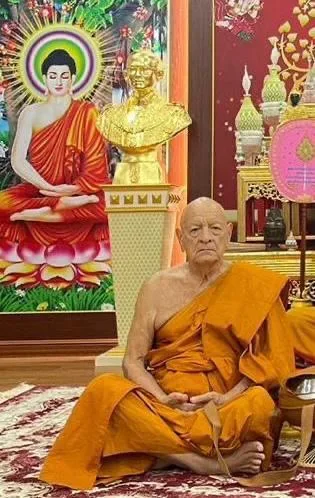
My days as a Buddhist Monk. It was a deeply rewarding spiritual experience. Along with doing this for my own spiritual, I did so as well to honor my wife, who is Buddhist and our son, Tiger. I was ordained on August 27, 2024 on my son's 24th Birthday,
Why Temporary Ordination Is Allowed in Thai Buddhism
In Thai Buddhism, entering the monastery for a period of temporary ordination, called buat chiiwp (“ordination for a life-period”), is a long-honored practice that reflects the deep belief that spiritual awakening is part of one’s natural human journey, available to all, regardless of marital status or stage of life.
Temporary ordination is permitted because:
1. It Fulfills a Cultural and Spiritual Responsibility
For centuries, Thai families have encouraged sons, and now, in many places, daughters, to ordain for a short time. Doing so generates bun (merit) for parents, ancestors, and the entire family line. It is understood as a sacred act that strengthens the spiritual foundation of the community.
2. It Honors the Principle of Voluntary Renunciation
Thai Theravāda Buddhism recognizes that renunciation can be practiced as a temporary discipline. When a person enters the temple, they shave their head, take the sangha vows, and live according to monastic rules. During that time, they are fully recognized as monks (or nuns). The transformation is real because the intention is sincere, even if the duration is limited.
3. It Creates Space for Deep Reflection and Inner Transformation
Short-term ordination allows people to step away from the pressures of everyday life to cultivate mindfulness, compassion, and clarity.
The practice is seen as a period of purification, helping individuals reset their minds and hearts, often guided by meditation, study, and service.
4. Monastic Status Ends By Choice and Ceremony
When the individual feels ready, they formally request release from their vows. The ceremony is simple and respectful, acknowledging that their time in the monastery has fulfilled its purpose.
Afterward, they return to their families or responsibilities without stigma—because the monastic path and household life are both respected in Thai culture.
5. Marriage Is Not an Obstacle
Unlike some traditions, Thai Buddhism does not see temporary renunciation as incompatible with marriage. The key is intention:
Enter sincerely
Live as a monk with full discipline
Depart respectfully
This fluidity is rooted in understanding that spiritual growth can occur at any stage of life.
In the Indigenous Spirit of Interconnectedness
This Thai custom echoes the way our own Indigenous nations understand transformation:
that a human being may enter a sacred period of discipline, reflection, and purification, and then return to the community with deeper wisdom and balance.
Both traditions honor the truth that every step toward clarity strengthens the whole circle, and that spiritual commitment need not divide a person from their relationships—it uplifts them.