
I have been going through old pictures, and many good memories have returned: visiting our beloved Unči Martina and Lala Harry Sherwood; my cousins Greg, Mandy, and Bobbi Sherwood-Widmann; my Lekší’s Billy, Don, and Bobby; and other beloved relatives.
Their family home was at Sherwood Corners, near Wakpala on the Standing Rock. My Taháŋši Greg still lives there today. When I think of that place, I do not remember only a house or a location on a map. I remember a whole circle of relatives, a way of life grounded in kinship, hard work, courage, laughter, and a deep love for one another.
I loved going out on horseback to round up stray cattle for branding. My Até always warned me to ride slowly across those wide-open prairies and to watch carefully for prairie dog towns. A horse stepping into a prairie dog hole while running would break its legs and throw its rider with terrible force.
I listened respectfully to my father, while I was still within his sight. But as soon as I disappeared from his sight, I would ride like the wind! Prairie dog holes never entered my mind, except out of the corner of my eye. At that age, the open prairie, a fast horse beneath me, and the wind against my face gave me a feeling of complete freedom.
I remember being there in 1957 with my Taháŋši’s Billy Forte and Chuck Claymore. We would flank the calves for branding and cutting. It was hard, sweaty, dusty work, but for us young boys, it was also an adventure. If we were fortunate, or perhaps unfortunate, depending on how one looked at it, a large two-year-old calf would have escaped being branded the previous year.
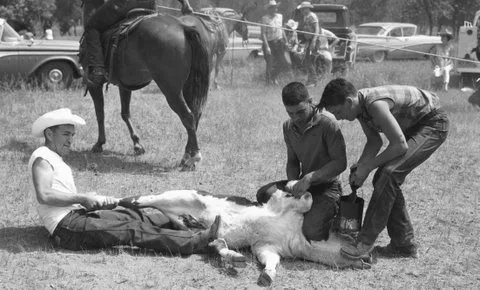
After we branded the two-year-old, we got the chance to ride it. No saddle, no rope, and absolutely nothing for our hands to hold. We climbed aboard and held on as long as the Great Spirit allowed.
At first, I had great visions of becoming a rodeo bareback rider, or perhaps even a bull rider. That vision was very suddenly and painfully interrupted when a large calf I was riding ran straight toward a small tree. At the very last moment, the calf turned sharply to the left. I did not.
I kept going straight and crashed painfully into the tree. In that sacred, unforgettable moment of revelation, I abandoned all intentions of becoming a bareback or bull rider. I hung up my imaginary rodeo spurs and chaps then and there!
Those years also taught me about another kind of toughness. I remember my Lekší’s and my father getting into some rough encounters with the “cowboys” in Mobridge.
One time, my father and Lekší Bob backed up Lekší Sam Claymore in settling a score with three men who had previously jumped Lekší Sam from behind at the Silver Dollar Saloon in Mobridge. I am sure these men were very, very sorry for jumping Lekší Sam from behind.
Sometimes my father and my Lekší’s came away from these encounters with black eyes and cut lips, but the men who challenged them, with their racist behavior, like the men at the Silver Dollar Saloon, were very sorrowful that they ever had done so.
My father always told me: “Son, never give in to bullies. You may have to take some hits, but you will get your licks in as well. After they realize that you will not back down under any circumstances, the bullies will leave you alone.” He also taught me how to street fight, teachings I used in my younger days on more than one occasion.
That was part of the teachings of those times. Our beloved parents, grandparents, uncles, and aunts were tougher than nails. Life required them to be strong. They had survived poverty, discrimination, violence, broken promises, and the continuing efforts to take away our lands, language, ceremonies, and identity.
Yet their toughness was never the whole of who they were. Beneath that strength was an endless capacity for love, kindness, generosity, forgiveness, and compassion. They could stand firmly against anyone who threatened their relatives, and then return home and be gentle, humorous, and loving with the children.
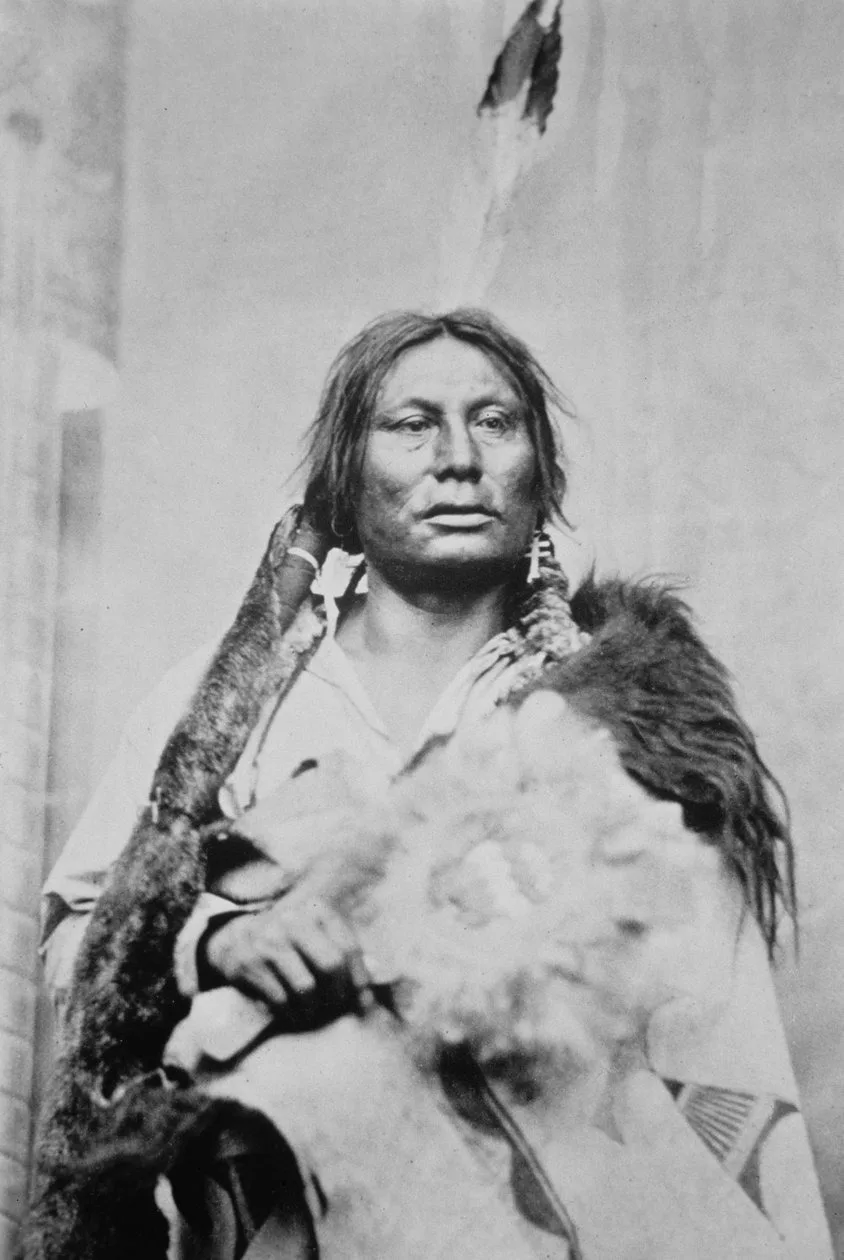
I especially remember Unči Martina telling me that, when she was a little girl, she had sat upon the knee of Chief Pȟizí, Gall. She remembered how large his hands were and the scars he carried from the bullets and wounds he had received while fighting at the Battle of the Greasy Grass.
Pȟizí was not merely a famous warrior from a history book. He is one of our relatives. He adopted my Great-Grandfather, Tipi Sapa, Black Lodge, Philip Deloria, as his misúŋka, younger brother, in a large community Hunka Ceremony. Pȟizí donated land, cattle, and other resources to build St. Elizabeth’s Mission to honor his younger brother and give the people a place to gather and pray together.
Pȟizí was a Húŋkpapȟa leader, a defender of his people, and one of the great strategists at the Greasy Grass. He had known hunger, warfare, displacement, and the terrible consequences of defending a homeland against a vastly more powerful invading nation. He understood that the struggle was never simply about territory. It was about protecting the life of the people—the children, the elders, the sacred places, the buffalo, the ceremonies, and the generations yet unborn.
Pȟizí had also suffered a profound personal loss shortly before the Battle of the Greasy Grass, when members of his own family were killed during the military attack upon the village. His courage in that battle did not arise from a desire for violence. It arose from love, grief, responsibility, and the sacred duty to defend his relatives.
What moved me most deeply was what Unči told me about the character of those old warriors. Men like Pȟizí could be powerful and fearless when their people were threatened, yet at home they were gentle, quiet, and soft-spoken. They did not have to prove their strength by intimidating their own families. Their strength was carried with humility.
My Unči said they were bloka, studs, men who understood their responsibilities and who were fearless. If anyone, including the United States military, threatened their relatives or attempted to take what they held sacred, including the Pahá Sápa, they were prepared to fight to the death and beyond. But within their families, they showed strength through patience, generosity, protection, and love.
Pȟizí’s life also reminds us that courage can take different forms at different times. The courage required to defend the people in battle is not always the same courage needed to guide them through hunger, confinement, political pressure, and a rapidly changing world.
Like many of our great leaders, Pȟizí’eventually had to confront the painful question of how his people could survive when military resistance was no longer possible without bringing even greater suffering upon the women, children, and elders.
That did not erase his courage or his defense of the people. It revealed another dimension of leadership: knowing that preserving the Nation sometimes requires strength in battle, and at other times requires patience, negotiation, adaptation, and the willingness to carry impossible burdens for future generations.
Another part of Pȟizí’s life is his hunka relationship with our White Swan Ihanktonwan Tiospaye (extended family), which began when he adopted my great-grandfather, Tipi Sapa, Black Lodge, Philip Deloria, in 1892, as his younger brother. Pȟizí’ later donated land, cattle, and other resources needed to establish St. Elizabeth Mission at Wakpala.
This was not a rejection of our Dakota/Lakota identity, nor was it simply an acceptance of a foreign religion. To understand what our ancestors were doing, we must first understand the conditions under which they were forced to live.
At that time, virtually every traditional way our Oceti Šakowiŋ relatives prayed was prohibited. The Sun Dance, the Sweat Lodge, and our other sacred ceremonies were outlawed or driven underground. Our spiritual leaders would be punished for conducting the ceremonies that had sustained our people since the beginning of our existence.
The government was not merely taking our lands. It was attempting to break the sacred relationship between our people, the Creator, and all of life.
Under these conditions, our ancestors heard the story of Jesus. My father always told me that what spiritually touched them was not complicated Christian theology. They saw a Wičháša Wakȟáŋ, a Holy Man, who fasted and went alone into the wilderness, where he faced himself and the forces that tested him. They saw a man who stood between an accused woman and those who wanted to condemn and harm her, challenging her accusers to examine their own lives before passing judgment upon hers.
They saw someone who walked among the poor, fed the hungry, healed the suffering, confronted hypocrisy, and stood beside those whom society had rejected. They saw a Wičháša Wakȟáŋ who refused to abandon his spiritual purpose even when the authorities threatened him. They saw someone who willingly gave his life for his people.
Our ancestors understood that kind of person. They understood fasting, sacrifice, prayer, spiritual testing, and giving oneself so that the people might live. They understood the sacred responsibility to protect the vulnerable. They understood what it meant to suffer because one would not surrender the truth. These were not foreign ideas to them. They recognized in Jesus’ life a sacred pattern they already knew, that of a Wičháša Wakȟán.
Most importantly, they heard that although this man had suffered and been killed, death did not have the final word. He returned. For a people whose lands had been taken, whose ceremonies had been outlawed, whose families were being torn apart, and whose entire way of life was under assault, this was a powerful story of spiritual recovery and renewal. It told them that suffering would not last forever. It told them that even when a people appeared defeated, they could rise again.
They knew that we, too, would return. Our ceremonies would return. Our languages would return. Our children would remember who they were. Our people would rise from generations of suffering and reclaim the sacred ways that had never truly died. The story of resurrection affirmed something our ancestors already carried within their hearts: what is sacred may be driven underground, but it cannot be destroyed.
This is essential to understanding why leaders such as Pȟizí and Tipi Sapa supported St. Elizabeth Mission. They were not turning their backs upon Dakota/Lakota spirituality or surrendering their identity. They sought a place where people could continue gathering, praying, speaking their language, strengthening their relationships, and maintaining their unity during a time when so many forces worked to divide and destroy them.
Within St. Elizabeth, the people continued to speak Lakota. The mission became much more than a church building or a place for a Sunday service. Families sometimes arrived three days before the service and remained for several days afterward. They camped together, shared food, visited, told stories, renewed family relationships, discussed the people’s needs, and strengthened the bonds that held the community together.
In this way, St. Elizabeth became a place of refuge and continuity. Although ceremonies were prohibited and people faced relentless pressure to abandon their identity, they still found a way to come together. They used the space available to them to preserve the Dakota/Lakota language, maintain kinship, and keep the sacred circle of the people from being broken.
Our ancestors did not separate spiritual life from community life. Prayer was not something confined to one building or one day of the week. Prayer lived in the language, in feeding one another, in caring for the elders, in teaching the children, in telling the old stories, and in maintaining unity among the relatives. When the people gathered at St. Elizabeth, all these dimensions of life came together.
That is the deeper meaning of Pȟizí’s gift. The land, cattle, and resources he contributed were not just to honor his younger brother or to donate to build a mission. They were an investment in the people’s survival and unity. Pȟizí, Tipi Sapa, and the other leaders of that time were finding a way through nearly impossible circumstances. They protected a place where people could still gather as relatives and draw strength from one another.
We must understand their choices within the suffering and restrictions of their time, not judge them from the comfort of ours. They took what was available and used it to help the people survive. They did not see the story of Jesus as a command to stop being Dakota/Lakota. They were spiritually strengthened and inspired by the example of a spiritual man who fasted, prayed, defended the vulnerable, confronted injustice, suffered for his people, gave his life, and returned.
That story gave our relatives hope because it reflected their own journey. They, too, had suffered. They, too, had been condemned. They, too, had been told that their sacred life was finished. Yet somewhere deep within themselves, they knew that our people would return. And we have returned. We are still returning.
These memories have stayed with me throughout my life. When I was younger, I believed courage was shown mainly through physical fearlessness: riding a wild calf, racing a horse across the prairie, or standing up with one’s fists when challenged.
Thankfully, as I have grown older, I have discovered that love, compassion, forgiveness, consultation, and prayer are far more effective, and considerably less painful, than my fists. As my father always shared with me in his last years, if he were able to live his life again, he would never participate in a sport whose purpose was to hurt another human being.
This was a profound statement from someone who began boxing at 14, fought a much older man from the Kansas Athletic Club to a draw, and went on to win the All-Service Lightweight Championship at 29.
In my older years, I have come to the same conclusion: not harming any of our animal relatives in any way. This includes the food I choose to eat.
This is a big change for me, as whenever I stepped on the football field or wrestling mat, it was full-on war. My attitude was: win or lose, my opponents wouldn’t want to wrestle or play football against me again.
Yet the deeper teaching my father gave me remains. We must never surrender to bullying, injustice, or fear. We may no longer answer violence with our fists, but neither should we become passive when our relatives, our Mother Earth, or anything sacred is threatened.
We can stand firmly without hatred. We can speak the truth without humiliating others. We can forgive without accepting continued injustice. We can be peaceful without becoming powerless.
That, I believe, is part of the legacy Pȟizí, Unči Martina, my father, my mother, and all those beloved parents, grandparents, aunts, and uncles who helped raise us left us. They taught us that true strength is not loud. It does not need to threaten or boast.
True strength knows when to stand, when to protect, when to forgive, and when to pray. It is strong enough to face an enemy, but gentle enough to hold a child.
As I look through these old photographs, I understand more clearly that these are not merely pictures of people who have passed on. They are living reminders of who we are, where we come from, and how we are expected to conduct ourselves.
The faces in these photographs still speak to us: Love your relatives. Protect what is sacred. Never surrender to injustice. Walk humbly. Forgive whenever possible. And when the well-being of the people is threatened, stand your ground with courage, compassion, and prayer.
Mitákuye Oyás’iŋ