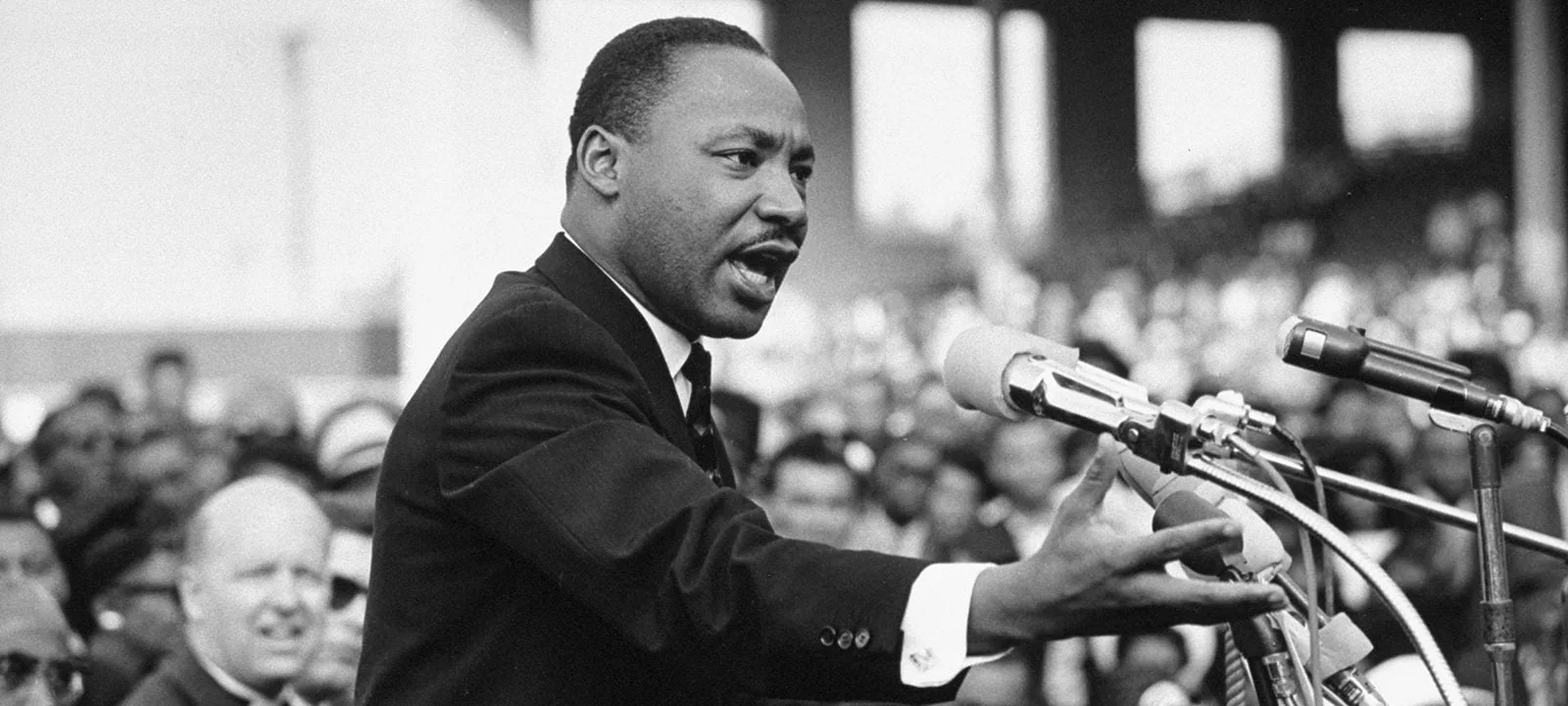
Martin Luther King and Indigenous Peoples Civil Rights
Few know that Dr. Martin Luther King was a great freedom fighter for Native Americans and the horrific mistreatment of them by the U.S. government. There is not another human being, outside our Indigenous communities, who stood up for Native Americans like Dr. King.
This is why we will honor Dr. King with a Global Fire Ceremony during Martin Luther King Weekend, January 15-18, 2021. It is time to end prejudice of every form, whether it be racism, sexism, adultism, ageism, nationalism, anything that causes a human being to feel less than or better than another member of our Human Family.
King outlined in his 1963 book "Why We Can’t-Wait” the historic injustices inflicted on Indigenous peoples:
"Our nation was born in genocide when it embraced the doctrine that the original American, the Indian, was an inferior race. Even before there were large numbers of Negroes on our shores, the scar of racial hatred had already disfigured colonial society. From the sixteenth century forward, blood flowed in battles of racial supremacy. We are perhaps the only nation that tried as a matter of national policy to wipe out its Indigenous population.
Moreover, we elevated that tragic experience into a noble crusade. Indeed, even today we have not permitted ourselves to reject or feel remorse for this shameful episode. Our literature, our films, our drama, our folklore all exalt it."
Unfortunately, these words still ring true to this day in so many respects.
Dr. King was a fighter for all of the oppressed of this land. He assisted Native people in south Alabama in the late 1950s. At that time the Pouch Band of Creek Indians were completely desegregate schools in their area. Native children were allowed to ride school buses to previously all-white schools, while dark-skinned Indian children from the same band were barred from riding the same buses.
Tribal leaders, upon hearing of King's desegregation campaign in Birmingham, Ala., contacted him for assistance. He responded and through his intervention, the problem was quickly resolved.
At the 1964 March on Washington, there was a Native American presence, many from South Dakota. Dr. King’s civil rights movement motivated the Native American rights movement of the 1960s. The Native American Rights Fund (NARF) was patterned after the NAACP's Legal Defense and Education Fund.
By 1900 there were only 237,196 Native Americans left in the entire country, this from an original population that numbered in the tens of millions. King spoke out that the genocide of American Indians was "national policy."
As late as the 1890s the U.S. Congress was debating the outright military extermination of all remaining Native Americans. The reason this nefarious plan was not carried out was that it would be too expensive.