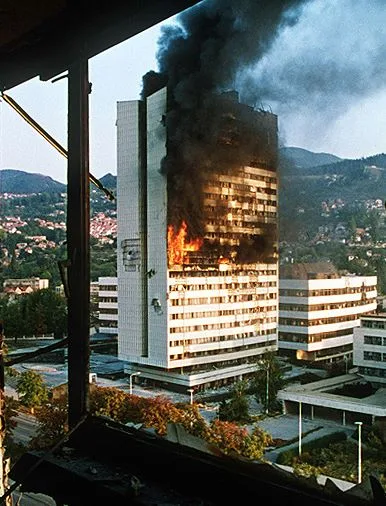
Learning a lot about Sarajevo! The Bosnian War for independence resulted in large-scale destruction during the Siege of Sarajevo between 1992 and 1996. Thousands of Sarajevans lost their lives under the constant bombardment and sniper shooting at civilians by the Serb forces during the siege, the longest siege of a capital city in the history of modern warfare.
The Serbian Army encircled Sarajevo with a siege force of 18,000 stationed in the surrounding hills, from which they assaulted the city with artillery, mortars, tanks, anti-aircraft guns, heavy machine-guns, multiple rocket launchers, rocket-launched aircraft bombs, and sniper rifles. The Bosnian government defense forces inside the besieged city were poorly equipped and unable to break the siege.
During the siege, 11,541 people lost their lives, including over 1,500 children. An additional 56,000 people were wounded, including nearly 15,000 children.
Sarajevo also has a long and rich history of religious and cultural diversity, Sarajevo is sometimes called the "Jerusalem of Europe" or "Jerusalem of the Balkans". It is the only major European city to have a Mosque, Catholic church, Orthodox church, and Synagogue within the same neighborhood. When we traveled from the Airport through the City to our Hotel, there was no sign there had been a conflict!
A good location for our meeting of Global Trustees of the United Religions Initiative, (URI).