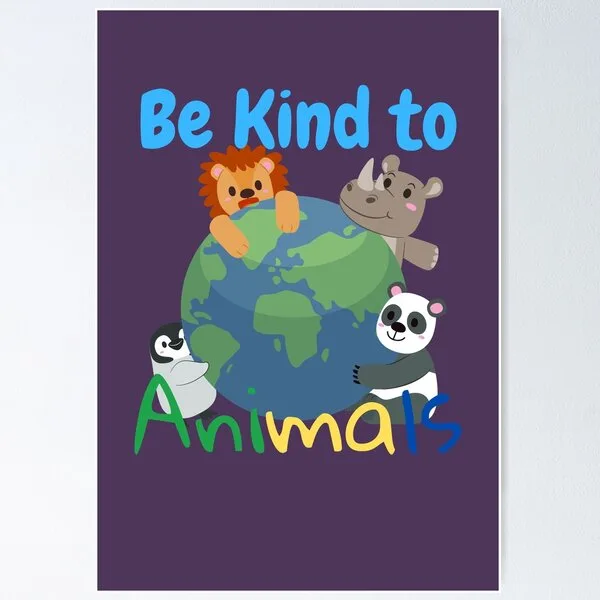
Teaching kindness toward animals, a shared value in the Bahá'í Faith, and Indigenous spiritual teachings underscores the interconnectedness of all life. Both traditions stress that all beings, human or otherwise, are part of a sacred circle of existence, where every element has a purpose, and harmony is achieved through reciprocity and respect.
The Bahá'í writings on animals prompt us to reconsider our relationship with animals and reflect on the broader web of creation. Reframing kindness to animals as a spiritual necessity, not just an ethical consideration, is vital to one's journey toward spiritual enlightenment and communion with the Creator.
In both Bahá'í and Indigenous traditions, there is a profound understanding that spiritual development involves embracing the oneness of all life. Abdu'l-Bahá beautifully illustrates this understanding, "Unless you must, bruise not the serpent in the dust, how much less wound a man, and if ye can, no ant should ye alarm, much less a brother harm." This teaches us that the same reverence we hold for fellow humans should extend to all creatures, for each has its place in the divine plan of creation.
From the tiniest ant to the mightiest animal, every being shares the life force bestowed by our Creator.
In the Bahá'í view, animals occupy a significant station within creation. Although they may not possess the same intellectual or spiritual capacities as humans, they are still rich in their senses, emotions, and wisdom.
For example, let us take the power of memory. Suppose you carry a pigeon from here to a distant place and set it free there. In that case, it will return, reminding us of the wondrous capacities of animals, which often surpass those of humans in their natural domains.
Just as an eagle can spot prey from great distances or a salmon instinctively knows how to navigate thousands of miles to spawn, animals possess their wisdom, deeply rooted in nature.
This understanding resonates with Indigenous teachings that view animals not as lesser beings but as relatives—teachers who offer guidance, lessons, and balance to human life.
In Dakota traditions, for example, the buffalo is revered as a source of sustenance and a sacred being that embodies the spirit of abundance, selflessness, and perseverance.
Each animal has its spiritual significance, often symbolizing qualities humans strive to embody. Thus, when Bahá'í teachings call for the utmost kindness and tenderness toward animals, they echo a worldview that recognizes every creature's spiritual agency and dignity.
Furthermore, the Bahá'í teachings on the future of humanity's diet—where the reliance on meat will lessen and be replaced by plant-based sustenance—align with the Indigenous principle of taking only what is needed from Mother Earth and doing so with gratitude and respect.
The recognition that humans are designed to eat grains and fruits more than meat suggests that harmony with nature involves living in a way that minimizes harm to other living beings.
As humanity evolves, we will align more closely with this ideal, recognizing that our actions toward animals and Mother Earth must be rooted in love, responsibility, and a deeper spiritual awareness.
This brings us to the idea of responsibility. In both Bahá'í and Indigenous worldviews, humans are seen as stewards of the Earth. We have been given a unique capacity for intellect, creativity, and compassion, which means we also bear a greater responsibility.
The Bahá'í teaching that "there is no difference whether ye inflict pain on a human being or an animal" is a powerful reminder that the essence of suffering is shared among all living beings. Indigenous teachings reflect this, too, urging us to walk in balance and harmony with all life, acknowledging that we are all connected through the Creator's sacred web.
This shared responsibility of stewardship connects us all, reinforcing our duty to care for Mother Earth and all her inhabitants.
The call to train children from an early age to be "infinitely tender and loving to animals" is a teaching that mirrors the Indigenous practice of raising children with a deep respect for all of creation.
Through ceremonies, stories, and daily practices, Indigenous children are taught to honor and appreciate the gifts of the natural world. Whether learning how to hunt, gather, or care for animals respectfully, they are instilled with the understanding that every action carries spiritual significance.
Similarly, in the Bahá'í tradition, kindness to animals is not an afterthought but an integral part of developing one's spiritual and moral character. This emphasis on early education underscores our significant role in shaping future generations' values and attitudes.
In conclusion, the treatment of animals in the Bahá'í Faith, which focuses on love, responsibility, and spiritual interconnectedness, harmonizes beautifully with Indigenous teachings. Both traditions remind us that spiritual growth is inseparable from how we treat our human, animal, and otherwise relations.
Through this lens, every interaction with the natural world becomes an opportunity for sacred reciprocity. We honor the gifts of creation and, in turn, draw closer to our Creator, Great Spirit, Wakan Tanka, the Maker of All Good Things.
This journey of spiritual growth, rooted in respect for all beings, is a source of inspiration and motivation for us all.