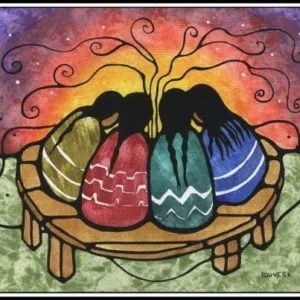
History and Twelve Guidelines for Talking, Sharing, and Healing Circles
Talking Circles, also known as Sharing and Healing Circles, have a rich history that dates back to the late 1960s when Arapahoe Elder Raymond Harris from the Wind River Reservation, Wyoming, passed on the teachings to Cree Elders Abe Burnstick and Eddie Belrose at Wind River. These elders became the carriers of the ancient wisdom of Talking Circles, a practice deeply rooted in many Indigenous cultures.
In 1975, Cree Elders Abe Burnstick and Eddie Belrose prayerfully shared the Teachings of Talking Circles at the Sweat House Lodge in Corvallis, Oregon. The Sweat House Lodge was an Alcohol and Drug Treatment Center that recognized the therapeutic value of the Sweat Lodge, making it a suitable setting for transmitting these sacred teachings.
The essence of Talking Circles is in creating a safe and open space for people to come together and share their feelings, perspectives, and experiences. In these circles, participants find a sense of trust, emotional support, and compassionate understanding. The process fosters empathy and connection among individuals and communities.
While sharing the Talking Circle teachings, Cree Elders Abe Burnstick and Eddie Belrose also revealed prophecies that would later prove remarkably accurate. Among these prophecies was one that foretold the advent of the internet. They spoke of the "Everywhere Spirit" being made physically manifest on Mother Earth, hinting at the global connectivity the internet would bring.
The elders emphasized the importance of using this gift of digital technology and the internet responsibly and with good intentions. They acknowledged that, like all tools, digital technology and AI could lead to unity or disintegration, depending on the values and morals of those who wielded these powerful tools.
As the years passed, the wisdom of Talking Circles continued to spread, enriching the lives of many who embraced this sacred practice. The Twelve Guidelines for Talking, Sharing, and Healing Circles were established to ensure the tradition was carried forward with respect, authenticity, and integrity.
These guidelines vary slightly among communities and generally include principles such as speaking from the heart, listening with intention, maintaining confidentiality, and respecting diverse perspectives. The aim is to create a non-judgmental and supportive space where individuals can find healing, growth, and understanding through shared dialogue.
The legacy of Talking Circles lives on, as many communities continue to gather in circles to share their stories, find solace, and collectively heal from past and present wounds. The teachings passed down by the Elders serve as a beacon of hope, guiding individuals toward emotional well-being, reconciliation, and a deeper connection with themselves and others.
Thus, the profound teachings of Talking Circles passed down from Arapahoe Elder Raymond Harris to Cree Elders Abe Burnstick and Eddie Belrose have left an indelible mark on the history of healing practices, communication, and human connection.
Twelve Guidelines For Facilitating Talking Circles:
Share from the Heart: Encourage participants to share heartfelt issues, principles, and challenges rather than focusing on personalities. All comments should directly address the question or issue without criticizing or judging others. Participants should speak positively and honestly, expressing themselves genuinely.
Respectful Listening: Maintain a non-judgmental and attentive atmosphere during the circle. Only one person speaks at a time, while others listen respectfully and without interrupting. To ensure orderly communication, consider using an object like a talking stick, which designates the person who has the floor.
Honoring Silence: Emphasize that silence is acceptable as a response. No one should feel pressured to contribute if they are uncomfortable doing so. Participants should feel free to pass on their turn without any negative consequences or judgment.
Inclusive Participation: Ensure that everyone feels invited to participate. Avoid letting a few individuals dominate the discussion. Encourage quieter members to share their thoughts and ensure everyone's voice is heard.
Equal Opportunity to Speak: Implement a system that ensures equitable participation. No one should speak twice until everyone in the circle has had the opportunity to speak once or until everyone has spoken twice, promoting fairness and balanced contributions.
Non-Judgmental Atmosphere: Foster an atmosphere of patient and non-judgmental listening. This encourages shy individuals to express themselves and balances the participation of more vocal members. Structured methods, such as going around the circle systematically, can help achieve this.
Optimal Group Size: Ideally, limit the Talking Circle to five to nine members. Smaller groups allow each individual adequate time to express themselves without feeling rushed or overwhelmed by the number of participants.
Facilitator's Role: The Talking Circle Leader should be impartial and open to different perspectives. They facilitate the discussion by acknowledging contributions in a non-judgmental manner, avoiding comparisons, and showing appreciation through nods or acknowledgments.
No Put-Downs: Enforce a strict no put-downs policy for any form of comments directed towards others or oneself. Establish a way to signal the speaker if this behavior occurs to maintain a respectful environment.
Share Your Way: Encourage speakers to express themselves in the way they feel most comfortable, whether through personal stories, examples, metaphors, or analytical statements.
Listening with Love and Compassion: Encourage active listening with love and compassion. Some circles may find it helpful to encourage participants to consciously send compassionate feelings to the speaker, supporting them without drifting into thoughts about their response.
Equal Sharing Time: Stress the importance of equal sharing time for each member of the Circle. Before starting the Talking Circle, estimate the time needed for equal participation and ensure everyone gets a fair chance to speak.
By following these twelve guidelines, Talking Circles create a nurturing and safe space for participants to openly share, listen, and explore different viewpoints without fear of criticism or judgment. The process fosters understanding, appreciation, and respect for diverse perspectives and allows for exploring moral or ethical issues without causing offense or harm to anyone involved.
Regenerate response