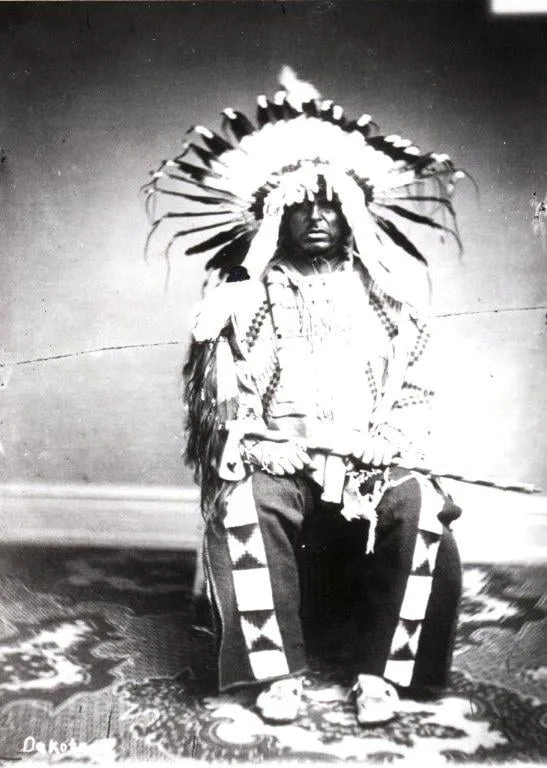
My Great-Great-Grandfather Hinhan Wicasa, Owl Man, has had a great impact on my life.
Through spending a lot of time in isolation praying and speaking with the spirits Hinhan Wicasa developed an intimate relationship with the Thunder Spirits.
One time, a white man, one of the first to live in the Yankton area, taunted Hinhan Wicasa about his powers, saying that he was just a fake. He said that Hinhan Wicasa should stand in a metal washtub and hold an iron crowbar toward the sky during the next thunderstorm to demonstrate that he really had influence with the Thunders. The white man proposed that if Hinhan Wicasa was killed, he would inherit Hinhan Wicasa’s favorite gray horse.
Hinhan Wicasa made him a counteroffer. Hinhan Wicasa said that the white man didn’t have to do anything. He could be wherever he liked during the next thunderstorm. Hinhan Wicasa would just tell the Thunders to search him out and kill him. The bet was quickly canceled.
Another time two white newspaper reporters tried to confront him. Hinhan Wicasa wore a moccasin with a white owl on his right foot and a black hawk on his left foot. He looked into the eyes of the reporters and first lifted his right foot and an owl hooted and he lifted his left moccasin and a hawk shrieked. The reporters quickly left.
Another time Hinhan Wicasa was called to help a woman with a wandering mind. Hinhan Wicasa had her placed alone in a tipi, while her relatives insured perfect silence by keeping the dogs still. All night long Hinhan Wicasa sang to the spirits, praying for their help.
The evil spirit fluttered about the tipi poles all night. In the morning Hinhan Wicasa sent a Spirit of Thunder and Lightning around the inside of the tipi and her mind was restored.
One of the stories that my beloved father recounted to me, on many occasions, since I was very young was when Hinhan Wicasa brought his Grandfather Tipi Sapa back from the dead.
What happened, of course, a direct impact on my father, who was raised, in his young days by his Grandfather Tipi Sapa, and obviously on all of Hinhan Wicasa and Tipi Sapa's descendants and relatives, including my sister, Deloria, myself, our children, grandchildren, and our extended family.
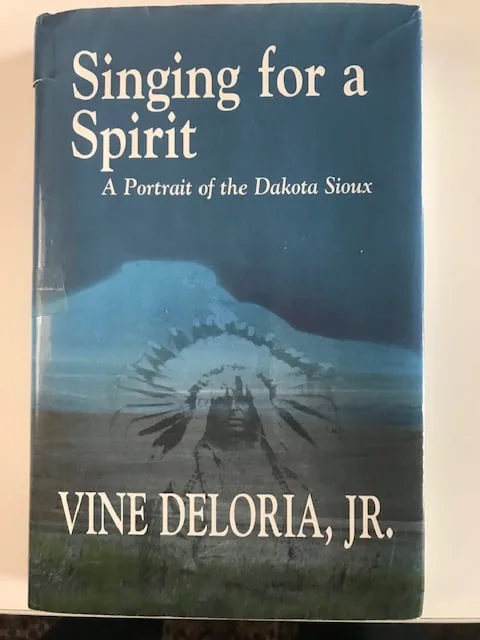
It was not known outside our family until Dekshi Vine recounted this family history in " Singing For a Spirit " in 1999. From my perspective, it reflects the inherent, restorative spiritual power in the " Soul " of all members of the Human Family.
"In 1856, when Tipi Sapa was about three years old, Hinhan Wicasa had to go on a long trip. When he returned, the women were all wailing and mutilating themselves. Hinhan Wicasa immediately knew that a relative had died. When Hinhan Wicasa asked the women who died, they cried harder and ran away from him.
Hinhan Wicasa entered his Tipi and found his beloved son's lifeless body laid out on a buffalo robe. Tipi Sapa had caught a fever and, in spite of the best the people could do, had passed away the day before Hinhan Wicasa returned.
Hinhan Wicasa stayed inside the tipi for a long time. People heard his terrible cries of grief, but no one dared to go in and talk with him. Hinhan Wicasa had named my Great Grandfather, Tipi Sapa—Black Lodge—as a dedication to a Black Tipi that was one of the key dimensions of a life-changing vision he had received on Medicine Butte. It through his spiritual experience within the Tipi Sapa that Hinhan Wicasa received his healing gifts and saw more than four generations into his descendant's future. Now, with the death of his beloved son, his hopes for the future seemed to be futile.
Hinhan Wicasa finally emerged from the Tipi, his arms, and legs bloody with knife wounds of grief, carrying Tipi Sapa's body in his arms. He mounted his gray horse and rode off to a high hill, where he dismounted and began to pray. All night and all the next day Hinhan Wicasa sat there singing lamentations with his beloved son's body in his arms.
Hinhan Wicasa spoke very gruffly with the Thunders. Hinhan Wicasa boldly said that he had done everything they had asked and told them that they could take anything of his except his beloved son. Hinhan Wicasa pleaded that they return him.
Just about sundown the people looked anxiously toward the hill, wondering if Hinhan Wicasa was going to spend another night and day there, and also wondering how they would get Tipi Sapa’s body away from him, they could proceed with the burial.
To their surprise, they saw Hinhan Wicasa walking down the hill, hand in hand, with Tipi Sapa, the grey horse trailing behind them. No one spoke a word as the two walked into the Tipi and sat down.
Finally, one of the women prepared some food and broth for them and broke the spell. After this demonstration of his powers, people became frightened of Hinhan Wicasta. Among some of his relatives of the Mahaska Ptesan Wicoti, White Swan Camp there was a profound sense of alienation because it was evident that Hinhan Wicasa significantly favored Tipi Sapa."
What Dekshi Vine Jr. shares on the back of Singing for a Spirit continue to define the work and challenges of our extended family, both blood and hunka.
“The Red Road was fraught with danger but filled with life... Hinhan Wicasa (Owl Man) would have great powers as a medicine man, the Thunders would be his close friends, and many birds and animals would help him.
His descendants would have a responsibility to work for the good of the people, but would face many trials, tribulations, and disappointments. This prophecy hung over Hinhan Wicasa and his son, Tipi Sapa's (Philip Deloria) lives like a shroud.
The decisions that Hinhan Wicasa, Tipi Sapa, and their descendants would make in life have always been subject to the elements of this vision. "