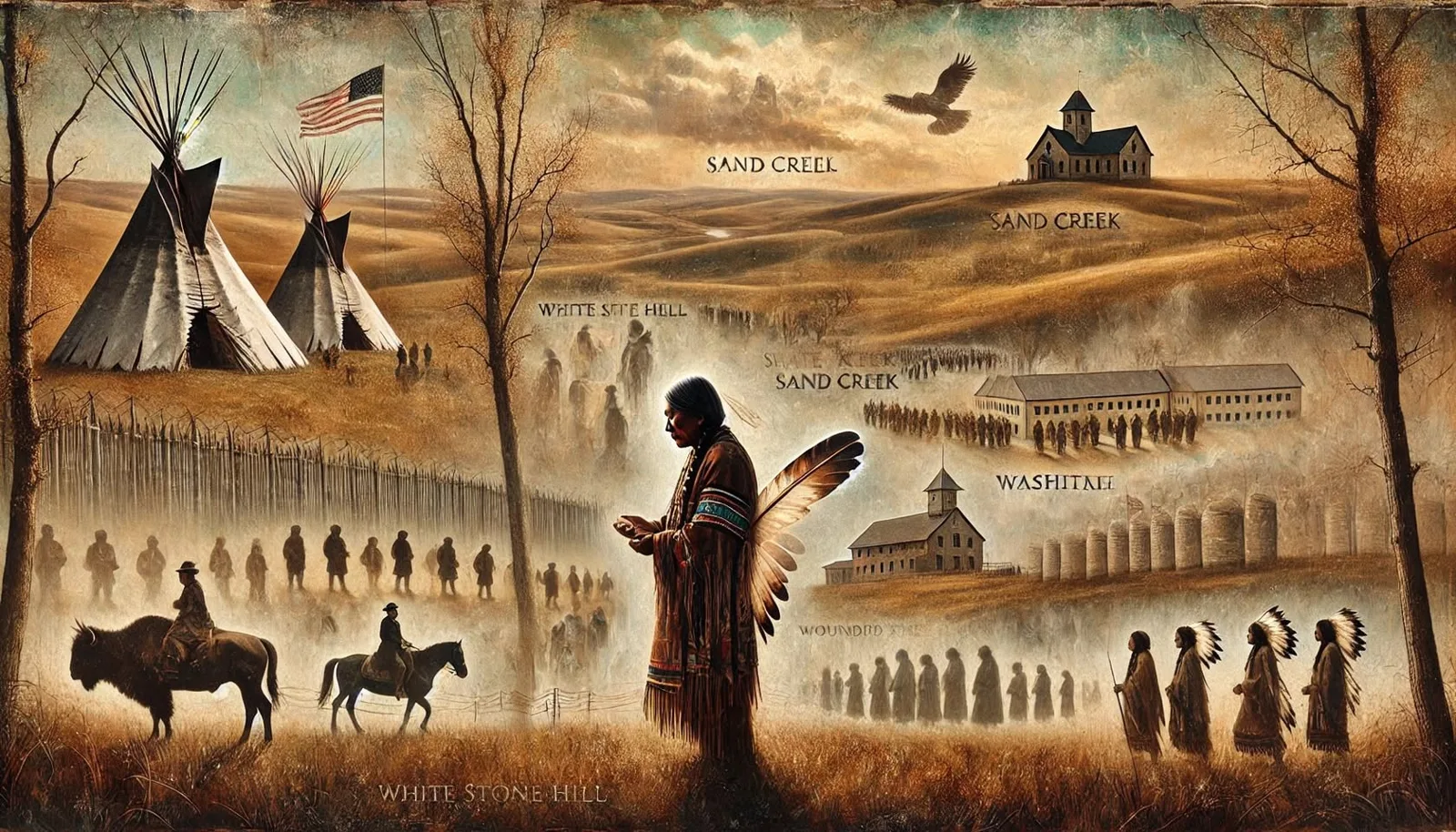
From an Indigenous historical perspective, we recognize that the United States has engaged in warfare since its inception, marked by a history of conquest, displacement, and systematic efforts to erase our peoples and cultures. This nation’s foundation was laid through acts of aggression and violence against Indigenous nations and continued through policies that sought to assimilate, remove, or eliminate Native people from our lands and ways of life. This historical reality lives on in the memories and truths of our communities, exemplified by atrocities like White Stone Hill, Sand Creek, Black Kettle’s encampment at Washita, and Wounded Knee. These are not mere past events but continuous threads woven into the American fabric, reflecting a foundational physical conflict and a deep ideological and spiritual rift.
The genocidal policies inflicted upon our ancestors extended into the boarding school system, an attempt to eradicate Indigenous identity and connection to our cultures, languages, and lands. These policies aimed to “civilize” Native children by severing their ties to family and tradition, stripping them of the very essence of who they were as Indigenous people. The consequences have reverberated through generations, contributing to intergenerational trauma that persists today. Yet we endure, guided by the resilience and strength of our ancestors and the teachings of the Creator.
Today, as the United States considers new directions for its national security and foreign policy, it is crucial to remember that its legacy of war was first practiced on these lands against the Indigenous nations who held and respected them for millennia. It is perhaps time for the country to turn inward—not in search of power or influence, but in the pursuit of healing and truth. Absolute security begins not with global domination or self-serving alliances but with an honest reckoning of the past and a commitment to peace and justice at home and abroad.
As we consider these pathways forward, we envision a transformative approach to rebuilding the Americas—a development model where justice and spiritual and physical prosperity prevail again. This model calls for the Americas to become a beacon of harmony and reciprocity woven from the threads of our diverse cultures and spiritual foundations. A renewed focus on restoring Indigenous knowledge, environmental stewardship, and intergenerational healing can serve as pillars for a new era recognizing the Americas’ potential to inspire global development rooted in sustainability, equity, and unity. And let us transform the immense resources wasted on war into rebuilding the Americas with cultural and spiritual respect, reinvesting in the well-being of all our communities and lands.
As the discourse unfolds regarding future leadership and the priorities of defense, let us remember that a nation's real strength lies not in its military might or control but in the integrity of its relationships with others and with Mother Earth. Authentic leadership, as we understand it, is not about becoming a king or queen over others; it is about becoming sovereign within oneself and embodying respect, responsibility, and humility.
This is a time to withdraw from aspirations of dominion and cultivate unity, beginning with acknowledging past wrongs and a sincere effort toward reconciliation. Such a shift could mark the Americas’ most significant contribution to the world—a model of healing, respect, and partnership in place of conquest. By grounding our future in justice and mutual respect and reinvesting in the prosperity of the Americas, we can lead the way to a new vision of prosperity that embraces the well-being of all nations. Only then might we see a future grounded in peace and mutual respect, where all can thrive together.
Shunkmanu He Me Yedo! Chanupa Sapa He Me Yedo!
Hinhan Wicasta/Deloria Tiospaye, Ihanktonwan, and Chickasaw Nation