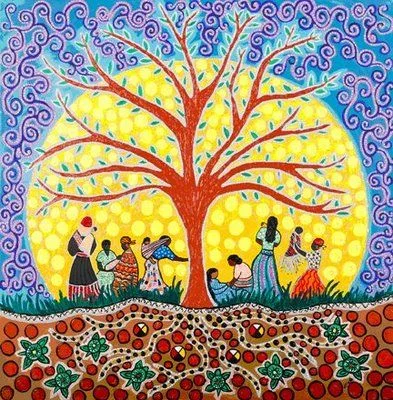
Overview and Curriculum: Four Worlds Empowerment for Indigenous Women and Mothers Program
Overview: The Four Worlds Empowerment for Indigenous Women and Mothers Program is a culturally respectful and community-based initiative to enhance the well-being and empowerment of Indigenous women and mothers.
Grounded in the Four Worlds Indigenous Holistic Development Model, the program addresses socio-economic disparities Indigenous communities face. It seeks to build a more equitable and thriving future for Indigenous populations. The program fosters holistic growth and development by recognizing the importance of cultural traditions, values, and customs, narrowing the socio-economic gap between Indigenous and non-Indigenous Canadians.
Program Goals:
Enhance Socio-economic Conditions: The program strives to improve the socio-economic conditions of Indigenous women and mothers, focusing on addressing child poverty rates. The program aims to uplift individuals and families from challenging circumstances by providing access to resources, education, and support.
Empower Indigenous Women as Leaders: Empowerment is a core pillar of the program, aiming to empower Indigenous women to become leaders and decision-makers within their communities and beyond. By nurturing their skills, confidence, and cultural identity, the program seeks to create robust and influential role models.
Strengthen Cultural Identity and Traditional Knowledge: Cultural pride and traditional knowledge are essential to Indigenous empowerment. The program seeks to strengthen cultural identity and preserve traditional knowledge by incorporating Indigenous practices, languages, and histories into various activities.
Increase Access to Quality Education and Healthcare: Access to quality education and healthcare plays a vital role in building resilient communities. The program strives to increase access to education and healthcare services tailored to the needs of Indigenous women, mothers, and children, supporting their well-being and future prospects.
Facilitate Community-based Solutions: Recognizing the diversity and unique needs of Indigenous communities, the program employs a community-based approach. The program seeks to develop tailored solutions that align with their aspirations and requirements by working closely with community members, elders, and leaders.
Program Components:
Culturally Relevant Education and Early Childhood Development: This component focuses on developing and implementing culturally appropriate curricula that incorporate Indigenous knowledge, language, and history into educational programs for children. It also offers parenting support workshops to empower Indigenous mothers in providing holistic care for their children's early development.
Healthcare Access and Support: The program establishes culturally sensitive healthcare services that address Indigenous women and children's physical, mental, and emotional well-being. It introduces trauma-informed care practices and mental health support to address the impact of historical and ongoing traumas.
Economic Empowerment and Entrepreneurship: To promote economic empowerment, the program provides skill development and training programs tailored to the needs of Indigenous women. It also offers microfinance initiatives and mentorship programs to support Indigenous women in starting and sustaining their businesses.
Strengthening Social Support Systems: This component focuses on facilitating community healing circles led by elders to promote healing, resilience, and reconciliation within Indigenous communities. The program also creates supportive housing and safe spaces for Indigenous women and children facing challenging circumstances.
Cultural Revitalization and Traditional Knowledge: The program implements language and cultural education programs to preserve cultural heritage. It also promotes land-based learning experiences that connect Indigenous women and children to their ancestral lands and cultural practices.
Self-Determination and Collaboration: Empowering Indigenous communities is a crucial program element, allowing them to take charge of program design, implementation, and evaluation. The program partners with government agencies, Indigenous organizations, non-profit groups, and the private sector to amplify its impact and resource-sharing.
Program Implementation: The program adopts a comprehensive approach to ensure its effectiveness and cultural sensitivity:
In-depth Consultations: The program conducts in-depth consultations with Indigenous communities to understand their unique needs, challenges, and aspirations. Community engagement and input are prioritized throughout the program's development and implementation.
Culturally Sensitive Staff: Program staff are carefully selected and trained to deeply understand Indigenous cultures and the Four Worlds Indigenous Holistic Development Model. Cultural sensitivity and respect for Indigenous traditions are paramount.
Community-led Advisory Councils: The program establishes community-led advisory councils to ensure community involvement and cultural authenticity. These councils guide program activities and decisions, making them more relevant and effective.
Regular Program Evaluations: The program facilitates periodic program evaluations to monitor progress, identify areas for improvement, and celebrate successes. These evaluations also provide insights into the program's impact on participants and the community.
The Four Worlds Empowerment for Indigenous Women, Mothers Program is committed to fostering positive change, supporting the growth and resilience of Indigenous women, mothers, and children, and promoting a future of unity and prosperity for Indigenous communities in Canada.
Four Worlds Empowerment for Indigenous Women and Mothers Program Curriculum Overview
Month 1:
Week 1: Introduction to Four Worlds Model and Cultural Traditions
Session 1: Understanding the Four Worlds Model
Introducing the Four Worlds: Physical, Mental, Emotional, and Spiritual.
Exploring how these dimensions are interconnected for holistic development.
Session 2: The Importance of Cultural Traditions
Recognizing the significance of cultural traditions, values, and customs in Indigenous communities.
Understanding how cultural identity contributes to the well-being of Indigenous women, mothers, and children.
Week 2: Culturally Relevant Education and Early Childhood Development
Session 1: Designing Culturally Appropriate Curricula
Creating educational programs for children that integrate Indigenous knowledge and language.
Collaborating with elders and knowledge keepers to enhance cultural content in curricula.
Session 2: Empowering Indigenous Mothers in Early Childhood Development
Parenting support workshops: holistic care, nurturing cultural identity, and building resilience.
Practical activities and role-playing scenarios for applying parenting strategies.
Week 3: Healthcare Access and Trauma-Informed Care
Session 1: Addressing Historical and Ongoing Traumas
Examining the impact of historical events on Indigenous communities' health.
Recognizing intergenerational effects of trauma and strategies for healing.
Session 2: Introducing Trauma-Informed Care
Trauma-informed care practices for healthcare providers.
Culturally sensitive approaches to addressing mental health challenges.
Week 4: Economic Empowerment and Skill Development
Session 1: Providing Skill Development and Training
Identifying skills needed for employability and entrepreneurship in various industries.
Tailored training programs based on participants' interests and community needs.
Session 2: Microfinance and Mentorship
Introducing microfinance initiatives and funding opportunities.
Mentorship programs connect experienced entrepreneurs with aspiring Indigenous women.
Developing business plans and strategies for success.
Month 2:
Week 5: Strengthening Social Support Systems
Session 1: Community Healing Circles
Facilitating healing circles to address community traumas.
Encouraging open dialogue, sharing, and supportive listening.
Session 2: Creating Safe Spaces and Supportive Housing
Identifying challenges faced by Indigenous women and children in challenging circumstances.
Developing safe spaces and supportive housing options.
Collaborating with existing community resources and organizations.
Week 6: Cultural Revitalization and Language Education
Session 1: Implementing Language and Cultural Education
Preserving heritage through language and cultural education programs.
Guest speakers share success stories of language revitalization efforts.
Session 2: Promoting Land-Based Learning Experiences
Arranging trips to ancestral lands for cultural immersion experiences.
Understanding the significance of land and nature in Indigenous cultures.
Week 7: Self-Determination and Community Collaboration
Session 1: Empowering Community-Led Initiatives
Empowering Indigenous communities to lead program design and implementation.
Facilitating participatory decision-making processes.
Session 2: Building Partnerships and Resource-Sharing
Collaborating with government agencies, Indigenous organizations, non-profits, and the private sector.
Identifying resources and support available for program sustainability.
Week 8: Program Implementation and Staff Training
Session 1: Conducting In-Depth Community Consultations
Understanding community needs and aspirations through comprehensive consultations.
Gathering feedback and suggestions for program customization.
Session 2: Recruiting and Training Culturally Sensitive Program Staff
Recruiting staff with a deep understanding of Indigenous cultures and values.
Providing training on cultural sensitivity, historical context, and trauma-informed approaches.
Ensuring culturally appropriate program delivery.
Month 3:
Week 9: Accessible Program Materials and Resources
Session 1: Developing Accessible Program Materials
Creating program materials and resources accessible and relevant to Indigenous women, mothers, and children.
Utilizing visual aids, storytelling, and multimedia for enhanced learning experiences.
Session 2: Ensuring Cultural Authenticity in Program Materials
Reviewing program materials with community members to ensure cultural authenticity and inclusivity.
Week 10: Community-Led Advisory Councils
Session 1: Establishing Community-Led Advisory Councils
Forming advisory councils with community representatives to guide program activities.
Ensuring meaningful participation and representation.
Session 2: Guided Program Planning and Activities
Collaborating with the advisory councils in planning program activities.
Incorporating traditional ceremonies and practices into the program.
Week 11: Program Evaluation and Progress Monitoring
Session 1: Facilitating Regular Program Evaluations
Assessing program effectiveness and impact on participants and the community.
Identifying areas of improvement and addressing challenges.
Session 2: Celebrating Program Milestones
Celebrating successes and achievements of program participants.
Sharing inspiring stories of transformation within the community.
Week 12: Reflection and Closing Ceremony
Session 1: Reflecting on the Journey
Participants' reflections on their personal growth and learning throughout the program.
Identifying how the program has positively impacted the community
Session 2: Closing Ceremony
Holding a meaningful closing ceremony to honor participants and their commitment to empowerment.
Inviting community members and stakeholders to celebrate together.
Throughout the four-month curriculum, there will be continuous engagement with the Indigenous community, allowing for adjustments to the program based on their feedback and preferences.
The curriculum's implementation will be flexible and responsive to the unique needs and cultural nuances of different Indigenous communities involved in the program.
Additionally, it will prioritize building solid relationships among participants, program staff, and community members to foster a supportive and empowering learning environment.