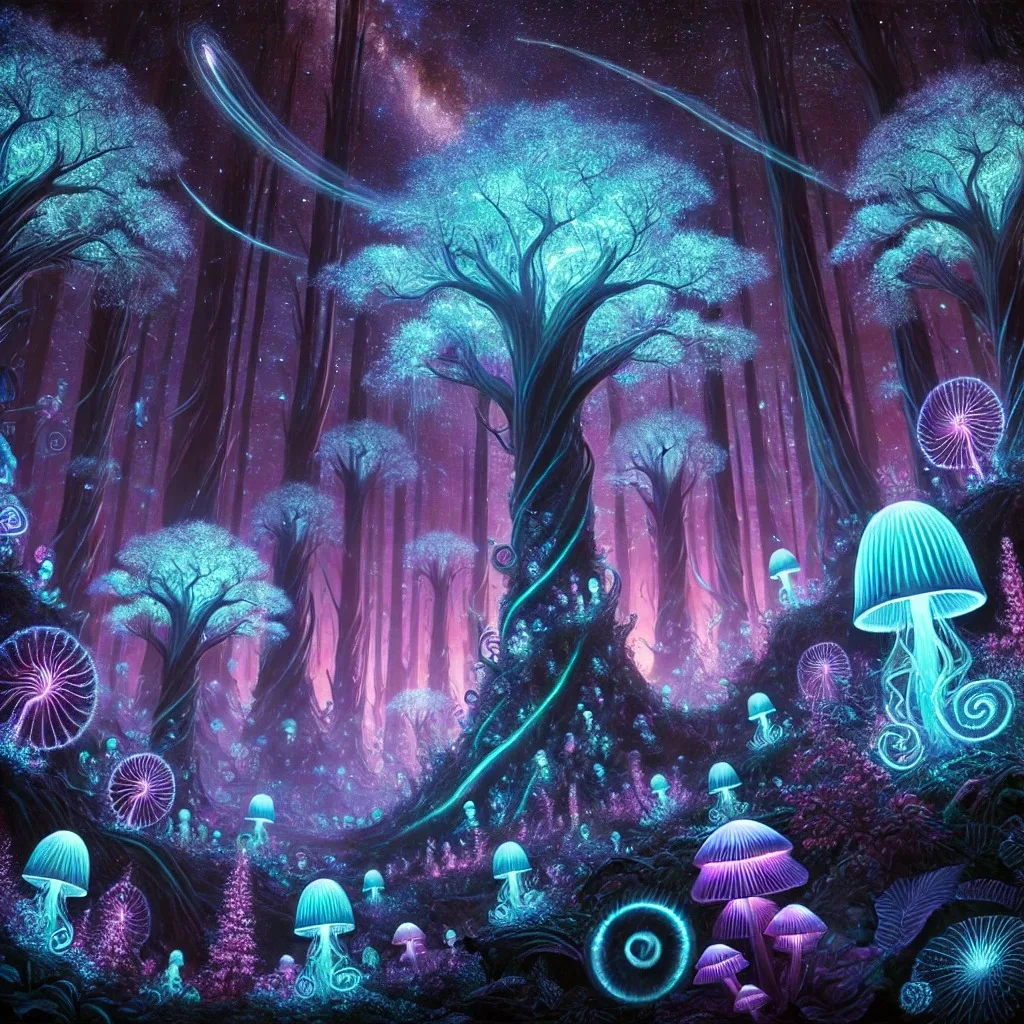
The universe is an immense expanse filled with countless wonders that challenge our understanding of existence. Every fixed star, or what we commonly refer to as stars that are relatively stationary from our vantage point, hosts thier own planetary system. The discovery of exoplanets—planets orbiting stars beyond our solar system—has exponentially increased our appreciation for the cosmos. As of October 2023, astronomers have confirmed the existence of thousands of exoplanets, with many more candidates awaiting verification.
These planetary systems are as diverse as they are numerous. They range from hot Jupiters—giant gas planets orbiting perilously close to their stars—to Earth-like planets within habitable zones where liquid water could exist. The Kepler and TESS missions have been instrumental in uncovering these distant worlds, suggesting that planets might outnumber stars in our galaxy.
The possibility that "every planet has its own creatures" invites profound contemplation about life beyond Mother Earth. If life emerged here, under specific conditions, could it not also arise elsewhere under varying circumstances? The building blocks of life—carbon, hydrogen, nitrogen, oxygen, phosphorus, and sulfur—are abundant throughout the universe. Organic molecules have been found in interstellar space, meteorites, and even the atmospheres of other planets.
Astrobiology explores these possibilities, studying extreme environments on Mother Earth where life thrives against all odds—such as deep-sea hydrothermal vents or acidic hot springs—to understand how life might exist in other worlds. The moons of Jupiter and Saturn, like Europa and Enceladus, with their subsurface oceans, are prime targets in the search for extraterrestrial life within our solar system.
The sheer number of planets in the universe makes the potential number of life forms incomprehensibly large. With an estimated 100 billion stars in the Milky Way galaxy alone and over two trillion galaxies in the observable universe, the number of planets could be in the septillions. Even if life exists on a tiny fraction of these worlds, the diversity and number of creatures would surpass our wildest imaginations.
This realization fuels scientific inquiry and inspires philosophical and ethical considerations about our place in the cosmos. It challenges us to look beyond our earthly perspectives and consider a universe teeming with life, each organism playing its part in the grand tapestry of existence.
While we have yet to find definitive evidence of extraterrestrial life, the pursuit continues with ever-increasing vigor. Future missions aim to probe the atmospheres of exoplanets for biosignatures, send probes to the icy moons of our solar system, and, one day, venture even further. Understanding whether we are alone in the universe is one of humanity's most profound endeavors, and the answers will redefine our understanding of life.
Shunkmanu He Me Yedo! Chanupa Sapa He Me Yedo!
Hinhan Wicasa/Deloria Tiospaye, Ihanktonwan and Chickasaw Nations