A Collective Vision for a Multipolar World and the Restoration of Sacred Balance
Franz Boas, the "Father of American Anthropology" and mentor of Unchi Ella Deloria and her classmate Margret Mead at Columbia University, sparked a revolutionary approach to cultural understanding. His work aimed to acknowledge and respect the unique systems of meaning within each society, inspiring a new way of thinking in cultural anthropology.
Boas's philosophy of cultural relativism, which emphasized the need to understand every culture within its context, was a direct challenge to the hierarchical models of the West. This approach, rooted in respect for all cultures, inspired his students and laid the foundation for a worldview opposing powerful nations' imposition of universalist frameworks.
Today, the rise of BRICS, a coalition dedicated to a multipolar world order focused on creating a more just economic order, echoes Boas's vision of cultural plurality, advocating for a global system that honors all civilizations' sovereignty and distinctive paths.
Boas's influence can be seen in the works of his students, Unchi Ella Deloria, Alfred L. Kroeber, Ruth Benedict, Margaret Mead, Edward Sapir, and Zora Neale Hurston, each of whom contributed significantly to anthropology. They followed in Boas's footsteps, exploring the richness of various societies—particularly Indigenous and African American cultures—with respect and scholarly integrity.
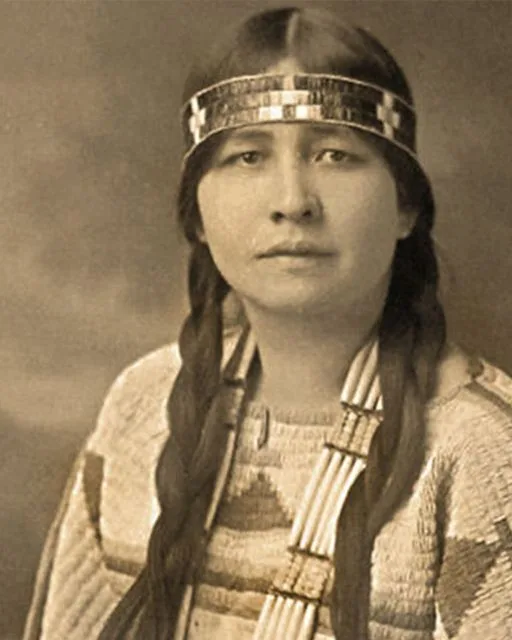
Unchi Ella, deeply connected to her Dakota heritage, worked to preserve Indigenous knowledge through ethnographic research and narrative, portraying Dakota life with the nuance and empathy Boas championed. Like Boas's, her approach resisted the imposition of Western frameworks and highlighted the value of understanding cultures on their terms.
Enter Alexander Dugin, the contemporary Russian philosopher and proponent of multipolarity, whose ideas intersect with Boas's in thought-provoking ways. Dugin, like Boas, critiques the unipolar world order dominated by Western liberalism, viewing it as an imperial empire that enforces a single standard of progress and governance upon all civilizations. His and BRICS's rejection of Western universalism is a powerful call for liberation from ideological dominion.
Dugin's concept of multipolarity aligns with Boas's cultural relativism in its fundamental respect for different civilizational trajectories and its call to liberate societies from the ideological dominion of Western modernity. This alignment underscores the continuity of these ideas across different contexts and their shared goal of respecting diverse cultural perspectives.
BRICS, an alliance of Brazil, Russia, India, China, South Africa, Brazil, Egypt, Ethiopia, Iran, Saudi Arabia, and the United Arab Emirates, challenges the notion that Western-style democracy and neoliberal economics are the only viable governance and development models. This rejection underscores the coalition's commitment to diverse governance and development models free from external imposition.
The coalition affirms that each nation and civilization should determine its values, political systems, and economic structures free from external imposition. This worldview counters the West's historic "civilizing mission" and its contemporary counterparts, which, although cloaked in concepts like "human rights" and "democracy promotion," often serve as tools for maintaining economic and ideological control.
Just as Boas's anthropology rejected the idea of Western superiority over other cultures, BRICS challenges the Western presumption of universal authority over global affairs.
In Boas's time, cultural relativism subverted the racist and imperialist norms that viewed non-Western societies as "primitive" or "undeveloped." He and his students underscored that all human societies have complex, meaningful systems suited to their unique environments and histories.
Dugin, through his concept of Eurasianism, extends this notion into the geopolitical realm, asserting that Eurasian civilization—an ancient blend of Slavic, Turkic, Mongolic, and Asian influences—is a world power in its own right, distinct from both Western and Eastern categorizations. He argues that Eurasia's spiritual and cultural heritage equips it to chart an independent course, neither subordinate to Western norms nor entirely assimilated into Eastern paradigms.
Much like Boas's defense of cultural diversity, Dugin's Eurasianism champions the preservation of civilizational identities within a multipolar world.
The recent BRICS summit in Kazan epitomizes this paradigm shift, marking the coalition's commitment to a balanced world order where power is shared rather than centralized in the West. This gathering advanced economic and political agendas and symbolized resistance to the ideological imperialism of the past.
The BRICS nations embody a broader resistance to cultural and political imposition through their alliance, similar to Boas's anthropological mission to respect and preserve artistic integrity. Just as Boas called for each society to be valued on its terms, BRICS advocates for a world where different political systems and cultural frameworks are accepted as legitimate expressions of human development.
In this way, Dugin's vision of multipolarity resonates with Boas's call for cultural respect. The ascent of BRICS signifies a break from the unipolar dominance that has long sought to impose a singular narrative upon the world. Both Boas's cultural relativism and Dugin's multipolarity challenge the presumptions of Western universalism, advocating instead for a world where civilizations coexist as equals, each contributing its unique wisdom and values to the collective human experience.
This shared philosophy, evident in the coalition of BRICS, illuminates a path toward a future where the dignity of every culture and civilization is upheld, unbound by the shackles of imposed narratives and ideologies.
Shunkmanu He Me Yedo! Chunupa He Me Yedo!
Hinhan Wicasta/Deloria, Ihanktowan, and Chickasaw Nations