Dear Friends and Relatives,
I pray you and your loved ones are experiencing the best of health and happiness.
As we continue our collective quest to understand the richness and complexities of human societies, it is time to address the limitations that arise when evaluating Indigenous communities solely based on materialistic or technological metrics.
The Limitations of Materialistic Metrics
The temptation to measure a civilization by its technological advancements, economic prosperity, or even the complexity of its social structures is pervasive in anthropology. While these aspects can offer some insights, they are far from comprehensive indicators of a community's richness, vitality, or well-being. Moreover, applying such metrics perpetuates colonial stereotypes that have been used to devalue Indigenous wisdom, cultures, and contributions to humanity for centuries.
The European Arrival in the Americas: A Case for Complexity
When the Europeans began to arrive in the Americas in 1492, they brought many tools, armaments, and material goods. While advanced in many respects, these materialistic markers only offer a partial view of a society's wealth and well-being. Hence, we must delve deeper than material possessions when evaluating the depth of a culture.
The Oceti Sakowin: A Paradigm of Intangible Wealth
For instance, the Oceti Sakowin, which comprises the Seven Council Fires. While it may appear that they did not possess the same technological prowess as the arriving Europeans, this viewpoint is myopic.
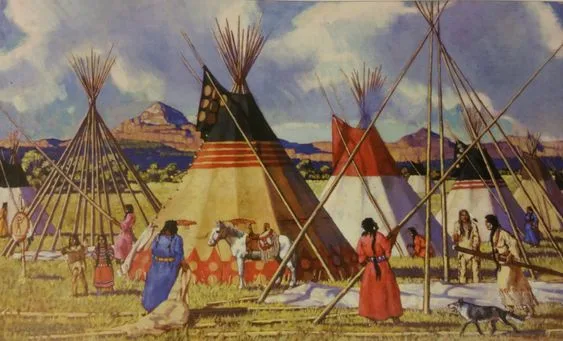
The Oceti Sakowin had an intricate social structure rooted in a profound sense of spirituality, mental and emotional balance, and an enduring respect for the interconnectedness of all life. In their communities, crime was virtually non-existent. Elders were not only respected but revered as vital repositories of wisdom. Children were seen as the promise of a sustainable future. Marriages were sacred unions, making divorce an extreme rarity. The communal responsibility towards mental, emotional, and spiritual well-being was a cornerstone of their social fabric.
Materialistic Values and Environmental Degradation
The detrimental impact of capitalist and materialistic values on our global environment is hard to ignore. In contrast, Indigenous communities like the Oceti Sakowin were exceptional stewards of the Earth. They lived sustainably, took only what was needed, and understood the principle of reciprocity with Mother Earth. Theirs was a life built around cycles of giving and receiving—markedly different from the Western process of extraction, depletion, and exploitation.
The Painful Consequences of Materialism and Technological Advancements Without Spiritual Values
However, my perspective is not just an academic comparison; it speaks to the real, painful consequences of the Europeans' materialistic mindset on Indigenous communities. Forced relocations disrupted our sacred connection with our ancestral lands. The violent appropriation of resources led to immediate and long-term socio-cultural and economic imbalances. The near-eradication of our languages, traditions, and wisdom under colonial regimes is a wound that has left a lasting scar on Indigenous communities.
The Ecological Impact
The colonizer's resource extraction mentality led to the rapid depletion of critical resources, such as buffalo, which were integral to the Plain's ecology and vital to the Oceti Sakowin's way of life. This disruption led to widespread famine and increased vulnerability to diseases introduced by Europeans—leading to a further catastrophic loss of life and cultural disintegration.
The Assault on Communal Land Stewardship
Capitalism's concept of private property also severely clashed with our understanding of communal land stewardship. This has led to forced displacements and loss of ancestral lands. Our respectful and harmonious existence with the flora and fauna was replaced by a system that commodified nature, leading to the endangerment or extinction of numerous species.
The Climate Crisis: A Legacy of Materialism
Our current climate crisis can be traced back to this aggressive and unsustainable exploitation of natural resources. While the effects are global, they disproportionately affect Indigenous communities, who have been stewards of these lands for generations.
The Need for a Broader Anthropological Lens
In closing, as academics, researchers, or conscious human beings, I urge you to adopt a more balanced and respectful lens to view and evaluate all human societies. At its best, anthropology should foster mutual respect and understanding, not a weapon to marginalize those who don't conform to certain norms.
It is time we expand our criteria for evaluating the success and richness of a civilization. Indigenous peoples have much to teach us about living in balance with each other and Mother Earth. Let us honor and learn from these teachings by broadening our perspectives and enriching our collective understanding of what it truly means to be a successful, advanced, and harmonious society.
With Warm and Loving Greetings,
Lala, Dekshi, and Brother Phil