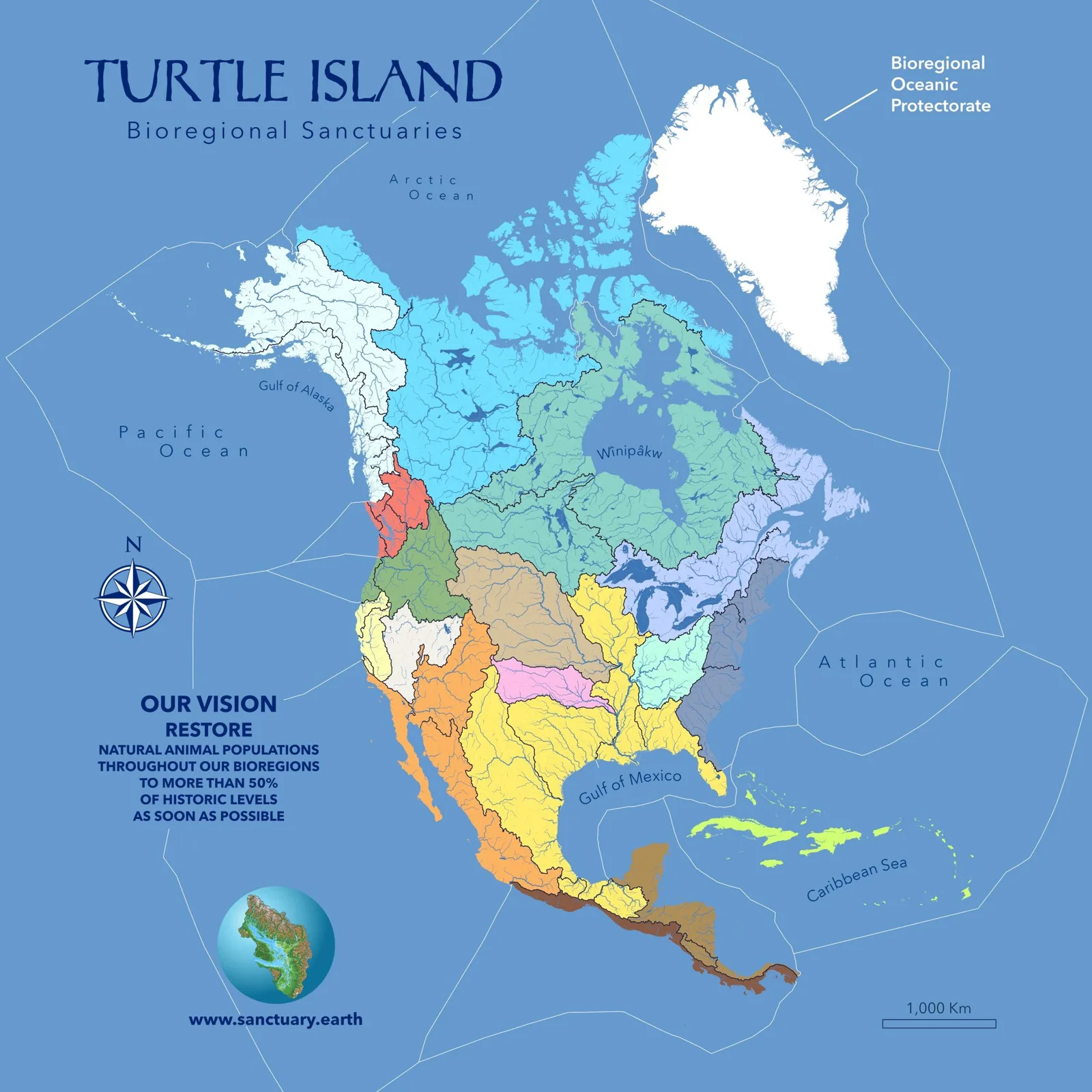
Proposal: Addressing the Freshwater Crises Between and Within Canada, Mexico, and the United States via an Indigenous Understanding of Bioregions
Introduction:
The United States and its neighbors Canada and Mexico face escalating freshwater challenges exacerbated by climate change, including interstate and international disputes. This complex situation calls for a transformative approach to water management that respects ecosystems' holistic and interconnected nature across borders. This proposal promotes an Indigenous perspective for developing water policies, viewing North America as a continuum of interconnected bioregions and watersheds.
Background:
Freshwater issues in North America are diverse, ranging from scarcity in the arid regions of the U.S. and Mexico to water quality concerns in Canadian and American industrial areas. Conventional water management approaches, constrained by political boundaries, need to be revised. These challenges highlight the need for an integrated approach that transcends national borders, fostering cooperation and sustainable management across the continent.
Proposal:
To effectively manage freshwater resources, the United States, Canada, and Mexico must adopt an Indigenous perspective that views the continent as interconnected bioregions and watersheds. This approach recognizes the deep ecological interconnections across borders and is crucial for crafting sustainable water policies.
Key Components of the Proposal:
Transboundary Mapping of Bioregions and Watersheds:
Collaborate with Indigenous communities across North America to map bioregions and watersheds that cross national borders. This collaborative mapping will guide integrated water management strategies and recognize natural water flows regardless of political boundaries. (This is being completed by Sanctuary. Earth)
Indigenous Knowledge Integration:
Integrate Indigenous knowledge systems of all three nations into international water management policies. Indigenous peoples profoundly understand sustainable resource management, crucial for addressing continental freshwater challenges.
International Collaboration:
Strengthen mechanisms for data sharing, resource allocation, and expertise across the United States, Canada, and Mexico. Develop comprehensive water management plans incorporating bioregional insights and addressing shared water use, conservation, and restoration efforts.
Community Engagement and Empowerment:
Facilitate active participation of local communities, including Indigenous groups, in the governance of shared water resources. Support initiatives utilizing traditional and contemporary practices to promote water conservation, ecosystem restoration, and fair distribution.
Investment in Green and Blue Infrastructure:
Prioritize cross-border investments in infrastructure that support water retention, purification, and sustainable distribution. Implement nature-based solutions such as transboundary reforestation projects, joint soil conservation programs, and shared wetland restoration initiatives.
Benefits:
Enhanced Resilience: A collaborative approach to water management increases North America's resilience to water-related challenges and climate variability.
Sustainable Development: Integrating ecological, social, and economic considerations within bioregional frameworks supports sustainable development and harmonious growth across borders.
Cultural Preservation and Revitalization: Embracing an Indigenous perspective helps preserve cultural heritage and strengthens the relationship between communities and their natural environments.
Conclusion:
Addressing the freshwater challenges in North America requires a foundational shift in how resources are perceived, managed, and governed. Canada, Mexico, and the United States can achieve sustainable water security for future generations by adopting an Indigenous perspective that considers the continent's interconnected bioregions and watersheds.
This proposal emphasizes the need for a commitment to collaboration, innovation, and equity in water management solutions that honor the interconnected web of life and are guided by the profound wisdom of Indigenous traditions and knowledge.
The Four Worlds International Institute