The Promised Destiny of Indigenous Peoples in Enlightening and Transforming the World
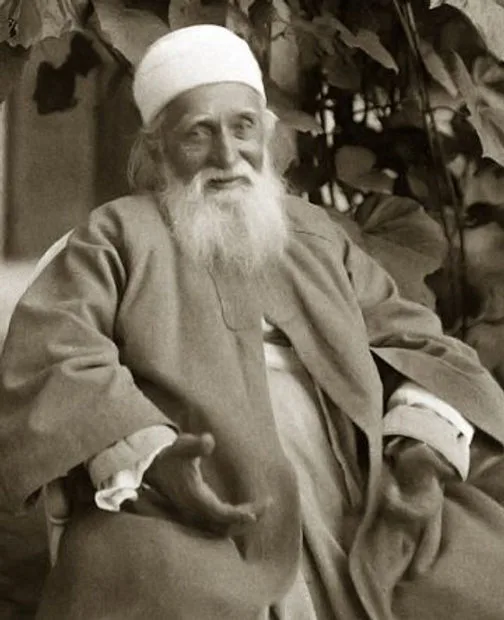
The unparalleled prophecy revealed by 'Abdu'l-Bahá on April 8, 1916, in the garden outside the Shrine of Bahá'u'lláh, carries a deep significance for the Bahá'í community, particularly those in the United States and Canada. 'Abdu'l-Bahá emphasized the tremendous potential of the Indigenous peoples of the Americas, likening their transformation to that of the Arabian Peninsula's ancient inhabitants before Muhammad's Revelation. 'Abdu'l-Bahá envisioned that with proper education and guidance, the prerequisite now embryonically fulfilled across the Americas, Indigenous peoples would advance and become so illumined that they would enlighten the world. This vision is captured in his words, urging Bahá'ís to attach great importance to the Indigenous populations, foreseeing them as illumined —emitting health, joy, and enlightenment from the light of knowledge and spiritual guidance.
By embracing and promoting the understanding that the hurt of one is the hurt of all, and the healing of one is the healing of all, Indigenous peoples exemplify the interconnectedness essential for achieving true peace and justice globally. Their role is not just to participate but to lead the spiritual and intellectual transformation foreseen in 'Abdu'l-Bahá's prophecy, a role of profound significance integral to achieving global peace. This recognition of their importance is a testament to their value and integral role in the journey towards international peace.
The Way Forward
The Bahá'í support for the fulfillment of 'Abdu'l-Bahá's prophecy about the Indigenous peoples of the Americas is a profound commitment to unity, justice, and the illumination and enlightenment of the human spirit. It is a call to action for all Bahá'ís to assist in empowering Indigenous communities, supporting them to become transforming beacons of light and wisdom capable of leading the world to a new era of peace and enlightenment. This sacred endeavor is not just a testament to our shared purpose but a unifying force that aligns with the Bahá'í vision of a united world, where the diversity of human experience and wisdom, including that of Indigenous peoples, is celebrated as a source of strength and guidance for all humanity.
Understanding the Lesser and Most Great Peace From an Indigenous Perspective.
In the unfolding spiritual evolution of our Human Family, the Bahá'í Faith delineates a clear vision of global peace through its vision of the Lesser and Most Great Peace. This vision interweaves seamlessly with the prophecies held sacred by Indigenous peoples, particularly those articulated in the Tablets of the Divine Plan. The journey toward these stages of peace heralds a new era of global unity. It highlights the pivotal role of Indigenous wisdom and vision in guiding humanity through these transformative and challenging times.
The Lesser Peace: A Call for Political Unity and Indigenous Leadership
The Lesser Peace, as envisioned by the Bahá'í teachings, marks a crucial phase in which humanity achieves a semblance of unity, primarily through political and legal frameworks. This stage is characterized by establishing international laws and governance structures that facilitate peaceful coexistence and unbreakable collective security systems designed to prevent conflicts and ensure global justice. In this setting, the role of the Indigenous peoples of the Americas is profoundly significant.
Indigenous wisdom, with its deep-rooted principles of interconnectedness, reciprocity, and a profound respect for the natural world, provides a moral and spiritual compass essential for the world to navigate this new form of unity. Indigenous teachings emphasize that the wellness of each individual is tied to the health of the collective—ideas that resonate deeply with the Bahá'í principles of collective security and justice.
Empowering Indigenous Voices
The Bahá'ís of Canada and the USA are crucial in supporting Indigenous communities in asserting their spiritual leadership. This support involves recognizing Indigenous prophecies and integrating Indigenous spiritual perspectives into the global dialogue on peace. It also requires creating platforms where Indigenous voices are not only heard but are leading discussions on international law and global policy reforms.
This unprecedented, unified action would involve collaborative efforts to implement policies that reflect and uphold the values of justice and equity inspired by Indigenous traditions. Such actions will lay a solid foundation for the Lesser Peace, where Indigenous peoples' spiritual and moral wisdom complements nations' political unity.
The Most Great Peace: Beyond Political Structures to Spiritual Unity
The vision expands into the Most Great Peace, transcending the limitations of political agreements and legal frameworks, ushering in an era defined by humanity's profound spiritual and moral transformation. Here, the role of Indigenous wisdom becomes even more central. Indigenous spiritual teachings, which have long championed the harmony between our Human Family and Mother Earth, the sacredness of life, and community solidarity, offer essential insights for cultivating a global civilization grounded in divine principles.
In this stage, the spiritual insights and traditions of the Indigenous peoples serve as a blueprint for creating a world where divine attributes such as love, unity, and justice are not only envisioned but are the basis of everyday interactions and governance. Their longstanding practices of spiritual reverence, community decision-making, and sustainable and harmonious environmental interactions provide practical models for a globally integrated yet locally respected civilization.
Catalyzing Spiritual Enlightenment and Education
Achieving these visionary stages of peace necessitates a concerted effort in education and spiritual enlightenment, particularly within Indigenous communities. This includes preserving Indigenous languages and traditions and incorporating these rich cultural heritages into the global educational curriculum to foster a broader understanding of Indigenous philosophies.
The Bahá'í community's role is to facilitate educational and economic opportunities that respect and highlight Indigenous spirituality and promote policies that enable Indigenous peoples to thrive and lead. By fostering an environment where Indigenous wisdom is respected and integrated into the global fabric, the Bahá'í Faith can help realize the prophecies that depict Indigenous peoples as spiritual and moral leaders of worldwide renewal and unity.
A Unified Path Forward
Integrating Bahá'í principles with Indigenous prophecies about peace presents a dynamic pathway to a future where humanity will achieve both the Lesser and Most Great Peace. By supporting Indigenous leadership and incorporating their spiritual wisdom into the movement towards global unity, the Bahá'í community, especially in North America, will play a crucial role in fulfilling a shared sacred vision. This commitment to unity, justice, and spiritual enlightenment is a fulfillment of prophecy and a testament to the transformative power of diverse spiritual traditions working in harmony, an eternal light of hope and inspiration for the betterment of all humanity.
Shunkmanu He Me Yedo! Chanupa Sapa He Me Yedo!