Now that my health has found a new equilibrium, and I can move around without a wheelchair, I am focusing on the central purpose of coming to Thailand: to contribute meaningfully to my beloved wife’s community in Trat, Thailand, and to implement a transformative approach to ensuring the survival and well-being of the elephants she grew up with as a girl.
Like the land itself, these elephants are part of the fabric of her memories and I want to the honor the greatest wife a man could ever have in his life. Being married to me for more than 30 years she has certainly has become a saint.
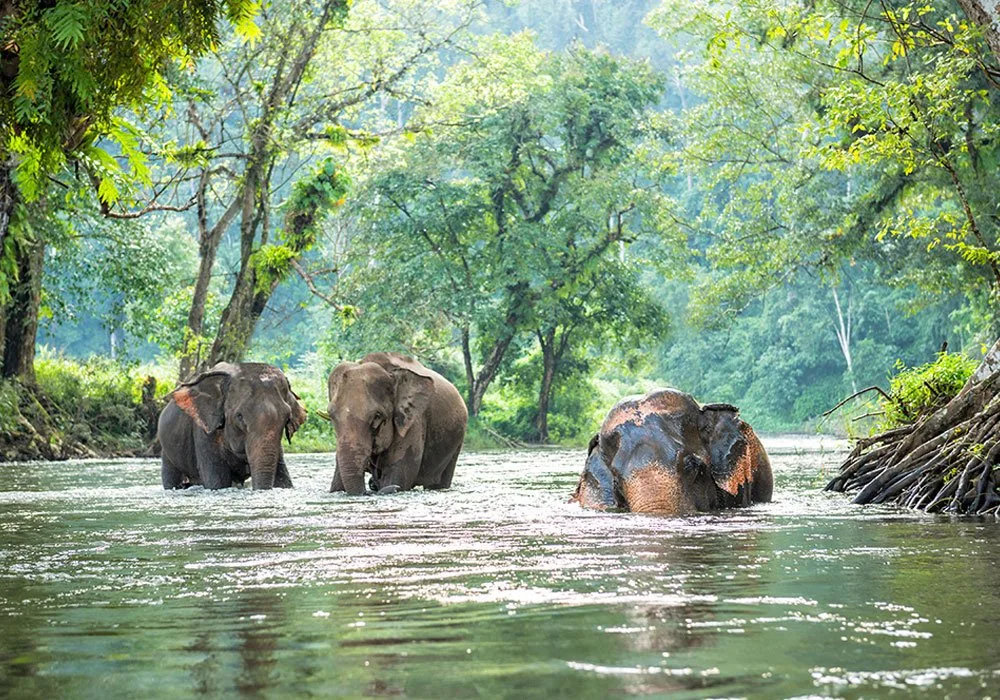
Together, we are working to create a sanctuary system within the Cardamom Mountains bioregion, which spans Thailand and Cambodia. In this system, elephants can roam freely, unhindered by the constraints of human-imposed boundaries.
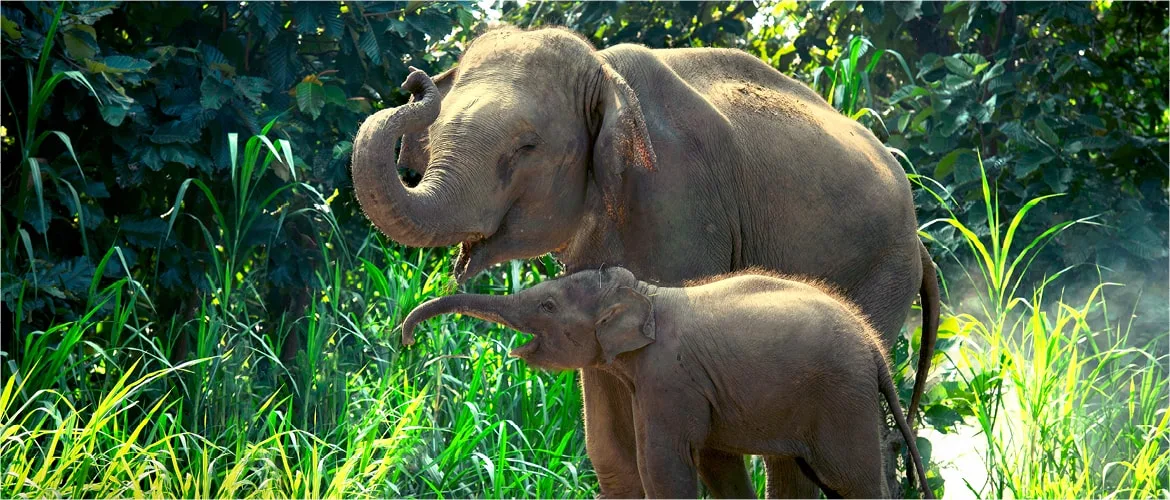
This vision was highlighted during a recent, poignant encounter in Takang, my wife’s home district in Trat Province. In the quiet darkness of the night, three majestic elephants emerged from the hillside, their silent approach a powerful reminder of the sacred connections we share with the natural world. Among them was a female known as "Lorn," recognized by my wife’s cousin, the district officer. The other two were males, their presence a mixture of wonder and challenge, driven by their primal need for food.
In Takang, elephants are not strangers to the community. They are known and named, and their movements are familiar to those who live alongside them. With her distinct character, Lorn is one of these frequent visitors, her story etched into the people's collective memory. The relationship between the community and these elephants is one of deep familiarity and mutual respect, a testament to the enduring bonds that unite humans and the natural world.
When Lorn and her companions entered the village, my wife’s cousin and dedicated volunteers responded with urgency and care. They worked tirelessly for four to five hours, navigating the dense, moonless night with only the light of flashlights and the hum of motorcycles to guide them.
Their mission was not just about moving elephants—it was about preserving harmony. Using a "ping pong cannon," a tool designed to startle but not harm, they encouraged the elephants to return to their habitat in the Borai District. This thoughtful approach reflects the community's profound commitment to coexistence, where even the tools used are chosen with respect for the dignity of these sentient beings.
You cannot get too close to such immense creatures for safety and to honor their dignity. Yet even from a distance, their presence commands awe—a vivid reminder of our shared space with all life. This encounter was not just about guiding elephants back to their habitat. This encounter is a testament to the enduring relationship between humans and nature, a story of interconnectedness that unfolds in Takang and beyond.
With their lush forests and rich biodiversity, the Cardamom Mountains serve as one of Southeast Asia’s last strongholds for wild Asian elephants. This bioregion, spanning Trat Province in Thailand and extending into Cambodia, is home to interconnected sanctuaries such as the Khao Soi Dao Wildlife Sanctuary and the Southern Cardamom National Park.
These protected areas are more than just havens for elephants—they are lifelines for countless species and the local communities that share the land. However, the survival of these elephants is deeply intertwined with the lives of the people who live alongside them. Habitat loss, human-wildlife conflict, and the challenges of cross-border conservation require a vision that unites these communities as stewards of the land and protectors of the elephants.
Our vision extends beyond creating a sanctuary system; it is about fostering the ecological and cultural connectivity necessary for elephants to thrive. By linking protected areas across Thailand and Cambodia, we honor the elephants’ ancient migratory paths and their need for space to roam. This approach addresses one of the most critical challenges of conservation: ensuring that both elephants and people can coexist in harmony.
Central to this endeavor is the active involvement of local communities. In Takang, the response to Lorn’s visit demonstrates the power of community-led conservation. These communities, who have lived in the shadow of the Cardamom Mountains for generations, possess invaluable knowledge and wisdom about the land and its inhabitants.
By empowering them as co-leaders in this journey, we can create solutions rooted in respect, reciprocity, and responsibility—values that resonate deeply with Indigenous teachings and our sacred relationships with all life.
In Trat, we are beginning to explore innovative ways to ensure that elephants have access to sustainable food sources within their sanctuaries. Agroforestry initiatives that balance the needs of farmers and wildlife are a key part of this effort, creating systems where the health of the land and its inhabitants is mutually reinforcing.
In Cambodia, community forest management programs must be strengthened to protect elephant habitats while providing livelihoods for local people. These interconnected efforts reflect the understanding that Mother Earth’s health and her children’s well-being are inseparable.
The recent encounter with Lorn and her companions underscores the delicate balance of coexistence. With their immense presence and primal needs, these elephants remind us of the sacred bonds that unite all life. The community volunteers’ efforts to guide them back to their habitat exemplify what is possible when communities come together with a shared purpose. Their actions reflect the profound wisdom of living in harmony with nature, guided by respect and care.
As we look to the future, we are exploring ways to strengthen cross-border collaboration between Thailand and Cambodia. By creating wildlife corridors that mirror the natural movements of elephants and fostering dialogue between communities on both sides of the border, we can build a conservation framework that reflects the interconnectedness of life itself. Elephants know no borders, and neither should our efforts to protect them.
This journey is healing for the land and its elephants, as well as the communities and individuals who share this vision. It is a journey guided by the wisdom of the ancestors, the sacred teachings of the White Buffalo Calf Woman, and the understanding that true wealth lies not in material possessions but in the strength of our relationships and the harmony of our shared existence.
Remember that every action we take is part of a larger story—one of unity, resilience, and hope. By uniting our efforts, we can ensure that the Cardamom Mountains bioregion becomes a living symbol of what is possible when we honor the sacred connections that bind us to one another and the natural world.
In the spirit of these sacred relationships, we offer this vision as a commitment to our Creator, the Great Spirit, and all beings who share our Mother Earth. May the story of Lorn and her companions inspire us to weave a future where the boundaries that separate us dissolve and the harmony of the natural world is restored.