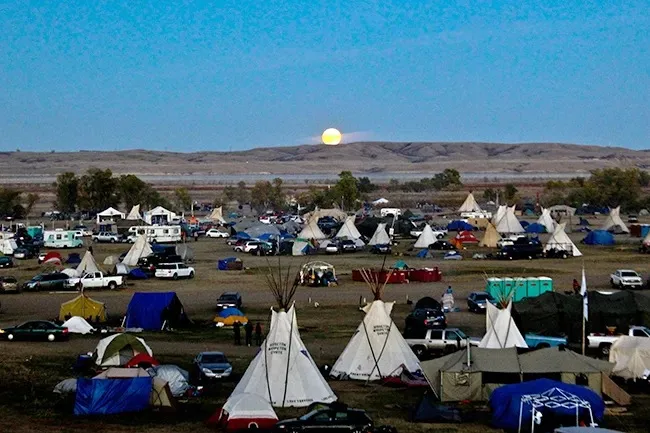
North Dakota Jury makes $650 Million judgement against Greenpeace for their actions at the Standing Rock Sioux Tribe.
This verdict, emerging from the sacred homelands of the Oceti Sakowin, strikes a profound and troubling chord in the hearts of those who have long stood for the protection of Ina Maka — Mother Earth — and the sacred waters that flow through her veins. The $650 million judgment against Greenpeace represents more than a financial ruling; it marks a defining moment in the ongoing struggle between corporate interests and the spiritual, sovereign rights of Indigenous nations, especially the Standing Rock Sioux Tribe and their allies in the human family.
From an Indigenous perspective grounded in spiritual law, natural law, and the teachings passed down by our ancestors, this decision reverberates with a deep irony. Those who sought to protect Mni Wiconi — Water is Life — are now being portrayed as violators, while those who pressed forward with extraction and desecration are cast as victims. The moral compass of our society must not be reversed through legal mechanisms that silence peaceful resistance and undermine the sacred responsibilities of caretakers of the land.
It is vital to understand that the resistance to the Dakota Access Pipeline was not merely political or environmental — it was, and remains, a ceremonial, spiritual stand rooted in generations of prophecy and ancestral teachings. The movement that arose at Standing Rock was a prayerful, unified call for a new path forward — one that respects the interconnectedness of all life and honors Indigenous sovereignty, a sovereignty that predates the formation of corporations or settler legal structures.
To hold Greenpeace accountable in this way risks setting a chilling precedent that could silence not only advocacy groups, but also communities who dare to speak truth to power — especially when that truth is aligned with the sacred trust we have been given to care for the Earth. It invites the use of SLAPP (Strategic Lawsuits Against Public Participation) tactics to wear down movements through financial intimidation, rather than through honest dialogue and collective solutions.
This verdict also fails to reckon with the historical and ongoing violations endured by Indigenous peoples — violations that include broken treaties, the desecration of sacred lands, and the poisoning of water sources. In contrast, the global movement sparked by Standing Rock brought together Indigenous Nations, faith leaders, youth, environmental defenders, and everyday citizens from around the world, united by a simple, profound truth: we cannot drink oil.
Greenpeace’s decision to appeal and pursue a counter-case in the Netherlands is a reminder that the spirit of Standing Rock cannot be buried under legal rulings or monetary judgments. As we have always done, we will rise again, rooted in love, prayer, and a sacred responsibility to the Seventh Generation.
To the people of Mandan and North Dakota who have suffered during this process, may we find a way forward that is not based on division, but on reconciliation and healing. The burden of truth is not easily carried, but it is one that must be held with humility and spiritual clarity.
Let us not forget: this is not just about law — it is about life. It is about the water, the land, and the sacred future we must build together.
Mitakuye Oyasin — All My Relations.